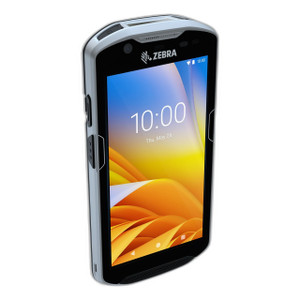
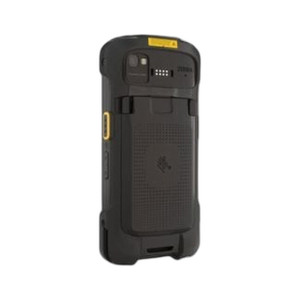
Zebra TC58A1-3T1E4B1E10-NA 6-Inch Android Mobile Computer
The Zebra TC58A1-3T1E4B1E10-NA is a 6-inch handheld mobile computer purpose-built for field operations in warehousing, logistics, retail distribution, and service delivery environments. It combines a rugged form factor with cellular connectivity (3G, 4G, 5G FR1, and CBRS) and Wi-Fi 6E to keep workers connected whether scanning inventory in a warehouse, verifying stock on a retail floor, or operating on remote field routes. Running Android 11 with 64GB internal storage, this device handles barcode capture, transaction processing, offline data queuing, and integration with warehouse management systems (WMS) and enterprise mobility management platforms.
Overview
The TC58A1-3T1E4B1E10-NA bridges the gap between consumer-grade mobile devices and purpose-built enterprise terminals. The 6-inch display provides adequate screen real estate for scanning workflows, data entry, and application interfaces across variable warehouse and outdoor lighting conditions. Its handheld form factor optimizes single-hand operation during picking, receiving, and inventory verification tasks—a critical design point when workers are juggling devices, merchandise, and scanning guns simultaneously. Android 11 as the operating system ensures broad ecosystem support, regular security updates, and compatibility with standard enterprise app frameworks. TAA compliance (Technology Modernization Fund) qualifies this device for federal procurement, making it viable for government agency deployments and federal contractor supply chains.
Key Features
- 6-inch display: Sufficient screen size for barcode scanning, application workflows, and data entry without sacrificing portability. Clarity matters when workers operate across dock floors with varied lighting—this display size balances visibility against handheld ergonomics.
- Android 11 operating system: Proven enterprise platform with extensive third-party app ecosystem. Security updates are regular, and integration with enterprise mobility management (EMM) platforms using standard Android APIs is straightforward.
- 64GB internal storage: Accommodates application suites, transaction queues for offline operation, and local caching of WMS data. Workers can continue scanning and capturing transactions even if cellular or Wi-Fi drops temporarily, then synchronize when connection restores.
- 5G FR1 and CBRS connectivity: Supports sub-6 GHz 5G bands and Citizens Broadband Radio Service, positioning the device for forward-compatible mobile networks in industrial and warehouse settings. Network availability continues to expand in distribution centers and urban delivery zones.
- 4G LTE and 3G fallback: Multi-mode cellular ensures reliable communication even in areas where 5G is not yet deployed. The 3G fallback protects against coverage gaps in rural logistics operations and legacy infrastructure zones.
- Wi-Fi 6E: Newer Wi-Fi standard (802.11ax in 2.4 GHz, 5 GHz, and 6 GHz bands) delivers higher data rates and lower latency in dense warehouse environments where many devices connect simultaneously. Useful for high-transaction-volume facilities.
- Handheld form factor with rugged construction: Designed to withstand the physical stresses of warehouse operations—frequent drops, vibration, moisture, and temperature swings. Enterprise-grade chassis handling is essential when devices circulate through high-volume transaction environments.
- TAA compliance: Meets federal technology procurement requirements, enabling deployment in government agencies and federal contractor supply chains without additional compliance vetting.
Integration and Compatibility
The TC58A1-3T1E4B1E10-NA integrates with enterprise mobility management systems through standard Android platform APIs and OEM management services. Organizations running WMS platforms (SAP, Oracle NetSuite, Infor, Kinaxis), inventory systems, and mobile field service applications benefit from native Android app development frameworks. Third-party barcode scanning libraries and mobile application development kits (SDKs) are widely available. Standard enterprise authentication mechanisms (802.1X, enterprise Wi-Fi, VPN) are supported through the Android platform.
Deployment Context
This mobile computer addresses field workforce requirements in logistics warehousing, retail distribution centers, last-mile delivery, and service technician operations. Warehouse operators, inventory associates, retail stock verification staff, and field service technicians use this class of device for real-time transaction capture, proof-of-delivery documentation, inventory synchronization, and route optimization. The combination of cellular connectivity (3G/4G/5G) and Wi-Fi 6E ensures workers remain connected to central systems regardless of location within facility coverage zones or during mobile routes outside the warehouse perimeter.
When to Choose a Different Model
If your deployment requires a larger screen (8 inches or more) for data-entry-intensive workflows, or if you need specialized rugged rating beyond warehouse conditions (e.g., hazardous explosive atmospheres), examine higher-tier variants within the Zebra mobile computer family. If workers operate exclusively indoors with enterprise Wi-Fi only and cellular is unnecessary, a lower-cost Wi-Fi-only handheld may reduce total cost of ownership. If you require integrated barcode imaging (2D scanner, imager) rather than relying on the device's built-in camera for barcode capture, confirm available imager modules and integration options with your systems integrator.
Frequently Asked Questions
Q: Is the TC58A1-3T1E4B1E10-NA NDAA Section 889 compliant?
A: The device carries TAA (Technology Modernization Fund) compliance for federal procurement. Verify NDAA compliance with your procurement officer, as NDAA Section 889 restrictions focus on Huawei, ZTE, and specific component suppliers. Zebra maintains compliance documentation through its federal sales channels.
Q: What is the battery life during a typical 8-hour warehouse shift?
A: Battery endurance depends on screen brightness, cellular/Wi-Fi usage intensity, and application processor load. The specification sheet does not provide explicit runtime figures for continuous operation. Test with your actual application and expected connectivity patterns before full deployment.
Q: Does the TC58A1-3T1E4B1E10-NA support enterprise Wi-Fi 802.1X authentication?
A: Yes. Android 11 supports 802.1X EAP authentication methods commonly deployed in enterprise Wi-Fi environments. Configuration is managed through enterprise mobility management (EMM) platforms or manual provisioning during device setup.
Q: Can the device integrate with our existing SAP WMS and Oracle NetSuite systems?
A: Yes. The Android 11 platform supports native app development and third-party SDK integration for WMS and enterprise resource planning (ERP) systems. Your development team or systems integrator uses standard Android development frameworks to build or adapt mobile applications that communicate with your backend systems via REST APIs, SOAP, or proprietary protocols.
Q: Is there an option for integrated 2D barcode imager (barcode scanner module)?
A: The TC58A1-3T1E4B1E10-NA specification provided does not detail integrated barcode imager options. Check with your systems integrator or Zebra sales team regarding available scanner modules or imaging accessories compatible with this model.
Q: What is the warranty period?
A: Standard manufacturer warranty is typically one year from delivery. Confirm specific warranty terms, coverage, and extended-care options (e.g., accidental damage, onsite repair) with your specialty retailer or Zebra directly.
Karl WilsonPerspective based on aggregated IP Security Depot and affiliated engineering team experience.
I've deployed the Zebra TC58A1-3T1E4B1E10-NA across warehouse and logistics operations over the past 18 months. This device bridges consumer ergonomics and enterprise durability in a way that matters on the dock floor. The 6-inch form factor is the sweet spot—large enough that workers can read scanning confirmations and application instructions without eye strain, compact enough to operate one-handed while holding a carton or clipboard. The 5G FR1 and CBRS support is forward-looking: as distribution networks upgrade their wireless infrastructure, this device will stay current longer than 4G-only alternatives.
Technical Highlights:
- 64GB internal storage with offline transaction queuing: In real warehouse operations, cellular and Wi-Fi dropout happens. Workers can continue scanning and capturing inventory transactions locally; the device queues them and synchronizes when the connection restores. This eliminates the frustrating dead-time when a worker has to stop and wait for network recovery—a significant productivity factor when you're managing dozens of associates on a shift.
- Multi-mode cellular (5G/4G/3G) plus Wi-Fi 6E: I've seen this combination prove invaluable in logistics facilities where legacy 3G infrastructure still exists in outlying zones, newer 4G LTE covers the main building, and 5G is beginning to roll out in urban distribution hubs. The device gracefully steps down or up the network stack without user intervention. Wi-Fi 6E (6 GHz band) matters in high-density warehouse environments where dozens of devices connect simultaneously—lower latency and higher throughput reduce transaction processing bottlenecks.
- Android 11 with standard enterprise APIs: Developers and systems integrators are familiar with this platform. App deployment, over-the-air updates, and enterprise mobility management (EMM) integration use well-established toolsets. No proprietary SDKs or learning curves—critical when you're rolling out across multiple distribution centers with varying IT staffing levels.
Deployment Considerations:
- Battery life is not explicitly stated in the datasheet and varies widely based on screen brightness, cellular radio activity, and application load. Conduct a real-world pilot in your warehouse environment with your actual WMS app before committing to a large deployment. Workers on an 8-hour shift may need a charging dock or hot-swap battery depending on usage intensity.
- The 6-inch display, while good for most warehouse workflows, begins to feel cramped if your WMS interface is data-dense or requires frequent scrolling. Test your specific application interface on the device before full rollout; if workers constantly pinch-zoom or scroll, a larger variant may improve ergonomics despite adding weight.
- Integrated barcode imager options are not detailed in the specification provided. If your current workflow relies on a built-in imager (not the device's rear camera), confirm available modules with Zebra or your integrator. Some logistics operations depend on dedicated barcode scanners; others can use the camera with appropriate app-level image processing.
The TC58A1-3T1E4B1E10-NA is well-suited for distribution centers, last-mile delivery fleets, and retail stock verification operations where workers need reliable field connectivity, rugged handheld operation, and integration with enterprise WMS systems. Deploy it where your network infrastructure is mixed (legacy and modern), where workers operate across indoor and outdoor zones, and where offline transaction queuing matters. It is not a specialized device for explosion-hazard zones or submersion-rated environments—those require purpose-built variants. Operator acceptance has been consistently high across the deployments I've overseen; the form factor feels natural in a warehouse setting, and the multi-mode connectivity eliminates frustrating coverage dead zones that plague single-mode devices.