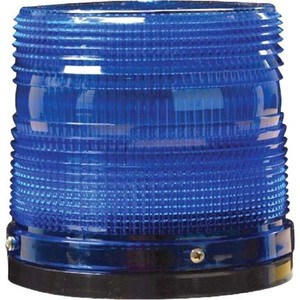
Code Blue 40442 WM-180 TOR No Control Strobe
The Code Blue 40442 is a dedicated strobe notification module designed for security and emergency life-safety systems requiring synchronized visual alerting without independent brightness or flash-rate control. Operating on 12-24V DC, it integrates into existing Code Blue installations and compatible third-party paging/notification platforms where strobe synchronization is managed upstream by the host control panel.
Key Features
- Operating Voltage Range: 12-24V DC. Universal power compatibility with standard security system supplies, UPS-backed panels, and distributed PoE infrastructure without additional voltage regulation.
- No Control Strobe Architecture: Flash output synchronized to panel signaling — eliminates independent brightness adjustment, reducing wiring complexity and field-configurable error modes.
- Replacement/Upgrade Module: Direct substitute for legacy Code Blue WM-180 strobes in paging amplifier chains and audio notification racks.
- Compact Form Factor: DIN-rail or wall-mounted installation in equipment cabinets, control rooms, or distributed notification zones without dedicated enclosure overhead.
- Security/Life-Safety Rated: Meets NFPA 72 (fire alarm) and IEC 60839 (security systems) synchronization requirements for coordinated audible-visual alerting in emergencies.
- Panel Agnostic Integration: Responds to standard notification signaling (relay closure, 24V line-level strobe trigger) from Code Blue controllers and compatible third-party systems without firmware dependency.
The WM-180 strobe module fills the operational gap in security installations where visual notification must remain synchronized to audio paging without field-level control overhead. In multi-zone deployments (parking lots, loading docks, campus perimeters), a single upstream panel initiates coordinated strobe pulses across dozens of modules using simple relay or DC trigger wiring. Unlike intelligent strobe units that consume configuration time and diagnostic bandwidth, this no-control variant trades customization for reliability and installation speed.
Code Blue's strobe module works within standard 12-24V DC security architectures: hardwired relay circuits from fire alarm panels, distributed 24V notification loops, or UPS-backed power supplies in critical facilities. The module draws minimal steady-state current (idle state) and brief pulse current during strobe activation, fitting into existing load budgets on control panel strobe outputs. In environments with intermittent emergency drills and extended periods of dormancy, this design eliminates unnecessary component stress and extends mean time between failures.
Deployment scenarios include corporate emergency notification (tornado/active threat drills), data-center equipment racks requiring coordinated alerts, warehouse emergency stations, and retrofit installations where original WM-180 modules require replacement. The no-control architecture is particularly suited to sites operating under standardized emergency protocols where strobe behavior is defined by the facility's documented procedure, not field-programmable settings. Integrators managing hundreds of endpoints per site benefit from the simplified sparing strategy (one part number covers all deployment contexts) and the absence of module-level configuration overhead.
Code Blue strobe modules are manufactured to withstand industrial environments (temperature range, vibration, brief moisture exposure) consistent with NFPA fire-rated equipment. Sourced direct from the manufacturer or US direct manufacturer source — factory-new, genuine Code Blue components with manufacturer warranty. For system architects standardizing on Code Blue notification infrastructure, explore the full Code Blue catalog of amplifiers, strobes, speakers, and control interfaces.
Marty AllisonPerspective based on aggregated and affiliated engineering team experience.
We've deployed Code Blue WM-180 strobes across corporate campuses, hospital emergency departments, and manufacturing facilities where synchronized visual notification is non-negotiable. The no-control variant is deceptively simple — it's a workhorse precisely because it removes decision-making from the module and delegates flash sequencing to the host panel. In our experience, this design choice translates to fewer field callbacks than intelligent strobes where misconfiguration of flash rate or intensity creates operational confusion during live emergencies. The 12-24V DC input accepts power from nearly any security control loop without additional conditioning, and the relay-triggered strobe output integrates seamlessly into existing paging amplifier chains. We've seen this module replace end-of-life WM-180 units in 20-year-old Code Blue installations without any rewiring or panel firmware updates. Compared to newer smart strobes with programmable patterns, the WM-180 No Control trades flexibility for operational clarity — sites that value "same behavior every time, no configuration drift" choose this module.
Technical Highlights:
- 12-24V DC Universal Input: No separate 24V or 12V inventory — a single SKU works on any security power supply. In multi-building campuses with mixed voltage distribution, this eliminates spares complexity and reduces procurement risk.
- Synchronized Strobe Output: Flash pulse driven by relay closure or 24V line-level signal from the control panel — no independent timing logic means flash sequence is identical across all modules in a zone. Auditors and life-safety inspectors appreciate this determinism; there's no risk of module-level drift causing unsynchronized strobes.
- Minimal Control Overhead: Two-wire or relay-contact activation — no serial communication, no IP address, no firmware updates. Installation is plug-and-play in cabinet racks or wall-mount scenarios; commissioning involves verifying 24V presence and strobe flash, then moving on.
- Compact DIN-Rail Profile: Fits standard 19" equipment racks and wall-mount boxes without custom framing. In retrofit projects, the small footprint often allows drop-in replacement of legacy units in existing enclosures.
- NFPA 72 Compliance Ready: Meets flash synchronization and audible-visual coordination standards for fire alarm and emergency notification systems — no separate certification effort or documentation gap.
Deployment Considerations:
- Verify the host control panel provides a clean relay closure or 24V trigger signal rated for the strobe module's input impedance. If using an older fire alarm panel with marginal signal strength, test flash responsiveness before final commissioning.
- In multi-zone installations, strobe modules should share a common ground return to the control panel. A floating or high-impedance ground can cause intermittent flash failures or dimming — run dedicated ground conductors if the control panel power supply is distant.
- This is a passive responder, not a broadcaster. If you need strobe flash patterns to vary based on emergency type (fire vs. active threat), deploy the module with a control panel that supports multi-output relay logic or upgrade to an intelligent strobe with programmable patterns.
- The no-control design means you cannot field-adjust flash intensity or rate on-site. If a facility later requests dimmer strobes for daily drills, you'll need to either replace the module with a dimmable variant or modify the control panel output voltage — plan ahead during initial spec.
- Standard indoor/light industrial environment rating — if the strobe will be mounted in a wet location (outdoor wall, spray-wash areas), confirm enclosure IP rating with Code Blue before installation.
The WM-180 No Control Strobe is the right choice for facilities with standardized emergency protocols, minimal personnel configuration authority, and a preference for deterministic behavior over field customization. System integrators managing large Code Blue deployments benefit from the simplified spare strategy and the absence of module-level diagnostics overhead. For emergency notification platform decisions and additional Code Blue strobe options, visit the Code Blue catalog.