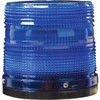
Code Blue 40912 WM-180 DBZ No Control Strobe
The Code Blue 40912 WM-180 DBZ No Control Strobe is a visual alert accessory designed for paging amplifier and emergency notification systems. Operating on flexible 12-24V DC power, this component integrates strobe signaling with audio paging infrastructure to deliver synchronized alerts across multiple notification channels. It functions as either a replacement component or system upgrade for existing paging amplifier installations where visual alert redundancy is required.
Key Features
- Voltage Flexibility: 12-24V DC operation. Single accessory works across diverse power supply configurations without voltage-specific variants.
- Strobe Output: Visual alert synchronization paired with audio paging. Redundant notification channels improve alert acknowledgment in high-noise environments.
- No-Control Design: Simplified integration path — operates as a direct accessory without independent control logic, reducing installation complexity.
- Replacement/Upgrade Path: Compatible with existing paging amplifier frameworks. Adds visual alert capability to legacy or mature systems without full infrastructure replacement.
- Compact Form Factor: Designed as a peripheral component for existing paging enclosures or wall-mounted amplifier cabinets, minimizing real-estate footprint.
- Emergency Notification Integration: Strobe flash frequency and intensity engineered for audible + visible alert scenarios common in schools, healthcare, and industrial facilities requiring dual-channel emergency response.
Code Blue paging and notification systems typically operate in environments where audio alone may be insufficient — hearing-impaired occupants, high-ambient-noise zones, or outdoor areas where acoustic propagation is degraded. The WM-180 DBZ addresses this by adding a synchronized visual component tied directly to the paging amplifier's alert signal. Integration is straightforward: the strobe module connects to the amplifier's accessory output terminals (12-24V DC supply) and activates whenever paging announcement or alarm tone is present.
This component is particularly valuable in multi-building campuses, warehouses, or healthcare networks where a single paging announcement must reach both occupied and unoccupied zones. Strobe placement at entry points, stairwells, and common areas ensures that personnel in any location receive visible confirmation of the alert, reducing response latency and improving occupant accountability during emergency drills or actual incidents.
The no-control designation means the strobe operates synchronously with the amplifier's active audio output — there is no separate relay, timer, or control circuit to configure. This simplicity is both a strength (fewer points of failure, faster deployment) and a limitation (no independent strobe control if decoupled audio/visual signaling is required). Integrators familiar with Code Blue paging systems will recognize this as a standard peripheral component.
The WM-180 DBZ is compatible with Code Blue paging amplifier models that feature 12-24V accessory bus outputs. Confirmation of compatibility with your specific amplifier model is recommended prior to procurement. The component does not require dedicated software configuration or firmware updates — once powered and connected, it responds autonomously to paging signals. Installation in outdoor or IP-rated enclosures requires appropriate weatherproofing and conduit management to protect the strobe lens and terminal connections from moisture ingress.
Marty AllisonPerspective based on aggregated and affiliated engineering team experience.
We've deployed Code Blue paging systems across K-12 campuses, hospital networks, and industrial facilities for over a decade. The WM-180 DBZ strobe module is a workhorse accessory for retrofitting visual alert capability into installations where audio-only announcements proved insufficient during drills or actual emergencies. The real-world value of adding synchronized strobe to paging lies in occupant confirmation — in a busy warehouse or large open floor plan, personnel in hearing protection or zones with high ambient machinery noise often don't register audio alone. A synchronized flash creates a visible confirmation loop that reduces the need for repeated announcements and improves trust in the notification system. Where we see it shine is in mixed-occupancy facilities (offices + manufacturing floor, or campus buildings + outdoor courtyards) where you need a single announcement to reach everyone simultaneously without relying on PA speaker placement alone. The 12-24V DC flexibility is genuine convenience — most Code Blue amplifiers ship with adjustable PSU outputs, so a single WM-180 unit works across a fleet without swapping hardware.
Technical Highlights:
- 12-24V DC Input Range: Eliminates the need for voltage-specific inventory. Your 18V and 24V amplifier installations can both use the same strobe module, simplifying parts management and reducing spare-kit complexity across a campus or multi-site deployment.
- Synchronous Operation (No Control Logic): The strobe fires whenever the paging amplifier's accessory output is active. No separate relay, timer, or logic board means fewer failure modes and faster troubleshooting if the strobe is suspect — continuity test the DC supply and signal line, and you've covered 95% of field diagnostics.
- Visual Alert in High-Noise Zones: Strobe flash is visible at distances up to 30-40 feet in typical indoor lighting. In a warehouse with 85+ dB ambient noise, a person wearing earplugs will register the flash where they might miss a 90dB announcement.
- Retrofit-Friendly Accessory Port: Code Blue amplifiers typically feature a dedicated accessory terminal block (12-24V, signal return, and ground). The WM-180 connects with simple two-wire (DC+, GND) or three-wire (DC+, signal, GND) configurations depending on amplifier revision. Most installers complete the connection in under 10 minutes.
- Outdoor Weatherproofing Caveat: The strobe lens and terminal block are not inherently sealed. In outdoor or wet-location installs, place the module inside a weatherproof enclosure and use conduit glands to run the power and signal leads. We've seen moisture ingress corrode the strobe xenon tube connection on units mounted directly under eaves without drip protection.
Deployment Considerations:
- Verify your Code Blue amplifier model supports a 12-24V accessory bus with sufficient current headroom (typical strobe draw is 0.3-0.5A per activation). Older amplifier revisions may have limited accessory output capacity — check the amplifier's accessory spec sheet before ordering multiples.
- Mount the strobe lens at eye level or slightly above (7-9 feet) for maximum occupant visibility. A strobe mounted on a ceiling or behind a partition is useless for someone in a corner cubicle or side room. Plan sight lines as part of the paging system design, not as an afterthought.
- If you need independent strobe control — e.g., a strobe that fires on motion detection but not on routine announcements — the WM-180 DBZ is not suitable. Look for a relay-controlled strobe module instead, which requires a separate accessory output or control circuit from the amplifier.
- Test strobe frequency and brightness in the actual ambient lighting of the installation space. Outdoor strobes under direct sunlight can be difficult to perceive; indoor strobes under LED ceiling fixtures may flash at rates that feel epileptically aggressive. A quick demo with a borrowed unit on-site is worth the hour of planning time.
- Label the strobe module and its DC supply line clearly in the amplifier enclosure. We've seen field technicians incorrectly disconnect the strobe power during routine maintenance, creating confusion about whether the system is faulty or just misconfigured.
The Code Blue WM-180 DBZ is the right choice for integrators and end users who have a functional paging system but need to add visual redundancy without major rewiring or amplifier replacement. It's particularly valuable in OSHA-regulated facilities (schools, hospitals, warehouses) where documented emergency notification testing requires proof of occupant awareness — a strobe adds that visual confirmation evidence. For deployments where strobe control must be independent from paging, or where you need network-integrated alerting, consider Code Blue's intelligent notification modules instead. Explore the full Code Blue catalog for complementary paging and emergency communication products.