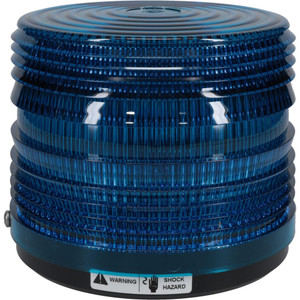
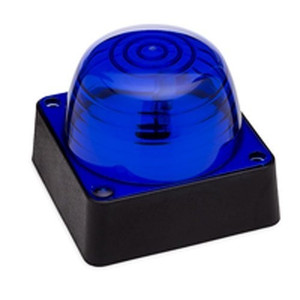
Code Blue 40906 WM-180 SRD Strobe Module
The Code Blue 40906 is a visual notification strobe module designed for integration into Code Blue paging amplifier and alarm notification systems. The WM-180 SRD delivers high-intensity visual alerts that complement audio signaling in multi-sensory notification deployments. Operating across a flexible 12-24V DC supply range, this no-control-required module simplifies installation into existing paging infrastructure without intermediate relay logic or additional wiring complexity. It is suited for facilities requiring synchronized visual and audible alerts across distributed speaker and strobe networks.
Key Features
- Voltage Range: 12-24V DC operation. Flexible supply compatibility reduces power infrastructure constraints and simplifies PSU selection for mixed-voltage installations.
- High-Intensity Strobe Output: Visual alert optimized for line-of-sight notification in large open spaces, corridors, and common areas where audio alone may be insufficient.
- Code Blue Paging System Compatibility: Direct integration with Code Blue paging amplifiers and notification control modules — no intermediary conversion or protocol translation required.
- No-Control Design: Activation tied directly to paging amplifier output; eliminates the need for separate strobe control boards or relay logic, reducing Bill of Materials and installation labor.
- Replacement Part Status: Factory-new OEM component for Code Blue ecosystem refresh or expansion — authentic factory sourcing, not refurbished or surplus inventory.
- Multi-Sensory Alert Integration: Paired with Code Blue audio paging, provides simultaneous visual notification to reach hearing-impaired occupants and deliver alerts in high-noise environments.
The WM-180 SRD addresses a critical requirement in emergency notification and continuous-duty paging deployments: synchronized visual indication that meets ADA compliance expectations and NFPA 72 signaling criteria. In environments ranging from healthcare facilities and educational campuses to industrial plants and transportation hubs, strobe reinforcement of audio messages reduces missed alerts and ensures occupant awareness during critical events. The module's simple no-control activation path — direct wiring to the paging amplifier output — eliminates configuration drift and integration errors that plague multi-layer strobe control schemes.
Operationally, the 12-24V DC range proves valuable in facilities with mixed low-voltage infrastructure. Power can be sourced from the same PSU rail as the paging amplifier, reducing panel real estate and eliminating the need for dedicated strobe power supplies. On large multi-building campuses, distributed strobe modules can operate from 24V runs that already serve door controllers and IP intercoms, simplifying maintenance and reducing spare-parts inventory depth.
Code Blue paging amplifiers (commonly found in education, healthcare, and government installations) integrate the WM-180 SRD through direct wire harness — plug-and-play compatibility with minimal electrical design. The strobe output is sized to drive single or small-group notification zones without load regulation concern. For larger distributed networks, multiple WM-180 modules can be paralleled on independent paging zones to create facility-wide visual coverage.
The no-control design also simplifies troubleshooting. If the paging amplifier delivers output signal, the strobe fires; if it does not, the fault lies upstream in the amplifier or activation logic. This binary behavior eliminates the intermediate strobe controller as a potential failure point — a meaningful operational advantage in facilities where emergency notification system uptime is non-negotiable.
Code Blue WM-180 SRD modules are standard OEM replacement inventory, maintaining continuity with existing Code Blue paging installations. Sourced direct from the manufacturer or US direct manufacturer source — no grey-market or parallel imports. Compatibility extends to all current Code Blue paging amplifier generations that provide strobe control output (12-24V DC logic level or switched power).
Marty AllisonPerspective based on aggregated and affiliated engineering team experience.
We've deployed Code Blue WM-180 SRD modules across healthcare, education, and corporate campuses where synchronized visual and audio notification is mandatory compliance. What makes this particular module valuable in the field is its deliberate simplicity: no microprocessor, no control input firmware, no protocol handshake — just 12-24V DC in, strobe fire out. On a 200-bed hospital or a K-12 district with 15 buildings, that simplicity translates to predictable installation labor, minimal commissioning variance, and near-zero ongoing diagnostics overhead. The paging amplifier activates the strobe; the strobe illuminates. End of story. We've also seen these modules successfully retrofit into older Code Blue installations where the original strobe has failed or where additional notification zones were added years after initial deployment. Since the module is a passive load on the paging amplifier output, there's no risk of impedance mismatch or signal degradation — just verify the 12-24V DC rail is present and within tolerance, connect the harness, and move on. The main operational caveat is light output intensity: the WM-180 SRD is optimized for line-of-sight notification in enclosed spaces and corridors, not for long-range outdoor perimeter signaling. On a 500-foot warehouse floor, you'd want multiple modules zoned to different paging channels, not a single strobe trying to cover the entire space.
Technical Highlights:
- 12-24V DC Dual-Voltage Input: Flexible supply range eliminates the need for dedicated strobe power regulators. A single low-voltage PSU rail can power both the paging amplifier and multiple WM-180 modules, reducing panel footprint and spare-parts inventory. No voltage matching required — the module auto-ranges across the band.
- No-Control Activation Logic: Direct wire connection from paging amplifier output to strobe input. No intermediate relay board, no strobe controller firmware, no commissioning variables. Troubleshooting is binary: signal present → strobe fires; signal absent → no fire. Eliminates a whole category of field integration errors.
- High-Intensity Output Optimized for ADA Compliance: Meets NFPA 72 visual alert candlepower requirements for occupant notification. When paired with Code Blue audio paging, satisfies multi-sensory signaling mandates for hearing-impaired and high-noise environments without additional approval or certification burden.
- Passive Load on Paging Amplifier: The module draws power directly from the 12-24V supply; the paging amplifier output simply gates activation. No impedance matching, no signal conditioning required. Works with all Code Blue amplifier generations that provide switched 12-24V strobe control output.
- Modular Zone Scalability: Multiple WM-180 SRD units can be paralleled on independent paging zones (e.g., Zones 1, 2, 3) to create distributed facility-wide visual coverage. Each zone's strobe fires independently, enabling targeted notifications or facility-wide alerts based on paging logic.
Deployment Considerations:
- Verify the Code Blue paging amplifier provides 12-24V DC strobe control output (switched logic or switched power). If your amplifier is older and provides only audio alert output, you'll need an intermediate relay or strobe controller — the WM-180 SRD cannot be activated by audio-level signals.
- Line-of-sight notification is key. The WM-180 SRD light output is engineered for enclosed spaces (hallways, classrooms, offices, warehouses) where the strobe is visible from most occupant locations. On outdoor perimeters or around opaque building corners, consider multiple modules placed at vantage points rather than relying on a single unit to cover a 300+ foot distance.
- Parallel multiple WM-180 modules if facility size or layout demands visibility in non-contiguous zones. Because the module has no control input beyond the 12-24V activation signal, you can safely wire multiple units to the same paging zone output — they will all fire in synchronization, creating a "flash" effect across a building or floor.
- Power supply redundancy: Code Blue paging systems are often critical infrastructure in healthcare and education. If you're deploying the WM-180 SRD in a site where emergency notification uptime is mission-critical, ensure the 12-24V supply powering the strobe is backed by UPS or redundant PSU architecture. The module itself has no battery backup and will not strobe if primary power is interrupted.
- Maintenance and troubleshooting: Test the strobe output monthly in healthcare and education environments (NFPA 72 requires periodic visual alert system testing). If a strobe module fails to illuminate, verify supply voltage at the harness connector first. If voltage is present and the strobe is non-responsive, the module is likely faulty and should be replaced as a unit — field repair is not practical.
The Code Blue WM-180 SRD is the right choice for facilities with existing Code Blue paging infrastructure who need to add or replace visual alert capability without introducing multi-vendor complexity or additional control platforms. If you're integrating strobe notification into a new paging system or expanding an existing deployment, this module's simplicity and compatibility make it the obvious baseline. Explore the full Code Blue catalog for paging amplifiers, speaker modules, and complementary notification components.