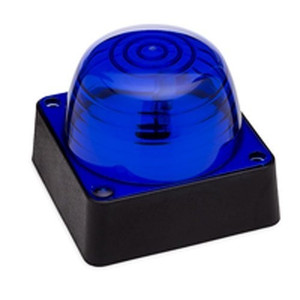
Code Blue 40907 WM-180 SYL Strobe Warning Module
The Code Blue 40907 WM-180 SYL is a strobe warning module designed for integration with security and emergency notification systems. Operating on 12-24V DC, this component provides synchronized visual alert signaling across multi-zone paging and audio installations. It functions as a standalone notification accessory—no control logic embedded—making it ideal for retrofit deployments and systems where strobe indication must remain independent of command or control circuitry.
Key Features
- Voltage Range: 12-24V DC operation. Flexible compatibility with standard security system power supplies and retrofit installations without voltage conversion equipment.
- Strobe Function: Visual alert notification synchronized with audio paging. Increases occupant response time in loud or visually demanding environments.
- No Integrated Control: Standalone strobe module without relay logic or switching intelligence. Simplifies wiring and reduces failure points in simple on/off notification circuits.
- Paging System Integration: Designed as an accessory component for paging amplifiers and audio notification systems. Works downstream of amplifier output or relay trigger without signal conditioning.
- Replacement Part Compatibility: Direct fit for existing Code Blue notification system architectures. Enables field upgrade of older deployments to add or restore visual alert capability.
- Compact Form Factor: Mounts in standard electrical enclosures and notification system cabinets. Minimal footprint for space-constrained installations.
The WM-180 SYL addresses a specific deployment need: sites where visual strobe notification must remain independent of the control or command path. Many legacy security installations separate paging audio from visual alert signaling for fault tolerance—if the control system fails, paging still triggers, and strobe still activates. This module operates in that standalone strobe tier, powered directly from the system DC bus and triggered by a simple relay contact or amplifier output.
Typical installations include multi-tenant office buildings with zone-based emergency notification, warehouse and manufacturing facilities where audible paging alone is insufficient, and campus-style deployments with distributed strobe modules at each building entrance or exit. The 12-24V DC range accommodates both legacy 12V door-strike systems and modern 24V fire-alarm and mass-notification infrastructure, eliminating the need for power-conversion hardware in mixed-voltage environments.
Integration is straightforward: the module accepts a dry contact or low-voltage trigger signal from a paging amplifier relay output, a fire panel, or a mass-notification system controller. No ONVIF, no API, no network dependency—this is intentional. Strobe notification operates out-of-band from IP-based control systems, ensuring that network failures do not silence visual alerts. Code Blue's modular design philosophy prioritizes this kind of independence: notification remains active even if the central system is offline.
As a replacement part, the WM-180 SYL integrates seamlessly into existing Code Blue notification cabinets and multi-module strobe arrays. Field technicians familiar with Code Blue system architecture will recognize the mounting points, connector style, and voltage specifications. Sourced directly from the manufacturer, replacement units are factory-new and carry full manufacturer warranty.
Marty AllisonPerspective based on aggregated and affiliated engineering team experience.
We've installed Code Blue notification systems across higher-ed campuses, healthcare facilities, and corporate office parks where emergency alerting must remain fault-tolerant. The WM-180 SYL occupies a specific but important niche: it's the visual component that stays active when everything else fails. What differentiates this module is its deliberate simplicity. There's no microprocessor, no Ethernet jack, no firmware to update. It's a relay-triggered strobe with a single job. In a mass-notification context, that's not a limitation—it's a feature. We've seen fire systems go down, IP networks drop, and control servers reboot; the strobe still flashes because it's wired directly to a 24V DC bus and a simple trigger contact. For integrators specifying Code Blue systems, the WM-180 SYL is the standard choice when you need visual notification independent of the command layer. It's also the go-to replacement module when a strobe fails mid-deployment and you can't afford downtime waiting for a complex control module to arrive and be programmed.
Technical Highlights:
- 12-24V DC Single Supply: Wide input voltage range eliminates the need for external power conversion in mixed-voltage installations. Supports both legacy 12V systems and modern 24V fire-alarm infrastructure without additional hardware.
- Dry-Contact Trigger Input: Accepts simple relay or solid-state trigger signal from paging amplifier output, fire-alarm panel, or mass-notification system. No logic or signal conditioning required—straightforward wiring reduces installation error.
- Out-of-Band Operation: Operates independently of IP network and central control system. Strobe remains active even if network fails, fire system offline, or central VMS is down—critical for life-safety compliance in high-occupancy facilities.
- Modular Code Blue Ecosystem: Integrates with existing Code Blue notification cabinets, multi-module arrays, and paging amplifier systems. Field-replaceable without re-engineering enclosure layout or trigger wiring.
- Factory-New Genuine Part: Direct manufacturer sourcing ensures authentic Code Blue component with original specifications and full warranty. No grey-market risk on critical life-safety hardware.
Deployment Considerations:
- Trigger Signal Polarity: Verify that the paging amplifier or fire panel output matches the WM-180 SYL input polarity (normally open relay contact vs. active-low signal). Code Blue documentation specifies typical pin assignments—confirm before installation to avoid reversed polarity and non-activation on alarm.
- Strobe Brightness and Distance: The WM-180 SYL provides standard intensity output suitable for indoor office, warehouse, and campus-building deployments. For outdoor or extreme-distance coverage (200+ feet), confirm photometric specifications against site layout before installation. High-output variants exist if standard brightness is insufficient.
- Power Supply Stability: The 12-24V DC bus feeding the strobe module should be backed by a UPS or battery supply rated for life-safety circuits. If powered from a non-regulated supply or a shared commercial branch circuit, install a surge protector and isolation contactor to prevent nuisance tripping or strobe failure during power transients.
- Mounting Orientation: The strobe lens and reflector are directional. Mount at eye level or slightly above to maximize occupant visibility in hallways and common areas. In open warehouse environments, consider multiple WM-180 SYL modules at different heights and locations to ensure 360-degree coverage.
- Maintenance and Testing: Unlike IP-networked notification systems, the WM-180 SYL doesn't report operational status over the network. Include it in monthly manual fire-drill testing and visual inspection protocols to confirm strobe flash. Replace the strobe bulb per Code Blue maintenance schedule (typically 2-3 years depending on utilization).
The WM-180 SYL is the right choice for integrators building fault-tolerant, life-safety-compliant notification systems where visual alert must remain independent of central control. For more Code Blue notification products and system architecture guidance, visit the Code Blue catalog.