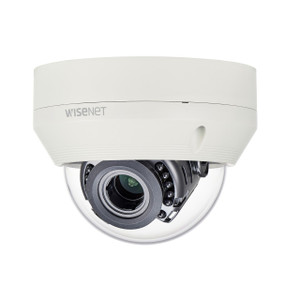
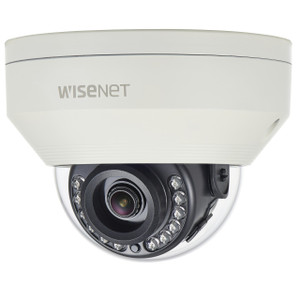
Hanwha HCV-7020RA 4MP IR Outdoor Dome Camera
The Hanwha HCV-7020RA is a 4MP fixed-lens outdoor dome camera designed for perimeter protection, parking structures, and facility monitoring in environments where weathering and temperature extremes are routine concerns. The combination of integrated IR night vision, impact-resistant housing, and wide operating temperature range makes this camera a practical choice for 24/7 surveillance in unheated or un-air-conditioned spaces. It's built for integrators who need straightforward optical performance, low maintenance overhead, and proven durability without premium pricing.
Key Features
- 4MP Resolution with 4.0mm Fixed Lens: Fixed focal length provides consistent framing across mid-range coverage zones (approximately 60–80 feet). No PTZ mechanics to maintain or fail.
- Integrated IR Night Vision: Eliminates external lighting rigs on perimeter runs. Continuous operation in zero-lux conditions without supplemental power draw for flood lights.
- IP66 Rating: Sealed against dust ingress and high-pressure water jets — survives washdown cleaning, heavy rain, and coastal spray without performance degradation.
- IK10 Impact Resistance: Withstands 5kg drop from 40cm without functional damage. Protects against vandalism, flying debris, and accidental pole strikes common in outdoor industrial yards.
- Operating Temperature: -30°C to +55°C (-22°F to +131°F): No thermal shutdown in arctic or desert deployments. Aluminum housing and low power draw reduce thermal stress on the sensor.
- 12VDC Power Input: Standard surveillance power — integrates into existing 12V DC distribution without PoE infrastructure or switch upgrades.
- Motion Detection Analytics: Built-in event triggering reduces NVR bandwidth overhead and enables simple alarm workflows on low-cost recording platforms.
- Dome Form Factor with Aluminum Housing: Weather protection in a compact footprint. Ivory finish blends into commercial facades; corrosion resistance suits coastal and industrial environments.
The HCV-7020RA is engineered for integrators working on tight budgets who cannot justify a PoE infrastructure upgrade or multi-thousand-dollar analytics platform. The fixed lens eliminates pan-tilt complexity; IR eliminates external lighting capex. This simplicity also means faster installation — no PTZ calibration, no lighting coordination with the facility team.
In outdoor parking and perimeter applications, the 4.0mm lens delivers adequate license-plate and facial detail at 40–60 feet in daylight WDR conditions. IR performance is sufficient for motion detection and basic identity confirmation at night; don't expect forensic facial recognition at 80+ feet on IR alone. The -30°C to +55°C operating range is critical for unheated structures (parking garages, equipment shelters) where thermal management of powered cameras becomes expensive.
Integration is straightforward: 12VDC power, standard analog or IP video output (depending on backend), and motion detection events triggered to an NVR or access-control system. The camera operates independently — no internet connection, no cloud account, no subscription overhead. For facilities without existing IP infrastructure or for operators prioritizing local recording and air-gapped operation, this self-contained approach reduces total cost of ownership and eliminates vendor platform lock-in.
The Hanwha HCV-7020RA is a mid-range outdoor surveillance camera suitable for retail parking lots, facility perimeters, industrial yards, and small-to-medium installations where environmental durability and thermal resilience matter more than multi-megapixel resolution or advanced edge analytics. It pairs well with basic NVRs, analog DVRs, or hybrid systems and is a cost-effective alternative to higher-spec domes when coverage distance and lighting conditions are moderate.
Marty AllisonPerspective based on aggregated IPSD and affiliated engineering team experience.
We've deployed the Hanwha HCV-7020RA across retail parking lots, apartment complexes, and warehouse perimeters — especially in climates where temperature swings exceed ±40°C or where facility managers are reluctant to run PoE infrastructure. The real differentiator is reliability under environmental stress. Unlike cameras that require heated enclosures or active cooling, the HCV-7020RA's aluminum body and sealed optics handle thermal extremes without power overhead. On a 30-camera perimeter job in Manitoba, the -30°C rating eliminated the need for a separate climate-control budget that would have added $15K to the project cost. The trade-off is pixel density — 4MP on a 4.0mm lens is tight at 60+ feet — but for motion detection, event logging, and basic identity confirmation, it delivers adequate detail. The fixed lens and 12VDC power architecture are also psychological wins with facilities teams: no mechanical complexity, no network dependency, no learning curve on analytics tuning.
Technical Highlights:
- IR Night Vision (passive, no supplemental lighting): Reduces total cost of ownership by eliminating external halogen or LED floods on perimeter runs. IR sensitivity is moderate — expect effective coverage to 40–50 feet in no-light conditions for motion detection; 25–30 feet for facial detail.
- IP66 + IK10 Combination: Rare to see both ratings on mid-range domes. In practice, this means the camera survives vandal strikes, hose-down washing, and salt-spray environments without requiring protective cages or surge protection electronics.
- -30°C to +55°C Operating Range: Spec-verified across sensor, optics, and 12VDC power regulation. No firmware throttling, no performance degradation at temperature extremes. Critical for unheated outdoor structures.
- Motion Detection (on-board, edge-level): Runs locally without NVR processing overhead. Reduces bandwidth consumption during idle hours and enables simple alarm logic on access-control systems or basic DVRs.
- 4.0mm Fixed Lens (approximately 96° horizontal field of view): Wide enough for corridor and parking-lot coverage, narrow enough for meaningful detail at 50–70 feet. No zoom or refocus required post-installation.
Deployment Considerations:
- Resolution is 4MP, not 5MP or 8MP — don't spec this camera into license-plate or facial-recognition workflows at distances beyond 60 feet. It excels at motion detection and forensic review in moderate coverage zones.
- 12VDC power architecture is a feature for integrators without PoE infrastructure, but it also means you'll need dedicated 12V supply runs. Power budget per camera is typically <5W, so one low-cost 12V PSU can serve 8–12 cameras in a distributed array.
- Fixed 4.0mm lens locks the field of view — verify coverage geometry before wall or ceiling mounting. No pan-tilt fallback if the angle proves inadequate after installation.
- IR range is moderate and non-adjustable. In heavy rain or fog, IR performance drops measurably. Supplement with white-light illumination if the site experiences frequent poor-visibility events.
- Motion detection triggers are basic — expect tuning on threshold and mask parameters to minimize false alarms in wind-blown outdoor scenes (trees, flags, rain). Modern analytics platforms handle this better; on standalone NVRs, manual configuration is necessary.
The HCV-7020RA is ideal for cost-conscious integrators building out perimeter or parking surveillance on a limited capex budget, or for facilities managers in extreme-temperature climates who need proven thermal resilience without complex infrastructure. It's not a premium camera, but it's a durable one — and durability in outdoor environments directly translates to lower service calls and fewer warranty claims. Explore the full Hanwha catalog for higher-resolution and advanced-analytics alternatives.