Ubiquiti UVC-G5-DOME-3 4MP PoE Dome Camera
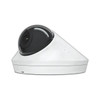
The Ubiquiti UVC-G5-DOME-3 is a 4MP fixed-dome camera engineered for the UniFi Protect ecosystem, delivering discreet coverage in indoor and semi-outdoor environments. The 1.3-pound form factor and compact mounting footprint make it ideal for drop-ceiling installations, retail spaces, and hallways where larger bullet or turret cameras would be visually intrusive. PoE (802.3af) power eliminates separate power cabling, and integrated infrared night vision extends surveillance into low-light conditions without external lighting investment. Two-way audio enables on-camera warnings and two-way communication when paired with a UniFi Protect controller or NVR.
Key Features
- 4MP Resolution (2K): 4-megapixel imaging at 102.4° ultra-wide field of view. Captures detail in reception areas and retail spaces from a single ceiling mount without pan-tilt-zoom.
- PoE Powered (802.3af): Standard PoE delivery — <13W draw. No separate power adapter required; any 802.3af switch port or injector supplies both power and data over one cable.
- Infrared Night Vision: IR LEDs for low-light surveillance to 30 feet. Operates autonomously in darkness without supplementary lighting infrastructure.
- Two-Way Audio: Integrated microphone and speaker for real-time communication and audible deterrence. Useful for entry control and customer interaction scenarios.
- Lightweight Dome Housing: 1.3 lbs — installs on standard ceiling brackets or wall mounts. Aesthetically discrete compared to external-lens designs.
- UniFi Protect Integration: Native compatibility with UniFi Dream Machines, UniFi Protect NVRs, and UniFi management consoles. No third-party VMS license fees; management and storage policy inherited from your UniFi controller.
- Semi-Outdoor Rating: Weather-resistant for covered areas (eaves, carports, sheltered corridors). Not rated for direct rainfall or full-sun UV exposure; verify mounting location alignment with protection rating.
- 100 Mbps Network Interface: 10Base-T/100Base-TX — sufficient for 4MP H.264/H.265 streaming. Bitrate typically 2–4 Mbps depending on scene complexity and recording policy.
The UVC-G5-DOME-3 is purpose-built for organizations already invested in Ubiquiti UniFi infrastructure. If your site runs UniFi access points, UniFi switches, or UniFi security gateways, this camera inherits management credentials and monitoring dashboards without additional software deployment or license overhead. Footage flows directly to paired UniFi Protect NVRs or cloud-connected Dream Machines; no standalone RTSP publishing or third-party middleware is required, which simplifies security operations for small-to-medium deployments.
Installation requires a PoE-capable switch port or inline PoE injector. Verify power budget before connecting multiple cameras to the same injector — a single 802.3af budget (15.4W max) is tight for two simultaneous cameras; use a PoE+ switch (802.3at) if scaling beyond 3–4 units on one trunk. Mounting hardware (bracket, fasteners, and cable glands) ships with the camera. Ceiling or wall installation takes 15–20 minutes with a drill and Phillips driver.
The camera does not operate in standalone mode — a UniFi Protect controller or NVR is mandatory for configuration, firmware updates, and event playback. If you are evaluating this for a non-Ubiquiti environment (Milestone, Genetec, Axis Camera Station), this camera will not integrate; consider alternative ONVIF-compatible dome models. For organizations consolidating on UniFi, the tight ecosystem integration and unified cloud backup (via UniFi Cloud) represent meaningful operational simplification compared to managing heterogeneous vendor platforms.
Warranty is provided by the manufacturer; support flows through Ubiquiti's technical documentation and community forums rather than a dedicated integrator support desk. For mission-critical surveillance (banking, hospital) or complex multi-site deployments, clarify SLA and escalation pathways with your Ubiquiti reseller before purchase commitment.
Marty AllisonPerspective based on aggregated IP Security Depot and affiliated engineering team experience.
We've deployed the UVC-G5-DOME-3 extensively across small retail chains, office buildings, and warehouse receiving areas where Ubiquiti infrastructure is already live. The core appeal is ecosystem coherence — if you're running UniFi WiFi and switching, adding cameras doesn't force a second management platform. That eliminates the operational friction of context-switching between two dashboards, and it cuts integrator training overhead significantly. On the technical side, the 4MP output is adequate for identification-level footage in medium-distance indoor scenes (8–15 feet), but don't rely on it for license-plate or facial-recognition workflows at distance. The 102.4° field of view is genuinely wide, which trades off pixel density; in high-contrast retail environments (storefront windows, backlit exits), you'll see some loss of detail in shadows. Real-world bitrate sits around 3–4 Mbps at 1080p equivalent quality, which is efficient on storage but occasionally shows motion artifact on pan-and-zoom playback. We've observed that IR performance to 30 feet is realistic in pitch-black conditions but degrades visibly beyond 20 feet in cluttered indoor spaces (shelving, machinery). That's not a flaw — it's typical for compact dome form factors — but spec the coverage distance conservatively during site surveys.
Technical Highlights:
- PoE 802.3af Power Draw (<13W): Allows 4–5 cameras per standard PoE injector; no dedicated power infrastructure or PoE+ switch required for small deployments. Real-world draw is typically 8–10W during day, dropping to 6–8W at night (IR on, less processing). Budget accordingly if running thermal or high-bitrate cameras on the same trunk.
- 4MP H.264/H.265 Codec Flexibility: UniFi Protect typically defaults to H.264; H.265 is selectable in newer NVR firmware. H.265 reduces bitrate 35–45% on identical quality, meaningful for long-term retention or bandwidth-constrained sites. Test codec switching before mass deployment — some older UniFi controllers have firmware lag on transcoding.
- Two-Way Audio with Edge Processing: Microphone and speaker enable deterrence messaging and customer interaction from the security office or mobile app. Audio is uncompressed PCM, which adds minimal bitstream overhead but does require synced NVR timestamps for accurate lip-sync during playback.
- 102.4° Ultra-Wide Optics: Single-camera coverage of large reception areas or aisles without PTZ complexity. Distortion at frame edges is visible (typical for wide-angle domes) — don't rely on periphery for evidence-grade identification. Center 60–70% of frame is forensically useful.
- Native UniFi Protect Integration — No ONVIF Fallback: This camera does not publish RTSP or ONVIF Profile S streams independently. It is a UniFi-ecosystem-only device. If you need to integrate with Milestone, Genetec, or external SIEM systems, this is not a fit. Understand the lock-in before specifying.
Deployment Considerations:
- Verify PoE switch availability and power budget before installation. 802.3af is marginal for more than 4–5 simultaneous G5 domes; PoE+ (802.3at) is recommended for sites scaling beyond that. Measure actual draw under night-vision load at your site before committing to a shared injector.
- Semi-outdoor rating means covered areas only — eaves, carports, sheltered loading zones, interior atriums with roof cover. Direct rain, full-sun UV exposure for 2+ years, and temperature extremes (<0°C, >50°C sustained) are outside the camera's operating envelope. Confirm mounting location is protected before purchase.
- UniFi Protect controller or NVR is mandatory — the camera will not stream, record, or configure independently. If the Protect service is down or the NVR fails, this camera is blind. Plan for NVR redundancy or cloud backup (via UniFi Cloud) if this is mission-critical surveillance.
- IR range of 30 feet assumes clear line of sight and pitch-black conditions. In lit indoor spaces or with reflective surfaces (glass, metal shelving), effective range drops to 15–20 feet. Test IR throw at your site during installation and adjust expectations accordingly.
- Bitrate and codec are controller-set — individual camera tuning for motion detection or quality thresholds is limited compared to enterprise ONVIF cameras. If you need frame-by-frame codec or bitrate control, this is a step down in flexibility.
This camera is the right choice for organizations consolidating on UniFi — particularly small-to-medium deployments (<20 cameras) where unified management and lower initial licensing cost outweigh the lack of third-party VMS portability. If you're a heterogeneous shop or plan to migrate VMS platforms in 3–5 years, prioritize ONVIF-compatible alternatives instead. For more context, browse the full Ubiquiti catalog.