Ubiquiti UTP-TOUCHMAX SIP VoIP Phone
Overview
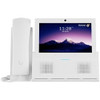
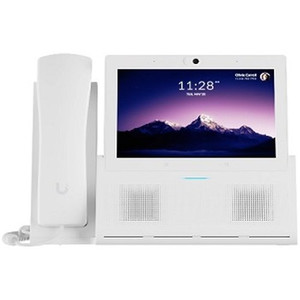
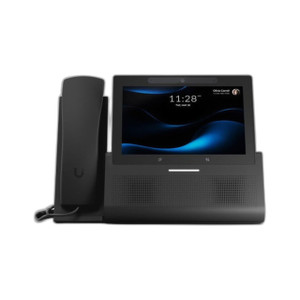
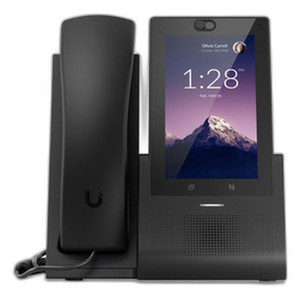
The Ubiquiti UTP-TOUCHMAX is a desktop IP phone engineered for enterprise VoIP deployments within UniFi ecosystems. This device delivers standard SIP-based telephony with integrated management through the UniFi Controller platform, making it a straightforward choice for organizations seeking to consolidate voice infrastructure with existing network management workflows. Weighing 3.55 pounds with a compact desktop footprint, the UTP-TOUCHMAX is purpose-built for office environments where both aesthetic integration and operational reliability matter. The phone integrates directly into the UniFi Talk ecosystem, eliminating the need for proprietary PBX infrastructure if your organization is already standardized on Ubiquiti networking equipment.
Key Features
- SIP Protocol Support: Standard SIP compliance ensures compatibility with most commercial VoIP carriers and on-premise SIP servers—you're not locked into Ubiquiti's calling infrastructure. If you switch carriers or deploy a different PBX later, the phone remains deployable without replacement.
- UniFi Controller Provisioning: Configuration, firmware updates, and fleet management happen through UniFi Controller rather than through a separate phone system interface. For teams already managing Ubiquiti switches, APs, and security gateways, this eliminates context-switching and reduces the number of management platforms you need to maintain.
- PoE Power Delivery: The UTP-TOUCHMAX draws power from standard 802.3af PoE, eliminating the need for a separate AC adapter at the desk. This simplifies cabling (one Ethernet drop per phone) and reduces clutter—meaningful when deploying dozens of phones across multiple office locations.
- Desktop Form Factor: Compact and designed for traditional desk mounting, the device integrates visually with standard office setups. No special mounting hardware or wall cuts required; it sits on a shelf, desk, or monitor stand.
- Centralized Management: All phones report to UniFi Controller, so you can push configuration updates, monitor call quality, and troubleshoot connectivity issues from a single console. This scales well in multi-site deployments where manual per-phone configuration would be impractical.
- Enterprise Deployment Readiness: The phone is designed for organizations running standardized Ubiquiti infrastructure across branch offices, campuses, or distributed facilities. If you're mixing multiple vendors (Cisco, Avaya, traditional PBX), the UTP-TOUCHMAX works less seamlessly; traditional SIP phones offer broader platform independence.
Integration and Compatibility
SIP protocol compliance is the bridge here: the UTP-TOUCHMAX works with any SIP-compliant carrier or on-premise server (Asterisk, FreePBX, etc.). That said, the most frictionless deployments happen when you're running UniFi infrastructure end-to-end—network switches, APs, security gateways, and phones all converge in one management console. If your organization is heterogeneous (mixed vendors), the phone still functions but loses the unified management advantage. For integrators standardizing customer sites on Ubiquiti, the UTP-TOUCHMAX simplifies training, documentation, and support workflows because voice operations blend into the existing network management topology.
Deployment Scenarios
Consider the UTP-TOUCHMAX for: multi-site SMBs standardizing entirely on Ubiquiti; enterprise departments or branch offices extending UniFi voice services without introducing a separate telephony platform; organizations seeking to retire legacy PBX hardware and consolidate onto SIP-based systems; and integrators building turnkey UniFi-managed network solutions where voice is part of the package. It's less suitable for organizations with legacy PBX dependencies, multi-vendor network stacks, or highly specialized call-routing requirements that demand deep PBX customization.
Frequently Asked Questions
Q: Does the UTP-TOUCHMAX require a UniFi Controller to operate?
A: The phone functions as a standard SIP device without a Controller, but management capabilities—remote provisioning, firmware updates, configuration distribution—require UniFi Controller. For single-phone deployments or those without a Controller, manual configuration is possible, but you lose the operational efficiency benefits.
Q: Can I use the UTP-TOUCHMAX with my existing VoIP carrier?
A: Yes. SIP protocol compliance allows the phone to register with any standard SIP carrier or on-premise SIP server. You're not restricted to Ubiquiti's calling service.
Q: What's the power consumption?
A: The phone operates via standard 802.3af PoE. Exact wattage specifications are available in the manufacturer datasheet; ensure your PoE switch has sufficient per-port budget if deploying many phones on the same switch.
Q: Is the UTP-TOUCHMAX suitable for remote/home office workers?
A: Yes, provided home internet is stable and you have PoE delivery at the desk (via PoE injector or PoE switch). The compact form factor and simple provisioning make it feasible for distributed workforces.
Q: What happens if the UniFi Controller goes offline?
A: Phones configured and already commissioned continue to make/receive calls via the SIP server. Controller outages don't disrupt active calls, but you lose the ability to remotely manage or update phones until the Controller is restored.
Ted PerryPerspective based on aggregated IP Security Depot and affiliated engineering team experience.
The Ubiquiti UTP-TOUCHMAX (often searched as UTP TOUCHMAX) is a competent SIP phone that shines in one specific context: organizations already committed to UniFi infrastructure. If your customer base or internal deployment is Ubiquiti-centric—switches, APs, gateways, the whole stack—the unified management plane is a genuine operational win. You stop juggling separate phone system interfaces and start managing voice through the same console that handles your network. That efficiency compounds when you're managing fleets across multiple sites.
Technical Highlights:
- PoE (802.3af) Power Delivery: Draws standard PoE power over a single Ethernet cable. No AC adapters at desks, no extra power planning headaches. This is table-stakes for modern VoIP, and the UTP-TOUCHMAX handles it cleanly.
- SIP Protocol Compliance: Open standards mean the phone isn't vendor-locked. You can integrate with Asterisk, FreePBX, or any commercial SIP carrier. If UniFi doesn't work out long-term, the phone remains deployable on standard SIP infrastructure.
- 3.55 lb Compact Desktop Form Factor: No special mounting, no wall cuts, minimal aesthetic disruption. Drop it on a desk or shelf. For office workers, this is much less intrusive than a wall-mounted unit.
Deployment Considerations:
- Controller dependency for provisioning and updates: if you lack UniFi Controller infrastructure or are unwilling to deploy it, you lose the key management advantage and reduce the UTP-TOUCHMAX to a basic SIP phone.
- Mixed-vendor environments are awkward: if your customer runs Cisco APs, Juniper switches, and Fortinet firewalls, the Ubiquiti phone doesn't integrate with their existing management plane, and you're maintaining yet another separate system.
The UTP-TOUCHMAX is the right call for greenfield UniFi rollouts where you're standardizing the entire network stack, or for organizations already running Ubiquiti and looking to consolidate voice. For integrators in heterogeneous environments, stick with traditional SIP phones and a separate PBX or hosted service.