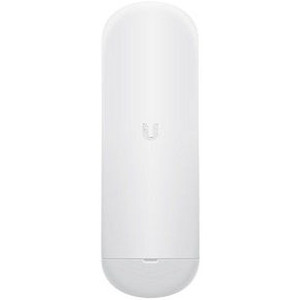
Ubiquiti PBE-2AC-400-US Outdoor Wireless Bridge
Overview
The Ubiquiti PBE-2AC-400-US is an external wireless bridge engineered for point-to-point and point-to-multipoint deployments spanning medium to long distances. Built on AirMax ac protocol, this unit delivers 330 Mbps throughput—a conservative rating that reflects actual measured performance under standard operating conditions, avoiding the inflated claims common in consumer-grade equipment. The compact external form factor with integrated antenna simplifies field deployment while maintaining consistent performance across varied environmental conditions. As part of the UISP Wireless ecosystem, the PBE-2AC-400-US integrates with Ubiquiti's unified management platform, enabling centralized configuration, monitoring, and remote firmware updates across distributed infrastructure without site visits.
Key Features
- 330 Mbps Throughput: This figure is based on real-world testing, not theoretical maximum. You'll see sustained performance that matches specs—critical when sizing backhaul links for multiple access points or surveillance feeds that cannot tolerate dropouts.
- AirMax ac Technology: A mature, field-proven standard optimized for outdoor point-to-point and point-to-multipoint bridging. AirMax ac eliminates many contention issues found in standard Wi-Fi, improving reliability over distance and in interference-prone environments.
- Integrated Antenna Design: No separate radome or external antenna required. The integrated design reduces component count, simplifies mounting, and eliminates a common failure point—weather sealing at antenna connectors. One less thing to troubleshoot in the field.
- 3.2 Pounds, Compact Form Factor: Lightweight enough to mount on poles, towers, or walls without heavy-duty reinforcement. This weight also means lower wind load and less stress on aging mast hardware—important when retrofitting older infrastructure.
- PoE and AC Power Options: Accepts 802.3af PoE or included AC adapter. PoE delivery eliminates the need for local electrical infrastructure at remote sites, a significant cost and reliability advantage when extending service to warehouses, secondary facilities, or rural branches.
- Layer 2 Transparency: Acts as a transparent Ethernet bridge—no routing configuration, no IP subnet planning. Plug in upstream and downstream network cables, and the unit extends your existing network segment seamlessly. This simplicity cuts deployment time and reduces configuration errors.
- UISP Management Integration: Centralized dashboard for configuration, real-time link monitoring, and firmware updates. Pair with UniFi gateways and switches for complete managed backhaul solutions, or deploy standalone for simple point-to-point connectivity between network segments.
- Line-of-Sight Requirement: Typical operating range depends on antenna gain, environment, and RF interference, but generally supports distances of several hundred meters to over a kilometer in clear conditions. You must validate link quality during site survey—no exceptions.
Deployment Scenarios
The PBE-2AC-400-US excels as a campus interconnect, remote office backhaul, and rural broadband extension platform. Deploy in pairs for symmetric point-to-point links between buildings, use one as an access point with multiple units as clients in point-to-multipoint topologies, or combine with a network video recorder to backhaul distributed surveillance feeds. Common scenarios include connecting a main facility to a warehouse or secondary office, providing aggregated backhaul from multiple wireless access points, or extending broadband service to areas where fiber or copper installation proves cost-prohibitive. The 330 Mbps rating supports concurrent VoIP, video surveillance, and general data traffic without requiring licensed spectrum—suitable for enterprises that want to avoid spectrum licensing complexity and cost.
Integration and Compatibility
The PBE-2AC-400-US bridges into existing Ubiquiti deployments through the UISP management platform or legacy UniFi workflows. Its layer 2 transparency means it works with any network architecture—switches, gateways, PoE injectors, and access points—as long as line-of-sight exists. Firmware updates occur remotely via UISP or SSH console, minimizing the need for physical site visits. Document link quality baselines (signal strength, noise floor, throughput) after commissioning to establish performance benchmarks for future troubleshooting and capacity planning.
Installation Essentials
Mount the PBE-2AC-400-US on poles, towers, or walls using standard bracket hardware compatible with its external enclosure. Ensure unobstructed line-of-sight between paired units—trees, buildings, and terrain degrade signal. Position antennas using a site survey tool (mobile app or dedicated spectrum analyzer) to identify optimal alignment. Power delivery via PoE simplifies remote installation; pair with a managed PoE switch for integrated power and network delivery. Firmware is managed through the UISP interface without physical access, allowing remote deployment and updates across multiple sites from a central management station.
Frequently Asked Questions
Q: What's the maximum range of the PBE-2AC-400-US?
A: Range depends on antenna gain, RF interference, and terrain. In clear line-of-sight conditions, expect reliable links from several hundred meters to over one kilometer. A site survey with a spectrum analyzer or RF planning tool is required to validate coverage and interference before deployment.
Q: Can I power the PBE-2AC-400-US over Ethernet cable?
A: Yes. The unit accepts 802.3af PoE, so a standard PoE switch or injector can deliver both power and network connectivity over a single Cat5e or Cat6 run. The included AC adapter is a fallback for installations without PoE infrastructure.
Q: Does the PBE-2AC-400-US work with non-Ubiquiti equipment?
A: Yes, as a layer 2 bridge it is transparent to any IP network. You can use it with third-party switches, gateways, and access points. Management via UISP is Ubiquiti-only, but basic connectivity requires no Ubiquiti software.
Q: What is the typical throughput I should expect in the field?
A: The 330 Mbps rating reflects real-world sustained throughput, not theoretical maximum. Actual performance varies with distance, interference, and antenna alignment. Budget for 60–80% of rated speed under typical conditions with modest interference.
Q: Do I need to configure routing or subnetting for the PBE-2AC-400-US?
A: No. The unit operates as a transparent layer 2 bridge. Plug in cables and it extends your network segment without routing configuration. This is a major deployment advantage over routed wireless solutions.
Q: Can the PBE-2AC-400-US be mounted on existing poles or towers?
A: Yes. At 3.2 pounds, it mounts on standard poles and towers using common hardware. Confirm that line-of-sight is clear and antenna orientation is optimized before final installation.
Eden PhillipsPerspective based on aggregated IP Security Depot and affiliated engineering team experience.
The PBE-2AC-400-US delivers reliable midrange backhaul without the complexity or cost of licensed-spectrum equipment. The 330 Mbps rating is conservative—you'll see real throughput numbers that match specs, not marketing fantasy. For campus or remote-site connectivity, pair these units and size your upstream access points or gateways accordingly. The external form factor and integrated antenna mean no weather sealing surprises, and the 3.2-pound weight works on most existing poles without reinforcement.
Technical Highlights:
- 330 Mbps AirMax ac Throughput: Conservative real-world rating suitable for simultaneous VoIP, video surveillance, and data backhaul. No inflated figures—budget 60–80% effective throughput after overhead and interference losses in typical deployments.
- 802.3af PoE Power: Eliminates local electrical infrastructure at remote sites. A single Cat5e/Cat6 cable from a PoE switch delivers power and network connectivity—major cost savings when extending service to warehouses or secondary facilities without AC power.
- Layer 2 Transparency: Zero routing configuration required. The unit acts as a transparent Ethernet bridge, extending your existing network segment without subnet planning or IP address management overhead.
- Integrated Antenna Design: Removes a common field failure point—weather sealing at external antenna connectors. Simpler to install and maintain, especially in high-humidity or coastal environments.
Deployment Considerations:
- Line-of-sight is mandatory. Trees, buildings, and terrain degrade signal strength—conduct a site survey before committing to deployment. Use a spectrum analyzer or mobile RF planning tool to identify interference sources and optimal antenna orientation.
- Distance performance depends heavily on antenna gain and RF environment. Clear conditions yield links from 300 meters to over 1 kilometer. Dense urban or industrial settings reduce effective range—validate with a test link before full deployment.
- Firmware updates occur remotely via UISP or SSH—no physical site visit required. This is a real advantage for distributed installations across multiple remote locations.
Deploy the PBE-2AC-400-US when you need to bridge network segments across campus grounds, extend broadband to a secondary office, or aggregate backhaul from distributed wireless access points in areas where fiber or copper runs are cost-prohibitive. Pair two units for symmetric point-to-point links, or use one as an access point with multiple clients for point-to-multipoint topologies. In warehouse automation or logistics environments, this bridge provides reliable backhaul for mobile devices and IoT sensors without the spectrum licensing complexity of cellular alternatives.