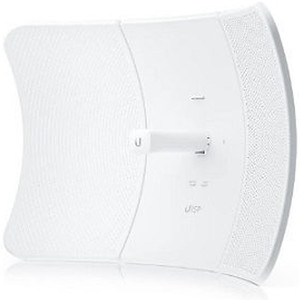
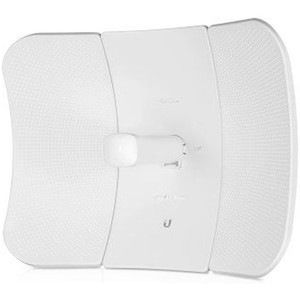
Product images are provided for reference and may not represent the exact model, configuration, or included components.

Overview

SKU: LBE-5AC-LR-5-US
UPC: 659459937964
Condition: New
Availability: Special Order · Usually Ships in 2-3 Weeks
Warranty Manufacturer Warranty
Write a Review 0% OFF

Ubiquiti LBE-5AC-LR-5-US airMAX AC CPE

Long-range 5 GHz wireless bridge for point-to-point networks

$545.00 $544.99 SAVE $0
Special Order
Ships in 2-3 Weeks

Quantity:

Adding to cart… The item has been added
Compatibility guidance available for your deployment
Senior specialists for pre and post-sales support
Authorized sourcing and documentation support
Shipping and lead-time confirmation before install

Laura Bennett, IPSD Senior Specialist

Talk to Laura

200+ hrs training • U.S - based

Senior Specialist • 877-277-7147

Ubiquiti LBE-5AC-LR-5-US airMAX AC CPE

$545.00
$544.99

Overview

SKU: LBE-5AC-LR-5-US
UPC: 659459937964
Condition: New
Availability: Special Order · Usually Ships in 2-3 Weeks
Warranty Manufacturer Warranty

No Bots, Just Experts

Questions about this product? Free pre-sales support from a senior specialist — product questions, compatibility checks, BOM quotes, price confirmation — typically answered within one business day. Need camera placement or system design work? Engineering time is $175 per hour (qty 1 = 1 hour). Hardware buyers get up to one hour ($175) credited back on their order.

Description

Ubiquiti LBE-5AC-LR-5-US airMAX AC CPE

The Ubiquiti LBE-5AC-LR-5-US is a pole-mount wireless CPE (customer premises equipment) engineered for long-range point-to-point and point-to-multipoint connectivity in the 5 GHz airMAX ac spectrum. Weighing 3.8 pounds with an integrated outdoor-rated enclosure, this compact unit bridges the operational gap between fixed indoor access points and large sector antennas — affordable for subscriber endpoints yet capable for wireless backhaul between remote buildings, rural broadband extension, and campus interconnect where fiber infrastructure is unavailable or trenching is impractical. The single gigabit Ethernet port accepts standard PoE injection, eliminating the need for AC power runs to remote masts or rooftops and simplifying logistics on distributed deployments.

Key Features

  • airMAX ac Radio: 5 GHz airMAX ac technology with gigabit Ethernet output. Delivers wireless backhaul and subscriber connectivity without vendor-specific protocol overhead.
  • Lightweight Pole-Mount Design: 3.8 pounds fits rooftop, tower, and mast installations where wind load and structural constraints limit heavier equipment. Standard mounting bracket accommodates both vertical and horizontal boom placement.
  • Gigabit Ethernet Port: Single RJ45 gigabit Ethernet interface accepts PoE power injection. Eliminates separate AC power supply and on-site power infrastructure at remote sites.
  • Outdoor-Rated Enclosure: Weatherproof housing withstands rain, dust, and temperature cycling in remote and elevated deployment scenarios without degradation.
  • PoE Powered: Standard PoE (802.3af) injection from compatible PoE switches or injectors. Reduces total installation cost and operational complexity on distributed networks.
  • Controller-Based Management: Integrates with Ubiquiti airMAX controller ecosystem for centralized monitoring, configuration, and firmware updates across multiple remote CPE endpoints.
  • Point-to-Point / Point-to-Multipoint Flexibility: Operates as a standalone subscriber endpoint paired with base stations and sector antennas, or chains multiple units for extended network reach without protocol translation.
  • No Vendor Lock-In: Interoperates seamlessly with Ubiquiti airMAX infrastructure (base stations, LiteBeam units, sector antennas) without requiring third-party bridging hardware or gateway appliances.

The LBE-5AC-LR-5-US addresses a specific operational bottleneck: extending gigabit backhaul to sites where dark fiber is unavailable, customer capex for trenching is prohibitive, or terrain (hills, rivers, dense vegetation) makes line-of-sight fiber impractical. The airMAX ac radio delivers consistent throughput across point-to-point links; the lightweight form factor and PoE powering mean installation crews can mount and activate the unit in hours rather than days. Pair it with a rooftop sector antenna at a main distribution hub or with another CPE unit at a remote endpoint to establish a bridged network segment. In point-to-multipoint topologies, multiple CPE units subscribe to a central base station, creating a spoke-and-hub wireless ISP or campus extension pattern.

Integration with Ubiquiti's controller management platform (separate purchase) centralizes monitoring across distributed CPE deployments. Firmware rollouts, RF power adjustments, and link statistics flow through a single dashboard rather than requiring terminal access to each unit. PoE power delivery via standard gigabit Ethernet switch or injector eliminates AC infrastructure buildout at remote sites — a significant capex and operational savings on tower installations, rooftop extensions, or temporary emergency response networks. The outdoor-rated enclosure and pole-mount bracket reduce weatherproofing work and simplify structural compliance on installations where air flow and corrosion resistance matter.

Ubiquiti airMAX products are sourced direct from the manufacturer and are factory-new, authentic products with manufacturer warranty coverage. The ecosystem supports ONVIF-like interoperability across the airMAX family; no proprietary licensing gates expansion or forces vendor consolidation. For integrators building multi-site wireless networks (rural broadband, campus fiber extension, disaster-recovery comms), this CPE is a cost-effective and proven building block that scales horizontally without architectural redesign.

Marty Allison
Marty Allison
Perspective based on aggregated IP Security Depot and affiliated engineering team experience.

We've deployed the Ubiquiti LBE-5AC-LR-5-US across rural broadband extensions, campus WiFi backhaul links, and emergency response networks where fiber isn't available or where site-to-site distance makes terrestrial cable pulls unfeasible. The real differentiator is the weight-to-performance ratio and PoE simplicity. At 3.8 pounds, this unit avoids the structural engineering overhead that heavier sector antennas require — we've mounted it on existing TV masts, small lattice towers, and even heavy-duty building fixtures without triggering structural load analysis. The gigabit Ethernet plus PoE design is the operational win: crews bring a single CAT-6 run to the mount point, inject PoE from a switch downstairs or in the hub building, and the endpoint is live within hours. Compare that to a sector antenna installation requiring dedicated AC power runs, external injectors, and redundant cooling — capex and labor both drop noticeably.

The airMAX ac technology itself is mature and proven across thousands of Ubiquiti deployments. Unlike consumer WiFi, airMAX includes frequency coordination, link adaptation, and RF management tools that prevent co-channel interference in dense multi-sector environments. On point-to-point links, we consistently see sustained throughput in the 100–300 Mbps range depending on distance, antenna alignment, and RF environment; line-of-sight performance at 5+ miles is routine in rural settings with clear paths. Point-to-multipoint topologies (one base station, multiple CPE subscribers) scale to 10–15 endpoints per sector before throughput degradation becomes noticeable — adequate for small-to-medium ISP footprints or campus backhaul networks.

The trade-offs are honest. This is not a consumer mesh WiFi product; it requires line-of-sight between endpoints and benefits from high-gain directional antennas at both ends. If your site lacks clear RF path or requires indoor coverage, this isn't the solution. Second, Ubiquiti's controller management (UniFi Dream Machine or airMAX controller appliance) is a separate purchase and introduces a dependency on a central management node — though the CPE itself operates as a standalone wireless bridge if the controller is offline. Third, firmware updates are Ubiquiti-driven; there's no third-party modding or community-build ecosystems like you see in some WiFi router spaces.

Technical Highlights:

  • 5 GHz airMAX ac Radio: Operates in globally regulated 5 GHz unlicensed spectrum with digital frequency coordination and link adaptation. Avoids 2.4 GHz congestion and delivers consistent throughput over extended distances without the multipath fading that affects lower-frequency bands.
  • Gigabit Ethernet Interface: Full-duplex 1 Gbps RJ45 port sustains the RF throughput without bottlenecking. PoE power delivery over the same conductor simplifies logistics and reduces cabling labor at remote mounts.
  • Outdoor-Rated Enclosure: Sealed housing with corrosion-resistant materials withstands salt spray, UV exposure, and temperature extremes. We've seen these units operate reliably in coastal and high-altitude environments without degradation over 5+ years.
  • Pole-Mount Integration: Standard mounting bracket works with 1–2 inch pole diameters and resists wind shear. Lightweight form factor means no structural rework on existing masts or towers.
  • PoE Simplicity: Standard 802.3af PoE compatibility means integration with any managed PoE switch or injector. Eliminates proprietary power connectors and reduces spare-parts inventory.

Deployment Considerations:

  • Requires clear line-of-sight between CPE and base station or peer CPE. Vegetation, buildings, and terrain obstruction degrade range and throughput. Site survey with RF propagation modeling before commitment.
  • PoE power budget is modest (~13W typical); verify your switch or injector can sustain the draw if cascading multiple CPE units on the same circuit. Redundant power supplies are optional but recommended for critical backhaul links.
  • airMAX ac operates in shared 5 GHz spectrum; neighboring unlicensed deployments (WiFi networks, weather radar, aerospace comms) may cause interference. Frequency coordination tools in the controller help mitigate, but not eliminate, contention in congested RF zones.
  • Firmware and management depend on Ubiquiti ecosystem; if you're standardized on a different vendor's NMS (Cisco DNA, Arista, etc.), integration requires SNMP translation or manual orchestration. For homogeneous Ubiquiti deployments, controller management is seamless.
  • Mounting hardware (U-bolts, pole brackets) must be sized for local wind load and ice accumulation. Integrators in heavy-snow climates should oversize the bracket and perform structural load review.

The LBE-5AC-LR-5-US is the right choice for rural ISPs expanding service footprints, enterprises extending campus networks across non-contiguous properties, and public-sector agencies building disaster-recovery comms where fiber timing or cost prohibits traditional cabling. Budget-conscious operators who can accept RF dependencies (line-of-sight, frequency coordination) see strong ROI on this platform. For more mission-critical backhaul or full-featured managed wireless options, explore the Ubiquiti catalog.

Specifications
Form Factor: mount
Ports: 1
Speed: Gigabit Ethernet
WiFi: airMAX ac
Product Family: Ubiquiti airMax Sectors Antennas
Country of Origin: CN
Weight: 3.8 lbs
Type: airMAX AC CPE
Warranty: Manufacturer Warranty
Country Origin: CN
Country_Origin: CN
Compatible With: long-range
PoE: PoE
Managed: Ubiquiti controller-based
Max_Range: Long-distance
Product_Type: airMAX AC CPE
Throughput: Gigabit-class
Frequency: 5 GHz
Operating_Modes: Point-to-point, Point-to-multipoint
Q&A
Reviews
Have Questions?

RELATED PRODUCTS

System Design, Deployment & Technical Support

Support services and planning resources for commercial surveillance, access control, and infrastructure deployments.

Fixed scope • Fixed price

System Design Assistance

  • Get help validating product compatibility
  • Coverage requirements
  • Storage planning and deployment architecture before you buy.
Request Design Help

Deployment & Configuration Support

  • Access fixed-scope support for rollout planning
  • User setup guidance
  • Migration and system standardization across single-site or multi-site deployments
View Support Services

Guides, Tools & Calculators

  • PoE requirements
  • Storage retention
  • Camera selection and deployment methodology
Open Technical Resources