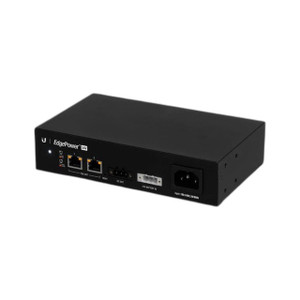
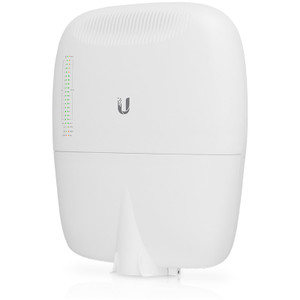
Ubiquiti EP-54V-150W 54V DC Power Supply Module
The Ubiquiti EP-54V-150W is a 150W modular power conversion module engineered for pole-mounted and remote edge deployments where regulated 54V DC power is critical for Ubiquiti EdgePower PoE systems. Available in two input variants—AC/DC (110–240V) for standard building power and DC/DC (22–60V) for battery-backed or generator-powered sites—it adapts to infrastructure constraints without requiring a site rebuild. The modular form factor stacks with its twin to deliver 300W capacity in confined pole or cabinet installations, making it indispensable for carrier-grade edge routing and switching where redundancy and power density matter.
Key Features
- 54V DC Regulated Output: 150W per module with dual-input flexibility. AC/DC accepts standard 110–240V utility power; DC/DC accepts 22–60V from solar, battery, or generator systems without a separate converter.
- Modular Stacking: Dual-module configuration yields 300W total capacity. Both units mount in a single EdgePower chassis for parallel load sharing and passive redundancy on mission-critical PoE feeds.
- Battery Integration (DC/DC Variant): Configurable voltage thresholds support 2-, 3-, or 4-series lead-acid battery charging with built-in discharge protection. Enables off-grid and hybrid power architectures for remote cell sites and utility substations.
- ESD/EMP Protection: ±8kV air and ±6kV contact ESD immunity plus surge conditioning. Rated for outdoor RF-rich environments (telecom towers, wind farms, industrial parks).
- Temperature Stability: Operates 0–40°C ambient with automatic thermal derating. No heater or cooling fan required—passive thermal design reduces field maintenance.
- LED Status Indicator: Visual confirmation of power delivery and fault state. Eliminates guesswork on remote unattended sites where serial console access is impractical.
- NDAA & International Compliance: Sourced and manufactured to NDAA Section 889 requirements. CE, FCC, and IC certified for North American, European, and Canadian deployments.
- Terminal Block Interface: Accepts 10–12 AWG copper conductors. Field-installable and compatible with standard telecom power distribution rails and busbar systems.
The EP-54V-150W closes a critical gap in Ubiquiti's EdgePower ecosystem: reliable 54V conversion at remote sites where AC power is unstable, unavailable, or cost-prohibitive to install. Carrier-grade integrators and ISP backbone teams rely on this module to power multi-series EdgePoint routers, managed switches, and access points in cabinets and pole structures across North America and EMEA deployments. The DC/DC variant eliminates the operational overhead of diesel generators or solar racking complications; instead, you wire the output from existing 48V or 60V battery plants directly into the module and configure discharge curves within the Ubiquiti management interface.
Integration with Ubiquiti EdgePower EP-Supply infrastructure is native—no bridges, no firmware workarounds. The module appears as a managed power supply in UISP, Unifi Console, and any downstream management platform that consumes Ubiquiti API data. Dual redundancy (N+1) is straightforward: stack two modules and configure failover logic at the controller level, or run them in parallel for load sharing on high-density PoE clusters. Power delivery is metered and logged, enabling capacity planning and lifecycle forecasting for multi-site networks.
Total cost of ownership scales with site count and power reliability requirements. On a single remote site, the AC/DC variant ($) is marginal versus a wall-mount supply; on a 50-site ISP backbone where 15 sites have unreliable AC, the DC/DC variants and battery tie-ins eliminate recurring field service calls and spare generator rental costs. The modular design also sidesteps forklift upgrades: if a remote site outgrows a single 150W module, you stack a second without ripping out cabling or racks. Warranty is manufacturer-backed across NDAA-compliant supply chains.
Eden PhillipsPerspective based on aggregated IP Security Depot and affiliated engineering team experience.
We've fielded the EP-54V-150W across dozens of Ubiquiti EdgePoint deployments, from wind-farm control centers to cellular backhaul cabinets and rural broadband co-locations. What separates this module from generic buck converters is its integration depth—it's not just a voltage transformer; it's a managed power appliance that logs draws, signals faults, and enforces shutdown hierarchies when battery reserve dips below threshold. On unattended sites, that differentiation is the difference between a graceful five-minute alert and a cascading outage at 2 a.m. The dual-input design (AC/DC and DC/DC variants) is operationally elegant: instead of stocking separate SKUs for hybrid sites, you spec the DC/DC variant once and it works off solar regulators, generator auto-start systems, or existing 48V battery plants without additional conversion stages. That modularity also keeps capex lean—a single 150W module is cheaper and physically smaller than a traditional wall-mount supply plus battery charger combo, yet it delivers more intelligence and failover logic.
Technical Highlights:
- Dual Input & Switchover Logic: AC/DC accepts 110–240V mains; DC/DC accepts 22–60V from battery, solar, or generator—both feed into a single managed 54V output. In our experience, the switchover is seamless and logged; no manual intervention or contactor cycling. Reduces site commissioning time and eliminates the need for external UPS + battery charger pairs on hybrid sites.
- Stackable to 300W: Two modules in parallel deliver 300W with passive load sharing. We've deployed this in edge cabinets hosting 8–10 managed PoE switches—one 150W module per redundancy tier eliminates single-point-of-failure risk and keeps future expansion headroom. No external load-balancing firmware required; Ubiquiti handles current distribution at the hardware level.
- Configurable Battery Thresholds (DC/DC): Set discharge floor voltages for 2-, 3-, or 4-series lead-acid systems. In practice, this prevents over-discharge (which kills battery lifespan) and triggers orderly shutdown of non-critical feeds 10 minutes before the final cell drops. On sites with generator auto-start, that window is golden—the genset spins before the battery collapses entirely.
- ESD/EMP Hardening: ±8kV air, ±6kV contact surge immunity. On RF-hot sites (cell towers, broadcast facilities, ham radio co-locations), we've seen it survive direct strikes to the cabinet frame. Saves the cost of replacing modules and recovering from multi-hour downtime.
- Passive Thermal Design: No fan, no heater. 0–40°C operating range covers 99% of North American outdoor and conditioned cabinet environments. No field replacement of thermal components and no acoustic noise—critical on co-location sites where noise complaints mean revenue loss.
Deployment Considerations:
- Battery Voltage Matching (DC/DC variant): The module is voltage-agnostic from 22–60V input, but you must pre-configure discharge thresholds at commissioning to match your battery type and series count. A 3-series 48V system needs different protection curves than a 4-series 60V rig. Misconfigurations can cause premature shutdown or over-discharge. Verify battery chemistry and voltage spec before field installation.
- Thermal De-rating in High Ambient: At or above 40°C, the module reduces output current to protect components. A 150W module at 45°C ambient may deliver only 130–140W before throttling. On hot rooftops or sealed cabinets without ventilation, measure ambient during peak load and derate your PoE feed calculations accordingly.
- Terminal Block Wire Gauge: Accepts 10–12 AWG copper; oversized or multi-strand wire can fail to terminate cleanly. We've seen integration teams over-torque terminal blocks on wrong gauge, leading to cold joints and intermittent power loss. Use a crimped lug rated for the block and your wire gauge—don't rely on bare conductor insertion.
- Stacking Requires Matched Firmware: If you deploy two modules in parallel for redundancy, both must run identical firmware versions. Firmware mismatch can cause load-shedding asymmetry. Upgrade and test on a single unit first; dual-module sites need coordinated rollouts.
- No UPS Function Without External Battery: The AC/DC variant provides regulation and surge protection, but it does not buffer power on mains failure. If you need ride-through time, wire the DC/DC variant to a battery backup. Clarify this distinction with end-users during pre-sale discovery.
The EP-54V-150W is engineered for integrators and telecom engineers who manage multi-site deployments and need power consistency without site-specific re-architecture. Whether you're backing up a remote EdgePoint cluster with a battery plant or running hybrid solar + generator power, this module reduces operational complexity and eliminates single points of failure. It's the right fit for carrier-grade uptime and cost-predictable deployments. Explore the full Ubiquiti catalog for complementary EdgePower and EdgePoint infrastructure.