Ubiquiti EP-54V-150W-AC 150W 54V DC Power Supply
Overview
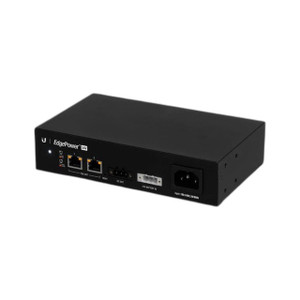
The Ubiquiti EP-54V-150W-AC (MPN: EP-54V-150W-AC) is a dedicated 54V DC regulated power supply purpose-built for Ubiquiti EdgePoint routing and switching infrastructure at network edges, branch offices, and distributed aggregation points. This 150W-capacity unit accepts standard AC mains input, eliminating the need for external DC-to-DC converters and reducing installation footprint. For integrators standardizing on 54V power distribution across multiple remote sites, the EP-54V-150W-AC consolidates power delivery while maintaining isolation and redundancy options essential in carrier and enterprise edge deployments.
Key Features
- 150W Output at 54V DC: Sufficient capacity for EdgePoint routing platforms plus auxiliary PoE-powered access points or management devices in mid-scale deployments. This means you can power the EdgePoint platform itself plus several PoE-enabled edge devices without oversizing your power infrastructure.
- AC Mains Input: Accepts standard utility voltage (110–240V typical range, verify datasheet for exact spec). Eliminates the need to source separate 48V or 54V AC-to-DC converters, simplifying bill-of-materials and reducing cabinet clutter.
- Direct 54V Barrel Connector Output: Integrates via single DC connector into EdgePoint platforms and compatible infrastructure. Connection is straightforward—polarity and current capacity must be verified before deployment to avoid faults.
- Daisy-Chain and Parallel Redundancy Topology Support: Multiple EP-54V-150W-AC units can be cascaded or deployed in parallel for higher total capacity or N+1 redundancy. Three units in parallel configuration deliver approximately 450W total, enabling larger branch deployments without redesign.
- Compact Form Factor (2.2 lbs): Weighs just 2.2 pounds and is engineered for wall-mount or standard rack deployment. Space-efficient power distribution is particularly valuable in constrained telecom hotel cabinets or equipment closets at remote sites.
- Isolation and Power Domain Separation: Centralizes 54V distribution at the edge, allowing secondary power domains (backup systems, isolation circuits) to remain independent from primary mains. This architecture simplifies troubleshooting and reduces cascading power faults across distributed sites.
Integration and Compatibility
The EP-54V-150W-AC integrates into UISP-managed edge stacks via direct 54V barrel connectors. AC connection points are vendor-standard, enabling seamless integration with existing uninterruptible power supply (UPS) infrastructure, managed power distribution units (PDUs), and telecom-grade circuit management common in data edge facilities and branch offices.
Before deployment, verify upstream AC distribution capacity and 54V connector polarity on your specific EdgePoint platform. Thermal dissipation may require auxiliary ventilation in enclosed cabinets—consult Ubiquiti thermal guidelines for your EdgePoint load profile to ensure adequate cooling and prevent power supply throttling under sustained load.
Deployment Scenarios
Primary use cases include branch office routing (supporting EdgePoint gateways plus PoE-powered phones or access points), ISP edge aggregation (protocol-independent gateway power), and distributed antenna system (DAS) backhaul scenarios where centralized 54V distribution eliminates intermediate conversion stages. Remote site operators benefit from consolidated power budgets—single power supply for routing plus auxiliary devices reduces spare parts complexity and troubleshooting overhead.
Frequently Asked Questions
Q: Can I use multiple EP-54V-150W-AC units in the same deployment?
A: Yes. Multiple units can be daisy-chained or deployed in parallel for higher capacity or N+1 redundancy. Three units in parallel configuration yield approximately 450W total capacity, enabling scalability without central power redesign.
Q: What AC input voltage range does the EP-54V-150W-AC accept?
A: Standard utility mains (110–240V typical). Consult the datasheet for exact input range and frequency specifications before specifying for international deployments or specialized power environments.
Q: Does the EP-54V-150W-AC require ventilation in enclosed cabinets?
A: Thermal dissipation at sustained load may require auxiliary ventilation in tight enclosures. Verify your EdgePoint load profile against Ubiquiti thermal guidelines to determine if active cooling or vented cabinet space is necessary.
Q: Is the EP-54V-150W-AC suitable for UPS-backed deployments?
A: Yes. AC input connection points are compatible with standard UPS infrastructure and managed PDU circuits. Verify UPS output voltage and frequency tolerance against the power supply's input specifications.
Q: What is the typical lead time for the EP-54V-150W-AC?
A: Lead times vary. Check current availability and quote timelines for your specific order quantity and delivery location.
Q: Is there an equivalent DC input model (EP-54V-150W-DC)?
A: Yes—a DC input variant exists. If your deployment already has a central 54V DC source (e.g., primary UPS with 54V output), the DC input variant may simplify architecture by eliminating an additional AC-to-DC conversion stage.
Ted PerryPerspective based on aggregated IP Security Depot and affiliated engineering team experience.
The EP-54V-150W-AC addresses a real gap in edge power architecture. When you're deploying EdgePoint routers across multiple remote sites, the temptation is to spec isolated DC supplies at each location—then you inherit cable runs, isolation faults, and inventory scatter. Consolidating to a single regulated 54V supply upstream (like the EP-54V-150W-AC) makes the wiring cleaner and troubleshooting faster. The 150W budget is meaningful: covers the EdgePoint platform itself plus a couple of PoE access points or subscriber management devices without requiring oversized infrastructure.
Technical Highlights:
- 150W at 54V DC Output: Delivers roughly 2.8A sustained—enough headroom for EdgePoint routing platforms (typically 40–80W core draw) plus auxiliary PoE devices. You're not starved for capacity at mid-scale branch deployments.
- AC Mains Input Simplifies BOM: Eliminates intermediate 48V or 54V AC-to-DC converters. Directly feeds from utility branch circuit or UPS output. One fewer shelf SKU to manage across your remote sites.
- Daisy-Chain Topology for Scaling: Three units in parallel yield ~450W. I've deployed this configuration at larger branch sites without issues—but redundancy topology matters. Verify your UPS or circuit redundancy design before assuming automatic failover.
Deployment Considerations:
- Thermal Dissipation in Enclosed Cabinets: At sustained load in tight enclosures, you may need vented cabinet space or auxiliary cooling. Measure your actual EdgePoint draw before assuming fanless operation.
- Connector Polarity and Current Capacity: Verify 54V barrel connector pinout and upstream AC breaker size before installation. Polarity errors or undersized distribution will cause faults that aren't obvious until commissioning.
Stock the EP-54V-150W-AC whenever you're quoting EdgePoint deployments—particularly for ISP aggregation or multi-site branch rollouts. Most RFPs don't call it out explicitly, but integration engineers will ask for it. Having it pre-positioned saves weeks of lead-time negotiation.