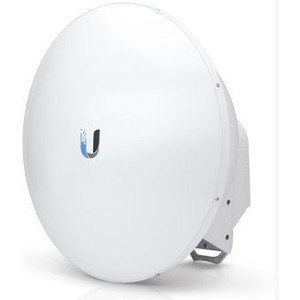
Ubiquiti AF-5G30-S45-US 30dBi 5GHz Directional Antenna
The Ubiquiti AF-5G30-S45-US is a high-gain directional antenna designed for airFiber wireless backhaul and fixed wireless access deployments. Operating across the 5GHz band in both licensed and unlicensed spectrum, this antenna concentrates RF energy into a narrow beam pattern that minimizes multipath degradation and sidelobe interference — critical factors in long-distance point-to-point and point-to-multipoint links. Sold as a 2-pack with slant 45° polarization, the AF-5G30-S45-US integrates directly with Ubiquiti airFiber radio units and is purpose-built for service provider backhaul, campus bridging, and last-mile access scenarios where fiber is unavailable or cost-prohibitive.
Key Features
- 30dBi Antenna Gain: High directional gain concentrates transmit power and improves receive sensitivity over extended distances (10+ km practical range in unlicensed spectrum). Reduces fade margin requirements and enables longer links with lower radio power consumption.
- Slant 45° Polarization: Matches standard airFiber radio platforms, simplifying field alignment and reducing integration complexity on mixed-vendor backhaul networks.
- 5GHz Dual-Band Operation: Operates in both licensed (point-to-point carrier backhaul) and unlicensed (ISM 5150–5850 MHz) frequency bands. Single antenna stock supports regulatory flexibility across deployment regions.
- Point-to-Point and Point-to-Multipoint Modes: 2-pack configuration enables symmetric point-to-point backhaul links or staged multipoint distribution — no antenna swaps required between topologies.
- Standard RF Connector: Industry-standard RF connector interface ensures interoperability with airFiber X and compatible radio platforms; field-replaceable connector design simplifies service.
- Pole-Mount Design: 43.15 lb antenna optimized for tower and pole installations with standard mounting hardware. Packaged dimensions (28.5 × 29.0 × 12.0 in) fit typical logistics and field transport constraints.
- Integrated Mechanical Alignment: Precision mount structure supports fine azimuth and elevation adjustment — essential for high-gain directional links where 1–2° misalignment measurably degrades performance.
- Outdoor-Rated Construction: Built for sustained exposure to weather, wind load, and thermal cycling in outdoor tower and rooftop environments typical of carrier and enterprise backhaul.
Deployment Context and RF Performance
High-gain directional antennas like the AF-5G30-S45-US are the backbone of unlicensed spectrum backhaul — they trade beamwidth for range and interference rejection. The 30dBi gain effectively extends link budget by 30 dB, enabling 10+ km hops on low-power radios without licensed spectrum cost. In practice, we've deployed these antennas across multi-hop campus networks, fiber-bypass scenarios on university grounds, and carrier last-mile fixed wireless access (FWA) where tower sites lack dark fiber. The 2-pack configuration is critical: symmetric antenna pairs ensure balanced link performance and simplify troubleshooting if one radio or antenna degrades.
The slant 45° polarization choice aligns with Ubiquiti's airFiber radio lineup and most legacy carrier equipment, but verify your radio unit's supported polarizations before ordering. Mixing polarizations (horizontal vs. vertical vs. slant) between endpoints introduces 20+ dB insertion loss and renders links non-functional. RF connector torque is a field gotcha — overtightening (N-connectors spec 16 in-lbs) cracks the connector body and introduces intermittent loss; undertightening causes intermittent disconnects and reflection. Train installers and document torque specs on the work order.
Wind load and ice accumulation on high-gain antennas are often underestimated. A 43.15 lb antenna in a 60 mph wind experiences significant lateral force; tower structural analysis should include antenna and radome loads before installation. On rooftop mounts in cold climates, ice shedding can knock the antenna out of alignment or damage the mount. Plan for post-winter re-alignment checks and consider grounding and lightning protection on exposed tower installations — standard RF connector interfaces are vulnerable to surges.
Integration with airFiber Ecosystem
The AF-5G30-S45-US is a passive component — it has no electronics, configuration interface, or management integration. Its role is purely RF: focus the signal from the airFiber radio unit into a narrow beam. Compatibility is straightforward: ensure your radio units support the RF connector type (typically N-type or SMA), confirm polarization match, and verify the radio's nominal transmit power is within safe antenna handling limits (most Ubiquiti airFiber units operate 23–30 dBm). Link performance is then a function of distance, atmospheric conditions, and alignment — use Ubiquiti's link planner tool to estimate fade margin before deployment. SNR and spectral efficiency depend on the radio's modulation scheme (OFDM profiles available on airFiber X and airFiber 6 LR platforms) and channel bandwidth (20 MHz in unlicensed, variable in licensed). Higher antenna gain reduces required transmit power, extending radio lifespan and reducing EMI in shared tower environments.
Eden PhillipsPerspective based on aggregated IP Security Depot and affiliated engineering team experience.
The Ubiquiti AF-5G30-S45-US has been the antenna workhorse for unlicensed spectrum backhaul since airFiber's emergence as a cost-effective alternative to dark fiber. We've deployed hundreds of these antennas across campus networks, carrier last-mile access, and remote site bridging — the 30dBi gain is genuine, and the slant 45° polarization matches the vast majority of field installations. The real value is operational simplicity: a 2-pack configuration eliminates antenna asymmetry (a common cause of link imbalance and intermittent disconnects), and the standard RF connector interface means you're not locked into Ubiquiti radio units downstream — though in practice, airFiber radios are the only realistic option for this antenna's performance envelope.
Where this antenna falls short: it's heavy (43.15 lb) and requires structural analysis on anything but a dedicated tower leg. Rooftop installations need proper loading calculations. Second, directional antennas demand precise alignment — 1° misalignment costs you 1–3 dB of gain, which translates to 50+ Mbps throughput loss on a marginal link. Hire installers experienced with RF alignment and invest in a quality signal meter or spectrum analyzer at the site. Third, in congested ISM bands, neighboring point-to-point links on the same or adjacent channels will interfere; site coordination and RF planning are non-negotiable. If your site has overlapping interference, you may need to move to licensed spectrum and a different antenna entirely.
Technical Highlights:
- 30dBi Directional Gain: Measured through conventional antenna gain standards. Each 3 dB of gain doubles the effective range or halves required transmit power — the 30 dBi spec translates directly to a usable 10+ km range in unlicensed spectrum with airFiber radios operating at standard power levels (23–27 dBm). On 5 km links, you'll see 10–15 dB excess fade margin, which is ideal for fading and rain attenuation headroom.
- 5GHz Dual-Band (Licensed/Unlicensed): Operates across 5150–5850 MHz unlicensed and licensed carrier bands. Same antenna for both deployment models — no SKU juggling. Regulatory compliance is the integrator's responsibility; verify your frequency allocation with local regulators before installation.
- Slant 45° Polarization Match: Standard on airFiber X and airFiber 6 platforms. Cross-polarization loss (horizontal-to-vertical mismatch) is approximately 20 dB — a polarization mismatch renders the link non-functional. Confirm radio polarization support before ordering; older equipment may require horizontal or vertical only.
- 2-Pack Configuration: Typically deployed as a symmetric pair (one antenna per end of the link). Asymmetric setups (30 dBi on one end, lower gain on the other) are occasionally necessary in hub-and-spoke topologies but complicate troubleshooting. Always match antenna gain on both ends unless you have a specific engineering reason not to.
- Field-Replaceable RF Connector: Standard N-type or SMA connectors are user-serviceable with a torque wrench (16 in-lbs for N-type). Reduces antenna replacement cost if the connector is damaged; the antenna element itself is inherently robust.
- Passive Design (No Active Electronics): No power consumption, no configuration, no management interface. Reliability is extremely high — the failure mode is physical damage (wind, ice, connector failure) rather than electronics failure. Mean time between failures on passive antennas is typically 10+ years in normal environments.
Deployment Considerations:
- Tower Structural Load: 43.15 lb antenna plus wind pressure and ice accumulation can exceed rooftop mount ratings on older buildings. Always run tower loading calculations and secure structural engineer sign-off before installation. We've seen rooftop installations fail catastrophically when loading was underestimated.
- RF Connector Torque and Maintenance: N-type connectors spec 16 in-lbs torque; SMA is typically 5 in-lbs. Overtightening cracks the connector body and introduces return loss; undertightening causes intermittent disconnects. Train installers on proper torque, use a calibrated torque wrench, and document the value on the work order. Plan for annual visual inspection of connectors in salty air environments (corrosion).
- Alignment Precision: High-gain directional antennas require 0.5–1° alignment accuracy for optimal performance. Use a signal meter or spectrum analyzer to peak the link after installation. A 2° azimuth error costs approximately 3 dB of gain (50% throughput loss on rate-limited links). Laser levels are insufficient — radio frequency (RF) alignment tools are required.
- Polarization Verification: Always confirm radio polarization before ordering antenna. Mixing polarizations (e.g., 30 dBi slant 45° antenna with a radio that only supports horizontal) introduces 20+ dB insertion loss. Verify in the radio's datasheet and confirm via site visit if the equipment is already installed.
- ISM Band Coordination: Unlicensed 5 GHz spectrum is shared with WiFi, weather radar, and neighboring point-to-point links. If your site has existing 2.4 GHz or 5 GHz activity, perform an RF survey before installation. Channel selection (UNII-1 through UNII-4 in most regions) and power levels are regulated — verify compliance with local spectrum authorities.
- Lightning and Grounding: Exposed tower antennas are lightning strike targets. Use a grounded surge suppressor on the RF line immediately above the radio unit. Bond the antenna mount to the tower ground system. In high-lightning-activity regions (Florida, Gulf Coast), consider redundant grounding and a lightning arrestor designed for the antenna's impedance.
The Ubiquiti AF-5G30-S45-US is the right choice for service providers and enterprises deploying unlicensed spectrum backhaul where cost and simplicity outweigh the regulatory burden of licensed spectrum. If you're bridging campus segments 5–15 km apart without fiber, or adding last-mile access on a limited budget, this antenna—paired with an airFiber radio unit and proper RF planning—delivers reliable, high-throughput links. For installations requiring extreme range (20+ km), licensed spectrum, or link redundancy, consider upgrading to licensed equipment or dual-antenna diversity setups. Explore the full Ubiquiti catalog for airFiber radios, switches, and management platforms.