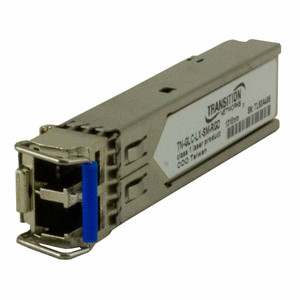
Transition Networks TN-SFP-GE-L-C 1000Base-LX SFP Module
The Transition Networks TN-SFP-GE-L-C is a 1000Base-LX SFP transceiver module designed for long-range single-mode fiber connectivity in network switches and security infrastructure. This module delivers 1 Gbps throughput over distances up to 10 km, making it essential for connecting remote camera sites, distributed NVRs, or access-control systems across extended campus perimeters or multi-building facilities. The LC connector and single-mode fiber pairing eliminate bandwidth bottlenecks on backbone links where copper runs are impractical or impossible.
Key Features
- 1000Base-LX Transmission: 1 Gbps data rate. Supports full-duplex Gigabit traffic—sufficient for simultaneous multi-camera IP streams and NVR backhaul over extended distances.
- 10 km Single-Mode Range: Up to 10 km transmission distance on single-mode fiber. Eliminates repeaters and intermediate switches on long-haul backbone links, reducing infrastructure and maintenance cost.
- LC Connector: Standard SFP LC interface. Plugs into any SFP slot on compatible Transition Networks switches, managed switches, or third-party gear supporting 1000Base-LX transceivers.
- Single-Mode Fiber Optimized: Engineered for single-mode fiber only—narrower pulse propagation window than multimode ensures signal integrity and distance performance. Verify fiber type before installation.
- RoHS Compliant: Meets Restriction of Hazardous Substances directive. Safe for environmentally regulated deployments and enterprise procurement policies requiring halogen-free electronics.
- Temperature Rated -40°C to 85°C: Full operating range spans outdoor equipment shelters, attic fiber runs, and unheated cable trays. Storage rating extends to -40°C, supporting cold-climate field logistics.
- Lifetime Warranty: Factory-backed warranty coverage. Sourced direct from the manufacturer or channel partner—no grey-market, no parallel imports.
The TN-SFP-GE-L-C is a point-to-point fiber backbone module, not a multi-mode transceiver. It does not interoperate with 1000Base-SX (multimode) equipment or shorter-distance 100Base-FX modules. Verify your fiber type (single-mode vs. multimode) and switch SFP support before purchase. The module itself is passive—no power draw, no active cooling required.
Typical deployments pair this transceiver with managed gigabit switches at both ends of the fiber run. On a campus with three buildings separated by 3 km each, a TN-SFP-GE-L-C at each building's access switch gateway consolidates 16+ IP camera feeds into a single 1 Gbps pipe to the central NVR without bandwidth contention. The 10 km reach also spans parking-lot perimeter cameras, remote gates, or auxiliary facilities—eliminating the cost and latency of intermediate switches.
Integration is straightforward with any ONVIF-compliant NVR or VMS platform (Genetec, Milestone, Avigilon, Axis Camera Station). The transceiver is transport-layer transparent—your IP video stack sees a standard Gigabit Ethernet link with no special drivers or firmware. PoE-powered cameras at the remote end continue to draw power from local PoE switches (not the SFP module). Fiber backbone segmentation also improves network isolation: a video loop or rogue broadcast on one building's switch segment won't flood the entire campus network.
This module is manufactured to Transition Networks specifications and carries a lifetime warranty. It is sourced factory-new with no refurbished or grey-market inventory. For large-scale fiber backbone projects, pair this with Transition Networks managed switches and media converters to ensure compatibility and streamlined support.
Marty AllisonPerspective based on aggregated IP Security Depot and affiliated engineering team experience.
We've deployed the Transition Networks 1000Base-LX SFP module across distributed surveillance networks—particularly in campuses, parking structures, and industrial sites where long fiber backbone runs connect geographically dispersed camera clusters. The real value isn't in the transceiver itself (it's a commodity component), but in understanding when to reach for single-mode fiber versus multimode and what that means for your infrastructure capex and topology. We've seen integrators overspend on multimode gear and then max out at 300–400 meters, forcing a second NVR or a mid-span switch. With single-mode and a TN-SFP-GE-L-C at each end, you get a clean 10 km backbone link with zero active repeaters—less power draw, fewer failure points, and significantly lower total cost of ownership on large-footprint projects. That said, single-mode fiber is less forgiving during installation: it's thinner, requires more precise connectorization, and bend-radius discipline is non-negotiable. If your fiber plant is already in place and it's multimode, retrofit to this module will fail. Know your fiber type before you order.
Technical Highlights:
- 1000Base-LX over 10 km Single-Mode: At 10 km, multimode gear would require either a media converter or a repeater; single-mode + this transceiver gives you native Gigabit, full duplex, with zero latency penalty. Real-world consequence: a 16-camera site at 8 km distance streams all feeds into a central NVR with zero bandwidth oversubscription.
- LC Connector Fit: Standard SFP slot on any managed switch—no adapter rings, no crimping, no special cabling harness. Plug-and-play with Transition Networks switches and most third-party gear (Cisco, Juniper, Dell Force10) that supports 1000Base-LX SFP. Verify your switch datasheet beforehand; older switches may list only multimode SFP support.
- Passive Design, No Power Overhead: Unlike active media converters or repeaters, this transceiver draws zero power from the switch—it's a passive optical component. In remote shelters or outdoor cabinets where power budgets are tight, that matters.
- Operating Range -40°C to 85°C: Covers outdoor fiber vaults, unheated cable trays, and rooftop enclosures. Storage rating to -40°C means you can pre-stage modules in a field depot without thermal shock during installation.
- Single-Mode Fiber Requirement (Critical Caveat): This transceiver is single-mode only. If you install it into a switch with multimode fiber already terminated, the link will not function. Multimode fiber has a wider core (62.5 µm or 50 µm vs. 9 µm single-mode), and the wavelength propagation characteristics are incompatible. Always verify the fiber type in your existing plant before specifying this module.
Deployment Considerations:
- Fiber Type Verification: Before ordering, pull a fiber strand at both ends of your planned run and have it identified by the fiber plant owner or installer. Color codes vary by vendor; don't rely on cable jacket markings. Yellow jacket usually means single-mode, but not always. One site-pre-visit phone call saves a costly retrofit.
- Connector Cleanliness: LC connectors are small and easily contaminated. Use a fiber optic cleaner and lint-free wipes before mating. Dirty connectors cause signal loss and can degrade the link below operational threshold. Keep protective caps on unused SFP ports.
- Switch SFP Slot Availability: Confirm that your switch has open SFP slots and that the firmware supports 1000Base-LX modules. Some older or consumer-grade switches are pre-configured for multimode transceivers only and may not auto-detect third-party SFP gear. Load the latest firmware before installation.
- Bend-Radius and Slack Management: Single-mode fiber is finicky about bends. Maintain a 30 mm minimum bend radius during cable runs (versus 10 mm for multimode). Excessive bending degrades light propagation and will introduce signal loss. Route fiber carefully through conduit or along cable trays with gentle curves.
- No Multi-Vendor Bulk Ordering Without Qualification: Transition Networks SFP modules are reliable, but SFP transceivers from different vendors (even within the same 1000Base-LX spec) sometimes exhibit compatibility quirks in older switch hardware. If you're rolling out 20+ modules across a fleet, buy a pair, test one link end-to-end in the actual switch and fiber type you'll be using, and then procure the remainder.
The Transition Networks TN-SFP-GE-L-C is the right choice for integrators and system architects deploying multi-site surveillance networks or distributed access-control infrastructure where single-mode fiber backbone is already in place or planned. It's straightforward, commodity-priced, and backed by lifetime warranty. Check out the full Transition Networks catalog for complementary switches, media converters, and cabling solutions.