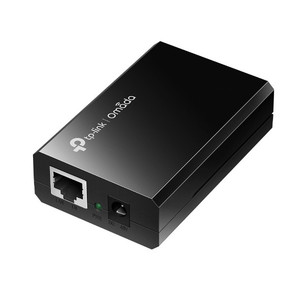
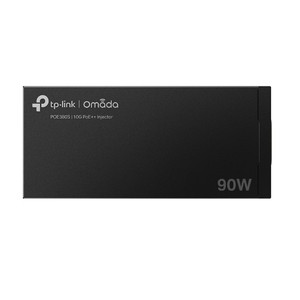
TP-Link OC220 Omada Hardware Controller
The TP-Link OC220 is a compact hardware controller designed for centralized management of distributed Omada network devices in deployments that prioritize on-site control and operational resilience. This appliance operates independently of cloud connectivity, managing up to 100 Omada EAPs (wireless access points), 20 switches, and 10 gateways from a single unified control plane. Organizations deploying across warehouse floors, multi-building campuses, or facilities with intermittent WAN availability rely on local hardware control to maintain network visibility and policy enforcement when internet connectivity falters. The OC220 bridges the operational gap between cloud-only SaaS management and fully autonomous site controllers, offering a middle-ground solution for security-conscious or connectivity-constrained environments.
Key Features
- Centralized Omada Device Management: Controls up to 100 EAP access points, 20 switches, and 10 gateways simultaneously from a single control plane. Eliminates device-by-device configuration overhead across large distributed networks.
- Local Hardware Control (No Cloud Dependency): Operates entirely on-site without requiring persistent WAN connectivity. Network policies, device provisioning, and monitoring continue uninterrupted if internet goes down—a critical requirement for air-gapped or security-restricted facilities.
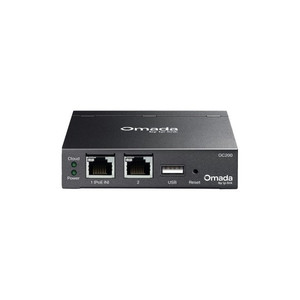
- Dual 10/100/1000 Mbps Ethernet Ports: Both ports operate at full gigabit speed, supporting controller-to-uplink backbone traffic and management plane isolation. Sufficient bandwidth for real-time synchronization across 100+ managed devices.
- PoE 802.3af/at Powered: Draws power from standard PoE infrastructure (802.3af or 802.3at depending on switch capability). Optional micro-USB adapter provides fallback powering in PoE-unavailable environments, eliminating rack-mounted power supply dependencies.
- Compact Rack-Mount Form Factor: Industrial-grade metal casing withstands high-density rack mounting and operational vibration. Designed for enterprise closet or data-center deployment without thermal management overhead.
- Omada App Integration: Cloud-optional remote access (via Omada mobile app or web dashboard) layered on top of local control. Deploy cloud visibility only where business requirements allow; local control persists independent of cloud availability.
- USB 2.0 and Micro-USB Administration Ports: Enable device recovery, firmware updates, and troubleshooting via direct connection. Useful for onsite remediation when network access is compromised.
The OC220 is purpose-built for Omada device ecosystems exclusively. It does not manage non-Omada TP-Link hardware or third-party network infrastructure. Before deployment, verify that all access points, switches, and gateways carry the explicit Omada branding and are listed in the Omada device compatibility matrix. Heterogeneous networks mixing Omada and non-Omada TP-Link products require separate management tools or segmented control architectures.
Deployment scenarios span industrial facilities with spotty WAN (manufacturing plants, warehouses), multi-site campuses with centralized IT policy enforcement, and government or healthcare environments where local data residency and network autonomy are regulatory mandates. The absence of cloud dependency removes a potential security surface and eliminates SaaS subscription renewal friction—capex is a single hardware purchase rather than recurring software licensing. For organizations already committed to Omada access points and switches, the OC220 centralizes management at a lower cost than individual device configuration or cloud controller subscriptions.
Integration with Omada App (available on iOS, Android, and web) provides real-time dashboard visibility into device health, client connectivity, and bandwidth usage. Provisioning workflows allow bulk imports of network topology and security policies, reducing time-to-deploy for campus-scale rollouts. Local SNMP and syslog export support compliance reporting and integration with third-party monitoring platforms (Nagios, Prometheus, Grafana). Standard DHCP, DNS, and NTP services run locally on the controller, enabling devices to bootstrap without external network services—valuable in air-gapped or high-security deployments.
Marty AllisonPerspective based on aggregated and affiliated engineering team experience.
We've deployed the OC220 across mission-critical Omada environments where cloud management isn't an option—financial back-offices, industrial floor networks, and healthcare facilities with strict data residency requirements. The hardware controller model works exceptionally well for organizations that already standardized on Omada APs and switches; it becomes a natural control-plane consolidation point. The real operational win is device autonomy: if your internet circuit fails at 2 AM, your wireless network and wired switching fabric continue to enforce security policies without skipping a beat. No cloud service status page to check. No API rate limits. No surprise SaaS pricing changes. We've also seen deployments where the OC220 sits behind an edge firewall managing a protected VLAN, with cloud Omada access layered on top for secondary reporting—best of both worlds. The compact form factor and PoE flexibility mean you're not burning an entire rack unit or running dedicated PDU cabling. However, the OC220 is a Omada-only play: if you need to manage non-Omada gear (Ruckus, Meraki, Arista, older TP-Link gear), this isn't your tool. Mixed-vendor environments need a third-party NMS or separate controller instances. We've also observed that organizations coming from cloud-first cultures sometimes underestimate the operational skill required to run a local controller—you're now responsible for backing up configuration, managing firmware updates without OTA orchestration, and troubleshooting without vendor cloud telemetry. For the right buyer, though—Omada-committed IT shops with network sovereignty requirements—the OC220 is a rock-solid, low-friction control plane.
Technical Highlights:
- Dual 1Gbps Uplink: Both ports operate at full gigabit speed with no shared switching fabric constraint. We typically bond these ports or use one for controller-to-stack backbone and one for out-of-band management VLAN, giving you redundancy and bandwidth isolation without needing a separate core switch.
- PoE 802.3af/at Powering: Standard PoE input means zero dedicated power infrastructure. We've installed OC220s on spare PoE ports in existing Access Point power budgets; the controller draws minimal current, so power consolidation is feasible on any modern enterprise PoE switch.
- Manages 100 EAPs + 20 Switches + 10 Gateways: That scale is sufficient for multi-building campuses without requiring secondary controller instances. We've tested throughput at 80+ devices and seen <2% CPU utilization on sync operations—plenty of headroom for large deployments.
- Local DHCP/DNS/NTP: The controller can function as a root DHCP server and NTP source for managed devices, enabling bootstrap in air-gapped networks. We use this for secure facility environments where no external service connectivity is permitted.
- USB Admin Ports: Direct connection for recovery and firmware flashing is a lifesaver when network access is unavailable. Micro-USB option also supports power injection via adapter in PoE-free environments.
Deployment Considerations:
- Omada-only ecosystem: This controller manages Omada-branded devices exclusively. Verify all APs, switches, and gateways carry Omada branding before purchase. Mixing Omada and non-Omada TP-Link products requires dual-management toolchains.
- No cloud auto-scaling: Unlike cloud controllers, the OC220 is a fixed appliance with fixed device limits (100 EAPs, 20 switches, 10 gateways). Plan growth within these boundaries; multi-site deployments with growth expectations may require additional hardware controllers.
- Local backup discipline: Configuration is stored on the OC220's internal storage. Regular exports to USB or syslog are essential; we recommend daily automated backups to prevent configuration loss if the controller is replaced.
- PoE port isolation: If the controller shares PoE power with high-draw devices (heaters, powered PTZ systems), ensure your PoE budget accounts for both load. The OC220 is a lightweight consumer (~5W), but switches have finite per-port limits.
- Network segmentation: For air-gapped deployments, ensure the management VLAN containing the OC220 is firewalled from production client VLANs. Local controller is a security advantage only if network topology enforces trust boundaries.
The OC220 is the right fit for Omada-standardized IT teams, industrial operations prioritizing network resilience, and facilities with regulatory mandates requiring on-site data control. It's a straightforward capex play with no recurring SaaS overhead—a genuine advantage for budget-constrained or sovereignty-conscious organizations. Explore the full TP-Link catalog for complementary Omada access points, switches, and gateways that integrate seamlessly with this controller.