
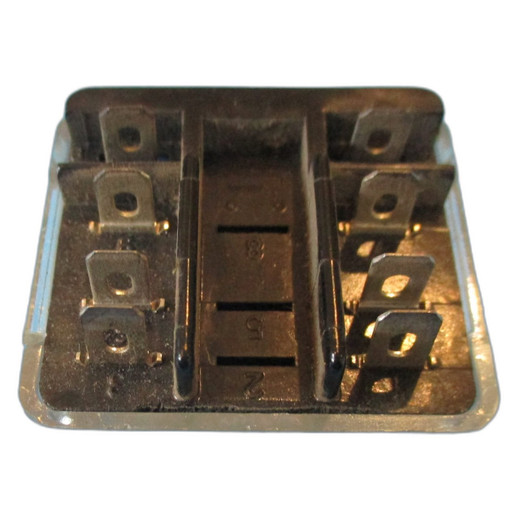


Product images are provided for reference and may not represent the exact model, configuration, or included
components.
Overview
SKU:
R-24E
Condition:
New
Availability:
Usually ships in 24 hours
Warranty
Manufacturer Warranty
System Sensor R-24E 4-Gang DPDT Relay with EOL
System Sensor R-24E 4-Gang DPDT Relay with End-of-Line Supervision Overview The System Sensor R-24E is a 4-gang double-pole double-throw (DPDT) relay…

System Sensor R-24E 4-Gang DPDT Relay with EOL
$222.75
$162.99
Your recommended setup
Review items below — quantities update pricing automatically.
Item
Qty
Status
Price
Optional Add-Ons recommended
Services optional
Bundle Summary
Bundle Subtotal:
$0.00
Optional Add-Ons:
$0.00
Services:
$0.00
Total:
$0.00
Overview
SKU:
R-24E
Condition:
New
Availability:
Usually ships in 24 hours
Warranty
Manufacturer Warranty
Description

System Sensor R-24E 4-Gang DPDT Relay with End-of-Line Supervision
Overview
The System Sensor R-24E is a 4-gang double-pole double-throw (DPDT) relay module designed for fire alarm system integration and control applications. The R-24E incorporates end-of-line (EOL) supervision, enabling monitoring of circuit integrity and ensuring proper device status within fire detection and alarm networks. This relay module provides multiple independent switching circuits, making it suitable for applications requiring simultaneous control of multiple devices or circuits from a single alarm panel input.
Key Features
- 4-Gang DPDT Configuration: Four independent relay circuits, each with double-pole double-throw capability for flexible switching configurations
- End-of-Line (EOL) Supervision: Built-in EOL monitoring ensures circuit continuity and device presence detection
- Dual-Pole Switching: Each relay gang supports simultaneous switching of two separate circuits per activation
- Fire Alarm Integration: Designed for compatibility with fire detection and alarm system architectures
- Modular Design: Compact form factor suitable for standard panel mounting and retrofit installations
- Reliable Switching Performance: Engineered for consistent relay operation across repeated activation cycles
Integration & Compatibility
The R-24E integrates with fire alarm control panels that support relay supervision and multi-gang switching requirements. The end-of-line supervision circuit allows monitoring systems to verify proper module installation and detect open or short circuit conditions on the EOL line. This capability is critical for maintaining system integrity in monitored fire alarm installations. The module's DPDT relay configuration enables independent control of multiple circuits simultaneously, supporting applications such as multi-door access control coordination, HVAC shutdown sequences, and auxiliary notification device activation.
Technical Specifications
The R-24E delivers 4-gang relay switching with dual-pole capability per gang. End-of-line supervision provides circuit integrity monitoring for alarm system compliance. The module is designed to operate within standard fire alarm system voltage and current parameters, making it compatible with conventional and addressable panel architectures. Each relay gang maintains independent switching functionality, allowing staged or coordinated device activation based on alarm conditions or system logic.
James Everett
The System Sensor R-24E is a workhorse relay module for fire alarm integrators managing multi-circuit control requirements. During deployment planning, this module addresses the common challenge of coordinating multiple devices from a single panel output—whether you're managing sequential door unlocking, HVAC shutdown, or notification device activation across a facility. The R-24E's 4-gang DPDT configuration provides flexibility that single-relay modules cannot match.
Technical Highlights:
- 4-Gang Relay Architecture: Independent DPDT circuits allow simultaneous switching of up to 8 separate control paths, essential for coordinated emergency response sequences
- End-of-Line Supervision: EOL monitoring detects circuit breaks or improper termination, preventing silent failures in critical control paths
- Dual-Pole Capability: Each gang supports switching of normally-open and normally-closed circuits independently, enabling both activation and de-activation logic
Deployment Considerations:
- Verify panel compatibility and relay output capacity before installation—R-24E modules require proper voltage and current sourcing from the control panel
- Terminate EOL supervision according to panel manufacturer specifications to ensure monitoring functionality; improper EOL wiring will trigger false supervision events
- In large facilities with multiple relay modules, consider supervision of module status itself to detect module failure or power loss conditions
For integrators deploying complex emergency response sequences, the R-24E eliminates the need for multiple single-relay modules, reducing panel real estate and simplifying wiring. Proper EOL configuration and panel integration testing ensures reliable operation under actual alarm conditions.
Specifications
Product Type:
4-Gang DPDT Relay Module with End-of-Line Supervision
Have Questions?
Ask an Expert.
Your recommended setup
Review items below — quantities update pricing automatically.
Item
Qty
Status
Price
Optional Add-Ons recommended
Services optional
Bundle Summary
Bundle Subtotal:
$0.00
Optional Add-Ons:
$0.00
Services:
$0.00
Total:
$0.00
RELATED PRODUCTS

System Design, Deployment & Technical Support
Support services and planning resources for commercial surveillance, access control, and infrastructure deployments.
Fixed scope • Fixed price
System Design Assistance
- Get help validating product compatibility
- Coverage requirements
- Storage planning and deployment architecture before you buy.
Deployment & Configuration Support
- Access fixed-scope support for rollout planning
- User setup guidance
- Migration and system standardization across single-site or multi-site deployments
Guides, Tools & Calculators
- PoE requirements
- Storage retention
- Camera selection and deployment methodology