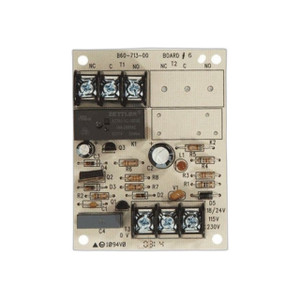
System Sensor MDL3R 12/24V Sync-Circuit Module
Overview
The System Sensor MDL3R is a dual-voltage synchronization circuit module designed to coordinate alert signaling across distributed fire alarm zones and devices. Operating at either 12V or 24V DC, the MDL3R integrates TCP/IP communication capability, allowing networked monitoring and control of synchronized alarm notifications in commercial and institutional fire alarm systems. This module serves as a bridge between conventional fire alarm infrastructure and modern IP-based control and notification requirements.
Key Features
- Dual-Voltage Operation (12V/24V DC): Flexibility to work with either 12V or 24V power supplies already deployed in your fire alarm infrastructure — eliminates the need for power supply replacement or conditioning when retrofitting existing installations.
- TCP/IP Connectivity: Built-in IP communication enables remote monitoring and coordination of alarm signals across networked zones, reducing wiring complexity for multi-zone or geographically distributed facilities and supporting integration with IP-based fire alarm control panels.
- Synchronization Circuit Design: Coordinates timing and sequencing of alert signals across multiple devices and zones — critical when you need simultaneous notification to prevent signal overlap or cascading delays that could reduce evacuation effectiveness.
- System Sensor Compatibility: Direct integration with System Sensor fire alarm equipment and compatible third-party systems supporting TCP/IP protocols — confirm compatibility with your control panel and network architecture before deployment.
- Modular Form Factor: Compact circuit module design allows rack, panel, or enclosure mounting, minimizing physical space requirements in control rooms or equipment closets.
- Network Infrastructure Support: Works within standard enterprise IT and industrial network environments, provided you verify VLAN, firewall, and network topology compatibility with your existing systems.
Integration and Compatibility
The MDL3R integrates with System Sensor fire alarm control equipment and third-party systems equipped with TCP/IP connectivity. Before ordering, verify compatibility with your existing control panel, network switch capacity, and fire alarm management software. Ensure your network topology supports the module's communication requirements, particularly if deploying across multiple physical locations or subnets. Installation should be performed or verified by qualified fire alarm technicians familiar with both conventional and networked alarm architectures.
Deployment Scenarios
The MDL3R is well-suited for multi-zone commercial and institutional facilities where coordinated alarm signaling across IP networks reduces installation labor and improves notification timing. It is particularly valuable in retrofits where upgrading fire alarm infrastructure to networked control is desired without replacing existing 12V or 24V power supplies. Typical deployments include office buildings, campuses, warehouses, and industrial facilities with distributed alarm zones.
When to Choose a Different Model
If your facility requires only conventional (non-networked) fire alarm operation, a standard synchronization module without TCP/IP capability may reduce complexity and cost. Consult the System Sensor product line to identify synchronization-only alternatives if network integration is not a requirement. If your control panel does not support TCP/IP or if network integration is constrained by firewall or IT policy, evaluate whether the MDL3R's networking capability can be leveraged — otherwise, a conventional sync module is the right choice.
Frequently Asked Questions
Q: What is the primary function of the MDL3R in a fire alarm system?
A: The MDL3R synchronizes alert signals across multiple zones and devices in a fire alarm system, ensuring coordinated notification timing. Its TCP/IP capability allows that synchronization to occur over a network rather than requiring direct hardwired connections.
Q: Can the MDL3R work with both 12V and 24V power supplies?
A: Yes. The module is rated for both 12V and 24V DC operation, allowing it to integrate with fire alarm systems using either voltage standard without requiring a separate power supply.
Q: Does the MDL3R require special network infrastructure?
A: The MDL3R uses standard TCP/IP communication and integrates with conventional enterprise network switches and topology. Verify that your network supports the module's IP requirements and that firewall rules and VLAN settings permit fire alarm traffic.
Q: Is the MDL3R suitable for retrofit installations?
A: Yes. Its dual-voltage design and TCP/IP capability make it useful for upgrading existing fire alarm systems to networked control without replacing power supplies or rewiring conventional alarm circuits.
Ted PerryPerspective based on aggregated IP Security Depot and affiliated engineering team experience.
The MDL3R fills a specific niche: it's not a control panel replacement, and it's not a simple relay module. It's a network-aware synchronization bridge designed for facilities moving from hardwired zone coordination to IP-based signal management. The dual 12V/24V tolerance is genuinely useful if you're retrofitting — you don't have to swap power supplies, just wire the module into your existing infrastructure and let it handle network communication.
Technical Highlights:
- Dual-Voltage Input: Rated 12V and 24V DC operation removes the constraint of single-voltage-only modules, cutting retrofit labor by avoiding power supply replacement or conditioning circuits.
- TCP/IP Interface: Network communication allows centralized monitoring and synchronization across geographically distributed zones without dedicated alarm wiring runs — reduces physical cabling footprint in multi-building campuses or large warehouses.
- Modular Design: Compact form factor enables DIN rail or enclosure mounting, integrating cleanly into existing control room or equipment closet layouts without major spatial rework.
Deployment Considerations:
- Verify your control panel explicitly supports TCP/IP sync modules before ordering — not all System Sensor or third-party panels have native IP signaling support, and retrofitting an incompatible panel defeats the module's value.
- Network segmentation matters: if your fire alarm network is isolated from production IT (best practice), confirm routing, VLAN tagging, and firewall rules allow alarm signaling without bottleneck or latency that could degrade synchronization timing.
- Installation must be handled by a certified fire alarm technician — this module bridges conventional and networked systems, and improper wiring or configuration can compromise alarm responsiveness or create single points of failure.
The MDL3R is the right choice for multi-zone commercial or institutional retrofits where you want coordinated IP-based alarm signaling without complete panel replacement. Skip it if your facility doesn't require networked synchronization or if your control panel lacks TCP/IP capability — conventional hardwired sync modules cost less and eliminate network configuration overhead.