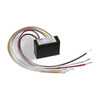
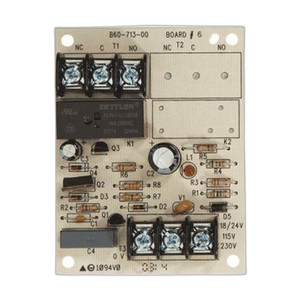
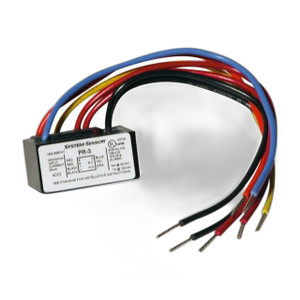
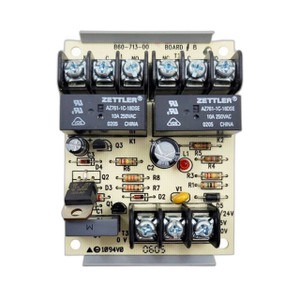
System Sensor PR-1 Single Relay Module
Overview
The System Sensor PR-1 is a single relay module engineered to expand relay control capacity in fire alarm and security systems. This module delivers auxiliary relay switching functionality across multiple voltage inputs, making it suitable for integrating third-party devices and expanding system control circuits in commercial and institutional fire protection installations. The multi-voltage design accommodates varied installation environments where consistent relay switching is required without the need for separate power conditioning.
Key Features
- Single Relay Output: Provides one independently controlled relay contact for expanding circuit control capacity — useful when a base fire alarm panel lacks sufficient auxiliary relay channels for integrated door locks, strobes, or damper controls.
- Multi-Voltage Support: Operates across multiple voltage inputs, eliminating the need for environment-specific variants. This flexibility reduces inventory complexity during mixed-voltage facility deployments.
- Third-Party Device Integration: Relay contacts can control external signaling circuits, access control devices, and proprietary equipment — standard relay switching allows integration with equipment beyond the core fire alarm ecosystem.
- System Expansion: Designed to work with System Sensor control panels and compatible fire alarm systems, allowing incremental relay capacity additions without panel replacement.
- Compact Form Factor: Module-based design permits installation in confined panel spaces or remote locations, reducing the need for external relay cabinets in space-constrained environments.
- Compatible with Existing Installations: Integrates with installed System Sensor infrastructure, supporting retrofit scenarios where system control demands exceed original capacity.
Integration & Compatibility
The PR-1 integrates with System Sensor control panels and other fire alarm systems requiring auxiliary relay control. Multi-voltage operation ensures deployment flexibility across facilities with differing power architectures. Installation requires integration into the host fire alarm or security system's control circuit — consult your system documentation or fire alarm system design guide to confirm relay contact ratings and wiring requirements for your specific application.
Frequently Asked Questions
Q: What voltage inputs does the PR-1 support?
A: The PR-1 is multi-voltage compatible. Consult the product datasheet or your system documentation for the specific voltage range supported by your installation.
Q: Can the PR-1 control devices outside the fire alarm system?
A: Yes — the relay contacts can switch third-party circuits and devices. Ensure that the external device's voltage and current requirements fall within the relay's rated switching capacity.
Q: Does the PR-1 require a separate power supply?
A: No. The multi-voltage design draws power from the host system, eliminating the need for a dedicated external supply in most installations.
Q: How many relays does a single PR-1 module provide?
A: The PR-1 is a single relay module, meaning one independently controlled relay output per unit. Multiple PR-1 modules can be installed in parallel if additional relay capacity is required.
Q: Is the PR-1 suitable for retrofit installations?
A: Yes — the module-based design permits installation in existing systems where panel relay capacity must be expanded without replacing the control panel itself.
Q: What compatibility certifications apply to the PR-1?
A: The PR-1 integrates with System Sensor control panels and fire alarm systems following standard relay switching protocols. Verify compatibility with your specific host system before deployment.
Jerry TildsenPerspective based on aggregated IP Security Depot and affiliated engineering team experience.
The PR-1 (often searched as PR 1) fills a straightforward but critical gap in fire alarm system design: when your control panel runs out of relay outputs and you need auxiliary switching without a full panel replacement. The multi-voltage tolerance is the smart engineering detail here — it means you're not managing separate SKUs for 12V, 24V, or line-voltage installations. That matters in mixed-age facilities where you're plugging into whatever infrastructure already exists.
Technical Highlights:
- Single Relay Output: One independent relay contact per module eliminates the constraint of fixed panel relay capacity — install one or many PR-1 units depending on how many external devices or circuits you need to control.
- Multi-Voltage Design: Eliminates inventory fragmentation and simplifies installation logistics; no need to stock or specify different relay modules for different facility voltage standards.
- Third-Party Integration: Standard relay contacts mean you can control door locks, strobes, dampers, or any load within the relay's rated switching capacity — you're not locked into System Sensor-only peripherals.
Deployment Considerations:
- Verify the relay's contact ratings (voltage, current) against your load before wiring third-party devices — relay coil voltage and contact switching capacity are two different specs.
- Module-based expansion works well in retrofit scenarios, but each PR-1 consumes a panel slot or requires remote mounting. Plan your physical layout early if you're adding multiple units.
- Integration requires circuit-level understanding of your host fire alarm system. Treat this as a panel-level addition, not a plug-and-play field device — commission it as part of your system expansion plan.
The PR-1 is your answer when you've maxed out panel relays and need to avoid a costly control panel swap. It's common in retrofit work, particularly in older buildings where system demands grow over time.