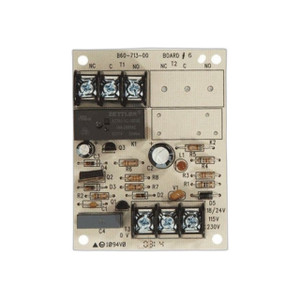
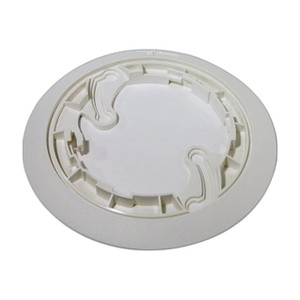
System Sensor RRS-MOD i3 Series Reversing Relay Synchronization Module
The System Sensor RRS-MOD is a reversing relay synchronization module purpose-built for integration into fire alarm and life safety control systems where coordinated relay operation across networked devices is required. This component enables synchronized switching and signal routing in multi-node installations, supporting applications that demand bidirectional signal control and conditional relay logic across distributed system nodes.
Overview
The RRS-MOD operates at 35VDC and communicates via TCP/IP protocol—a pairing that matters because it means you can deploy this module alongside modern networked fire alarm architectures without requiring separate, parallel signal lines. TCP/IP integration eliminates the complexity of traditional hardwired relay circuits while maintaining the deterministic, fail-safe operation required in life safety applications. Reversing relay functionality allows the module to switch signals in both directions, enabling conditional actuation based on system state—for example, triggering one set of solenoids during alarm conditions and a different set during reset or evacuation routing scenarios.
Key Features
- 35VDC Operating Voltage: Standard fire alarm power level keeps the module compatible with existing life safety power distribution without requiring auxiliary supplies or voltage conversion.
- TCP/IP Communication: Network-native integration allows this module to sit on the same control loop as your fire alarm panel and network devices, reducing wiring runs and supporting future system expansion without physical reconfiguration.
- Reversing Relay Capability: Bidirectional signal switching means one module can orchestrate multiple conditional logic paths—critical when device actuation depends on system state or mode changes (e.g., normal operation vs. alarm vs. evacuation).
- Multi-Node Synchronization: Deploy multiple RRS-MOD units across a networked system and coordinate their relay states in real time, ensuring relay banks activate in lockstep rather than sequential delays that could compromise safety or efficiency.
- System Sensor i3 Series Compatibility: Built for the i3 control platform, the RRS-MOD integrates natively without compatibility quirks or firmware workarounds—your panel recognizes and provisions the module as a standard component.
- Life Safety Rated Operation: Designed for fire alarm and emergency systems where failure is not an option; reversing relay function preserves signal integrity under fault conditions that would degrade traditional electromechanical circuits.
Integration & Compatibility
The RRS-MOD is compatible with System Sensor i3 Series control platforms and networked fire alarm systems utilizing TCP/IP communication standards. Before deployment, verify compatibility with your specific control panel model and network topology. This module integrates with existing relay-actuated life safety devices—solenoid valve controls, damper actuators, door hold-release mechanisms—allowing you to replace or augment hardwired relay banks with network-synchronized modules. Integration engineers should confirm that their panel firmware supports the RRS-MOD as a network node and that TCP/IP bandwidth is adequate if deploying multiple synchronized modules across a wide-area fire alarm network.
Deployment Considerations
The RRS-MOD is most cost-effective when replacing complex hardwired relay ladder logic with synchronized network commands, or when you need bidirectional control that a simple relay bank cannot provide. If your system requires only single-direction, fire-and-forget relay actuation (e.g., alarm bell relay), a simpler module may be adequate. Network latency, even on modern TCP/IP fire alarm networks, is typically sub-100ms—acceptable for life safety actuation but not suitable for real-time audio/video synchronization or sub-second coordinated actions.
Frequently Asked Questions
Q: Is the RRS-MOD compatible with non-System Sensor i3 control panels?
A: The RRS-MOD is designed for System Sensor i3 Series platforms. Compatibility with third-party fire alarm panels depends on those panels' support for TCP/IP relay modules and System Sensor's proprietary protocol stack. Consult your panel manufacturer and System Sensor technical support before attempting cross-platform integration.
Q: What is the maximum number of RRS-MOD units that can be deployed on a single i3 network?
A: System Sensor documentation specifies network node limits for the i3 platform. Consult the i3 Series system design guide or contact System Sensor technical support for your specific panel model to confirm the maximum number of synchronized relay modules supported.
Q: Does the RRS-MOD support hardwired relay backup in case of TCP/IP network failure?
A: The RRS-MOD is a networked module and relies on TCP/IP communication with the control panel. If deterministic relay backup during network failure is required, consult System Sensor on hybrid architectures that combine network relay modules with independent hardwired safety circuits.
Q: What relay contact ratings does the RRS-MOD support?
A: Contact your System Sensor technical representative or consult the RRS-MOD datasheet for detailed relay contact specifications, including voltage/current ratings for switched loads. This is critical when sizing solenoids, damper motors, and other actuators controlled by the module.
Ted PerryPerspective based on aggregated IP Security Depot and affiliated engineering team experience.
The RRS-MOD is a network relay module, not a standalone device—it lives on your i3 control loop and orchestrates relay switching via TCP/IP commands rather than hardwired circuits. That distinction matters because it simplifies multi-zone life safety systems but introduces a dependency on network availability. If you're replacing a legacy hardwired relay bank or adding synchronized relay control to a new i3 deployment, the RRS-MOD (often searched as RRS MOD) eliminates wiring complexity. But if your system cannot tolerate TCP/IP latency or network fault scenarios, this is not the right choice.
Technical Highlights:
- 35VDC Operating Voltage: Matches standard fire alarm power rails, eliminating the need for voltage conversion or auxiliary supplies—one less transformer in the cabinet and simpler fault isolation during troubleshooting.
- TCP/IP Protocol Integration: Networked relay commands mean you can add or reconfigure relay logic without pulling new conduit or relay chains, a real cost win in large multi-zone systems where hardwired relay additions would require extensive panel rewiring.
- Bidirectional Reversing Relay: Single module can command multiple conditional paths (alarm vs. reset vs. evacuation routes), reducing the number of separate relay modules needed compared to single-direction alternatives—material savings in systems with complex evacuation logic.
Deployment Considerations:
- Verify your i3 panel firmware revision supports the RRS-MOD as a networked node before ordering; older panel versions may not recognize this module or may have limited synchronization bandwidth.
- TCP/IP network latency, even on modern systems, introduces sub-100ms delays—acceptable for solenoid valve or damper actuation but not suitable for real-time audio/video sync or sub-50ms coordinated actions.
- Plan for network redundancy if multiple RRS-MOD units are deployed; a single TCP/IP network failure cascades to all synchronized relays, so dual-path networking or independent hardwired backup relays may be required in mission-critical zones.
Deploy the RRS-MOD in modern life safety networks where TCP/IP is already the backbone (i3 fire alarm systems, addressable panel expansions) and you need synchronized multi-zone relay control without the cost and complexity of hardwired relay banks. Skip it if your system is legacy hardwired, has strict sub-50ms timing requirements, or cannot tolerate any TCP/IP dependency.