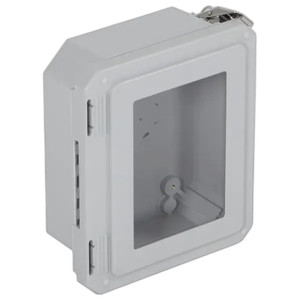
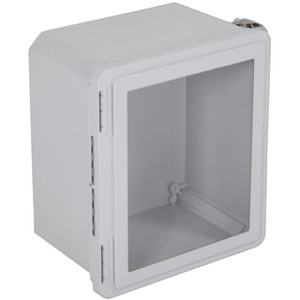
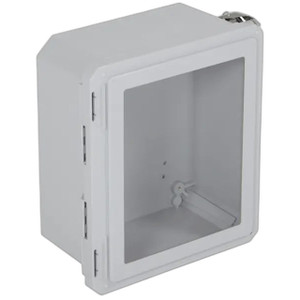
STI EF080804-O Opaque Credential Reader
Overview
The STI EF080804-O is an injection-molded polycarbonate credential reader built for access control environments where environmental durability and multi-door integration matter. The opaque fiberglass design (RAL 7035 light gray) supports TCP/IP communication, enabling integration into networked access control systems without requiring separate reader interfaces. Rated for 7-door capacity, the EF080804-O is sized for facilities consolidating credential authentication across multiple secured entry points. Operating output of 44dB(A) keeps ambient noise impact manageable in busy commercial or secure facility settings. UL/cUL certification (EP242410-O) confirms compliance for both U.S. and Canadian electrical and fire safety standards — a hard requirement in many jurisdictions before installation.
Compatibility
The EF080804-O integrates with access control systems supporting TCP/IP credential-based authentication. This reader functions as a standard credential interface within building management architectures that handle networked door controllers and central management platforms. Typical deployment contexts include multi-tenant commercial buildings, secure facilities, government installations, and enterprise environments where credential reader consolidation reduces panel clutter and simplifies wiring. Verify your access control platform's reader compatibility before specifying — the TCP/IP standard supports most modern systems, but legacy parallel-interface or Wiegand-only panels may require intermediate converters.
Installation Notes
The non-metallic polycarbonate enclosure requires proper grounding and conduit management during installation. Cut holes for conduit at the desired location using standard hole-sizing guidance: 7/8" hole for ½" hub, 1 1/16" for ¾", 1 ¼" for 1", 1 7/8" for 1 ½", and 2 3/8" for 2" hub sizes. For metallic conduit, secure the connector hub onto the conduit, then lock the hub into the prepared hole with the connector locknut and attach a properly sized grounding lug over the locknut. For non-metallic conduit, align the conduit to prevent stress on enclosure walls — improper alignment will compromise the enclosure durability rating. Bonding between grounding points must follow applicable electrical code (National Electrical Code in the U.S., Canadian Electrical Code in Canada). Greenlee-style hole cutters are the preferred tool for precise, clean holes. Do not over-torque conduit fittings — hand-tight plus ¼ turn is standard practice.