
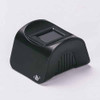
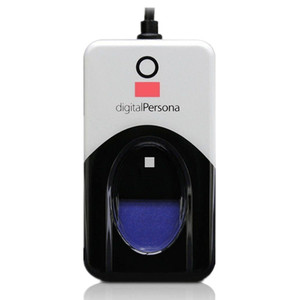
PioneerPOS Dash T3+ - URU Fingerprint Reader - T3P-BIO100
Usually Ships in 2-3 Weeks
Free shipping over $499

Manufacturer-verified compatible cameras, recorders, mounts, accessories, and licenses for this product. Adjust quantities and add the entire bundle to your cart in one click.
Questions about this product? Free pre-sales support from a senior specialist — product questions, compatibility checks, BOM quotes, price confirmation — typically answered within one business day. Need camera placement or system design work? Engineering time is $175 per hour (qty 1 = 1 hour). Hardware buyers get up to one hour ($175) credited back on their order.
The PioneerPOS 4MB-BIO100 is a fingerprint biometric reader designed to add cryptographic identity verification to PioneerPOS ST3 point-of-sale terminals. Fingerprint authentication replaces or supplements card-based credentials, eliminating the operational friction of lost cards, shared PINs, and manual credential resets in multi-user retail and hospitality environments. The device connects directly to the ST3 terminal port, requiring no external power supply or network configuration — deployment is integrated into the existing POS ecosystem with minimal staff retraining.
Fingerprint biometric readers are most effective in multi-user environments where credential sharing is common — quick-service restaurants, grocery chains with rotating cashiers, and hospitality venues. Card-based systems create overhead: lost cards require reissuance, PINs drift across operators, and the audit trail conflates multiple users. Fingerprint enrollment captures the operator identity at the point of transaction, making labor cost allocation, compliance auditing, and loss prevention simpler. The ST3 terminal processes enrollment and verification locally, so there is no external dependency on cloud biometric APIs or network latency.
Installation requires physical access to the ST3 terminal's biometric port — confirm your system model includes this interface before procurement. Not all older or entry-level ST3 configurations ship with the necessary firmware or port hardware; contact your POS integrator to verify compatibility. Once confirmed, mount the reader in a secure, accessible position near the primary operator zone. Typical placement is to the left of the PIN pad or in a side-facing bracket. Protect the reader from direct water spray (food service prep areas) and excessive dust (warehouse environments), though the black plastic enclosure is rated for standard office and retail durability. Run the power/data cable neatly along the terminal base and secure with cable clips to prevent accidental disconnect during daily operation. Test the reader after installation by enrolling a test user and executing a practice transaction — confirm that fingerprint capture quality is consistent and that the terminal recognizes the biometric match before go-live.
ST3 terminals with biometric integration typically support three or more enrolled fingerprints per user, allowing flexibility if one print is temporarily unavailable due to injury or damage. The reader stores encrypted fingerprint templates locally; it does not transmit biometric data to external databases or cloud services, reducing privacy compliance burden under GDPR or state biometric privacy laws. If the reader fails, fallback authentication via PIN pad is preserved, ensuring business continuity. Replacement reader modules are field-replaceable on the ST3 without requiring system reset or data migration.

We've integrated the PioneerPOS 4MB-BIO100 into retail and hospitality sites where cashier turnover and credential sprawl were operational pain points. The value proposition is straightforward: eliminate the logistics and cost of physical card management while creating per-user transaction accountability. What we've learned is that biometric reader deployment success depends almost entirely on early-stage compatibility verification and staff buy-in. The hardware itself is reliable — we've seen consistent performance across dozens of multishift retail environments — but a failed compatibility check at install time wastes a project day and creates customer frustration. Always confirm with the POS integrator that the ST3 unit supports the biometric port before issuing a purchase order.
Technical Highlights:
Deployment Considerations:
The 4MB-BIO100 is most valuable in multishift retail, hospitality, and quick-service restaurant environments where cashier turnover is high and credential management has been a chronic pain point. If your ST3 system supports biometric integration and you have 5+ users sharing terminals, this reader typically pays for itself through reduced credential reset calls and improved per-user accountability. Explore the PioneerPOS catalog for compatible ST3 terminals and integrated payment solutions.

Manufacturer-verified compatible cameras, recorders, mounts, accessories, and licenses for this product. Adjust quantities and add the entire bundle to your cart in one click.
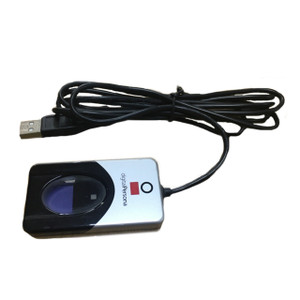
URU-platform fingerprint biometric reader designed for healthcare access control, patient verification, and credential-gating workflows where

Compact payment terminal designed for retail, hospitality, and quick-service environments where space and transaction speed are primary operational

Fingerprint capture and verification device designed for retail point-of-sale environments, employee access control, and warehouse inventory workflows

USB-connected fingerprint reader designed for point-of-sale and access environments where fast, password-free employee authentication matters
Looking for more PioneerPOS products? Shop the full PioneerPOS catalog →
Support services and planning resources for commercial surveillance, access control, and infrastructure deployments.
Fixed scope • Fixed price