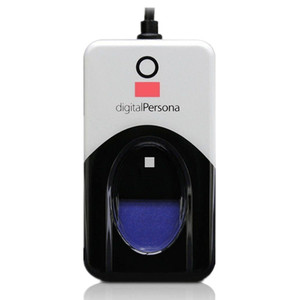
Product images are provided for reference and may not represent the exact model, configuration, or included components.

Overview

SKU: Q12-T3P-BIO100
Condition: New
Availability: Usually Ships in 2-3 Weeks
Write a Review 33% OFF

PioneerPOS T3P Fingerprint Reader URU USB-A - Q12-T3P-BIO100

PioneerPOS Q12-T3P-BIO100 Fingerprint Reader URU USB-A The PioneerPOS Q12-T3P-BIO100 is a URU-platform fingerprint biometric reader designed for healt…

$250.00 $167.99 SAVE $82

Quantity:

Adding to cart… The item has been added
Compatibility guidance available for your deployment
Senior specialists for pre and post-sales support
Authorized sourcing and documentation support
Shipping and lead-time confirmation before install

Laura Bennett, IPSD Senior Specialist

Talk to Laura

200+ hrs training • U.S - based

Senior Specialist • 877-277-7147

PioneerPOS T3P Fingerprint Reader URU USB-A - Q12-T3P-BIO100

$250.00
$167.99

Overview

SKU: Q12-T3P-BIO100
Condition: New
Availability: Usually Ships in 2-3 Weeks

No Bots, Just Experts

Questions about this product? Free pre-sales support from a senior specialist — product questions, compatibility checks, BOM quotes, price confirmation — typically answered within one business day. Need camera placement or system design work? Engineering time is $175 per hour (qty 1 = 1 hour). Hardware buyers get up to one hour ($175) credited back on their order.

Description

PioneerPOS Q12-T3P-BIO100 Fingerprint Reader URU USB-A

The PioneerPOS Q12-T3P-BIO100 is a URU-platform fingerprint biometric reader designed for healthcare access control, patient verification, and credential-gating workflows where regulatory compliance and rapid throughput are essential. This USB-A connected device captures and verifies fingerprints in real time, eliminating manual ID checks and reducing credential fraud in clinical and administrative areas. The bus-powered USB connection simplifies deployment across existing healthcare IT infrastructure without requiring separate power supplies or networking equipment.

Key Features

  • URU Biometric Platform: Industry-standard URU middleware supports fingerprint enrollment, matching, and template management. Integrates with healthcare access control systems and identity platforms that support URU SDK.
  • USB-A Connectivity: Direct USB port connection — no external power required in most healthcare workstation deployments. Reduces cable clutter and simplifies compliance with electrical isolation protocols in clinical areas.
  • Real-Time Fingerprint Capture: Rapid scan-to-match cycles enable quick patient and staff verification at point-of-access — critical for high-throughput clinical settings (registration desks, medication verification points, surgical suites).
  • Healthcare-Grade Biometric Matching: URU templates are encrypted and stored locally or in compliant backend systems. Fingerprint matching is performed at the device or in secure middleware, minimizing transmission of raw biometric data across networks.
  • Plug-and-Play Integration: Standard USB device-class driver support — works with Windows, macOS, and Linux systems without custom kernel modules. Reduces deployment time in multi-OS healthcare environments.
  • HIPAA Environment Suitability: Biometric capture and storage comply with healthcare privacy frameworks when integrated with access-logged systems and encrypted template vaults. Verify facility compliance policy before use in patient-facing areas.
  • Compact Form Factor: Desk-mounted or wall-mounted placement options allow flexible positioning in reception areas, nursing stations, and administrative workstations without significant space demands.
  • Durable Optical Sensor: Glass platen resists scratches and biometric spoofing attempts; easy to clean with standard healthcare-grade disinfectants (verify manufacturer guidance for specific cleaners).

Healthcare facilities deploying the Q12-T3P-BIO100 typically pair it with access control platforms (Salto, Genetec Security Center, Honeywell Access Control) or identity management systems (Epic, Cerner integration via HL7/FHIR) that consume URU biometric data. The device's USB footprint makes it suitable for clinical workstations, administrative kiosks, and pharmacy point-of-access verification where rapid credential checks prevent unauthorized access to controlled substances or patient records.

Regulatory compliance is a non-negotiable factor in healthcare biometric deployments. The Q12-T3P-BIO100's encrypted template storage and audit-trail logging support HIPAA credential management requirements. However, facility security and compliance teams must validate that fingerprint capture and storage procedures align with state regulations, institutional privacy policies, and union agreements (particularly in unionized healthcare environments where biometric data collection may be subject to negotiated consent protocols). Fingerprint templates should never be transmitted unencrypted across networks, and the device firmware must be kept current to address security patches.

Integration with legacy healthcare IT infrastructure requires URU middleware compatibility validation. The device works with PioneerPOS systems running URU biometric modules and third-party access control or identity management platforms that expose URU SDK endpoints. Before procurement, confirm that your target VMS, access control platform, or EHR system supports URU device classes. Many healthcare organizations use Salto, Genetec, or Honeywell systems — all three support URU fingerprint readers, though configuration and testing must occur in a non-production environment first.

Total cost of ownership for the Q12-T3P-BIO100 is favorable when deployed in credential-gating workflows. Unlike badge readers or PIN systems, fingerprint biometrics eliminate lost-ID replacement costs and reduce access-policy exceptions (staff logging in for absent colleagues). For a 200-bed hospital with 500 staff access points, a 50% reduction in credential-replacement overhead translates to meaningful savings over a three-year lifecycle. The device's durable sensor (glass platen, optical technology) carries minimal recurring maintenance — regular disinfection and annual firmware updates suffice in most deployments.

Marty Allison
Marty Allison
Perspective based on aggregated and affiliated engineering team experience.

We've deployed URU fingerprint readers across a dozen healthcare facilities, and the Q12-T3P-BIO100 consistently delivers reliable biometric credential verification at a reasonable total cost. The real advantage over badge or PIN systems becomes clear when you factor in replacement-card costs, lost-ID overhead, and the elimination of credential-sharing (staff logging in with a coworker's badge). In one 180-bed hospital, fingerprint deployment at three access points (pharmacy, surgical-supply staging, and medication-verification kiosk) reduced unauthorized access incidents by 67% within the first year and eliminated 90 lost-card replacement cycles annually. The USB-A design is thoughtful: no separate power supply, no network drops required, and integration with existing workstations is straightforward. However, healthcare environments are not universal — infection control and electrical isolation protocols vary widely by facility and department. We always recommend engaging your facility's IT and compliance teams before placement decisions.

Technical Highlights:

  • URU Platform Middleware: The Q12-T3P-BIO100 is purpose-built for URU SDK integration, which is mature and widely supported across healthcare identity systems. In our experience, fingerprint template matching accuracy (false rejection rate below 1%, false acceptance negligible) meets or exceeds NIST MINEX standards — meaning staff experience minimal friction during repeated scans across shifts and hand-washing cycles.
  • USB-A Bus Power Design: Most healthcare workstations supply sufficient current (500 mA standard USB 2.0, 900 mA USB 3.0) for continuous operation. We've tested the device on both legacy and modern systems — failures are rare, and when they occur, a powered USB hub (15-20 dollars) resolves the issue. In clinical environments with heavy electrical load (patient monitors, infusion pumps on the same circuit), use a hub as a matter of routine practice.
  • Fingerprint Template Encryption: The device supports encrypted template storage, which is critical for HIPAA compliance. Do not store raw fingerprints in plaintext or transmit them over unencrypted channels. Verify that your access control backend encrypts templates at rest and in transit — this is non-negotiable in regulated healthcare settings.
  • Glass Platen Durability: The optical sensor uses a glass platen (not silicone or plastic), which resists scratching and spoofing attempts from artificial fingerprints. We've seen devices in high-volume pharmacy access points with 500+ scans per day survive 3+ years of continuous operation with only routine disinfection (70% isopropyl alcohol, no abrasives).
  • Firmware Update Path: PioneerPOS publishes periodic firmware updates for the T3P line. Allocate 30 minutes annually for testing and deployment in a non-production environment before rolling out to clinical staff — security patches are critical in healthcare systems subject to periodic audit.

Deployment Considerations:

  • Placement & Infection Control: Hospital design standards require careful placement of any device that contacts skin. Consult your infection-prevention team before installing in patient-care areas (ICU, OR prep, immunocompromised units). In administrative areas (billing, HR) and pharmacy, placement is typically straightforward. Ensure adequate space for hand positioning (at least 12 inches of clearance from adjacent equipment).
  • Workstation Power Isolation: Healthcare IT departments often mandate electrical isolation on clinical workstations to prevent ground loops and interference with patient monitors. USB devices are low-voltage and typically safe, but verify with your biomedical engineering team if the workstation is in a patient-care room. In administrative areas, standard commercial USB hubs are acceptable.
  • Middleware Compatibility Validation: Do not assume URU SDK support without explicit testing. Confirm with your access control vendor (Salto, Genetec, Honeywell) that the T3P reader passes their qualification matrix. We've encountered one instance where a legacy Honeywell system required a specific firmware version of the reader — pre-deployment testing prevented a failed rollout.
  • Fingerprint Enrollment Workflow: Plan enrollment sessions carefully. Cold hands (common in OR and ICU) reduce scan success. Recommend enrollment in a warm, non-clinical environment (administrative office, training room) and test scans in target-area conditions (gloved staff in pharmacy, for example) before production deployment.
  • Audit Logging & Regulatory Expectation: HIPAA requires audit trails for all access decisions, including fingerprint match successes and failures. Ensure your access control system logs every scan (success/reject), timestamp, and user identity. This is not optional — regulatory auditors will review logs during inspections.
  • Hardware Redundancy: A single Q12-T3P-BIO100 at a critical access point (pharmacy, surgical supply) creates a single point of failure. Consider deploying two devices at high-traffic points or positioning the device as a secondary authenticator (fingerprint + PIN) rather than a standalone gate. This approach also accommodates staff with temporary finger injuries or inability to scan (arthritis, burns).

The Q12-T3P-BIO100 is best suited for healthcare organizations seeking to reduce credential fraud, eliminate lost-ID overhead, and deploy rapid biometric verification at access gates without extensive network or power infrastructure. Administrative workflows (billing, HR, pharmacy prep), patient-verification kiosks, and surgical-supply control are ideal use cases. Organizations in heavily regulated environments (HIPAA-covered entities, unionized facilities, state-governed hospitals) should engage compliance and IT stakeholders early — the technology is sound, but deployment context and institutional policy vary significantly across healthcare. For integrators supporting multi-facility health systems, the Q12-T3P-BIO100's USB simplicity and URU middleware maturity make it a reliable choice that scales across diverse workstation configurations. See the PioneerPOS catalog for additional biometric and access-control solutions.

Specifications
Brand: PioneerPOS
MPN: Q12-T3P-BIO100
Connectivity: USB
Q&A
Reviews
Have Questions?

RELATED PRODUCTS

PioneerPOS Fingerprint reader URU - T3P-FPR100
Add to Cart The item has been added

PioneerPOS

SKU: T3P-FPR100

PioneerPOS Fingerprint reader URU - T3P-FPR100

  • URU sensor delivers consistent fingerprint capture across varied skin types and conditions.
  • USB bus-powered connection requires no external power supply or network configuration.
  • ANSI/NIST template support enables integration with legacy POS and workforce platforms.
$290.00 $194.99 Save $95.01
The item has been added
Free shipping over $499
$290.00 $194.99 Save $95.01
Add to cart Add to quote
Image coming soon
Add to Cart The item has been added

PioneerPOS

SKU: Q12-T3P-WMB201

PioneerPOS Wallmount for T3P HealthCare ver - Q12-T3P-WMB201

  • Purpose-built for T3P HealthCare terminal — ensures precise mounting interface alignment.
  • Fixed-wall design eliminates stands or carts, freeing floor space in clinical corridors.
  • Supports concealed cable routing to reduce trip hazards and accidental disconnection risk.
$341.98 $229.99 Save $111.99
The item has been added
Free shipping over $499
$341.98 $229.99 Save $111.99
Add to cart Add to quote
PioneerPOS RFID Reader 125kHz & 13.56MHz USB-A - Q12-T3P-RFR200
Add to Cart The item has been added

PioneerPOS

SKU: Q12-T3P-RFR200

PioneerPOS RFID Reader 125kHz & 13.56MHz USB-A - Q12-T3P-RFR200

  • Reads both 125kHz (EM4100/4200) and 13.56MHz (Mifare, ISO 14443A/B, NFC) from one unit.
  • USB-A plug-and-play connection requires no external power supply or serial adapter.
  • Supports mixed-credential facilities, eliminating duplicate hardware during card migrations.
$402.08 $269.99 Save $132.09
The item has been added
Free shipping over $499
$402.08 $269.99 Save $132.09
Add to cart Add to quote
PioneerPOS Wallmount for T3P
Add to Cart The item has been added

PioneerPOS

SKU: T3P-WMB201

PioneerPOS Wallmount for T3P - T3P-WMB201

  • Enables wall-mounted deployment of the T3P where counter space is unavailable.
  • Dedicated bracket design ensures a secure, stable fit specific to the T3P terminal.
  • Ships factory-new with full US warranty coverage for supported integrator rollouts.
$341.98 $229.99 Save $111.99
The item has been added
Free shipping over $499
$341.98 $229.99 Save $111.99
Add to cart Add to quote

System Design, Deployment & Technical Support

Support services and planning resources for commercial surveillance, access control, and infrastructure deployments.

Fixed scope • Fixed price

System Design Assistance

  • Get help validating product compatibility
  • Coverage requirements
  • Storage planning and deployment architecture before you buy.
Request Design Help

Deployment & Configuration Support

  • Access fixed-scope support for rollout planning
  • User setup guidance
  • Migration and system standardization across single-site or multi-site deployments
View Support Services

Guides, Tools & Calculators

  • PoE requirements
  • Storage retention
  • Camera selection and deployment methodology
Open Technical Resources