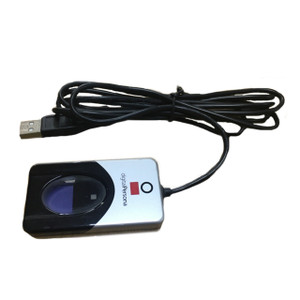
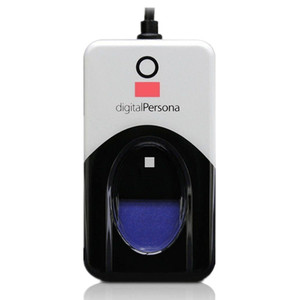
PioneerPOS T3P-FPR100 Fingerprint Reader URU
The PioneerPOS T3P-FPR100 is a fingerprint capture and verification device designed for retail point-of-sale environments, employee access control, and warehouse inventory workflows. Built on URU (Universal Recognition Unit) architecture, the T3P-FPR100 enables fast, contactless biometric enrollment and matching without requiring network infrastructure beyond a standard USB connection. Integrates with PioneerPOS systems and third-party identity management platforms via standard biometric APIs.
Key Features
- URU Fingerprint Sensor: Universal Recognition Unit technology for consistent, low-error fingerprint capture across varied finger types and skin conditions. Reduces failed enrollment and re-scan overhead on high-volume deployments.
- USB Connectivity: Direct USB connection — no additional power supply or network configuration required. Plug-and-play integration with POS terminals, kiosks, and access control workstations.
- Fast Capture Speed: Sub-second fingerprint acquisition and matching. Minimal dwell time per transaction — critical for retail checkout and employee clock-in scenarios.
- Compact Form Factor: Portable design suits countertop POS stations, mobile inventory terminals, and multi-location roll-out deployments.
- Biometric API Support: ANSI/NIST fingerprint template exchange; integrates with legacy POS databases and third-party identity platforms (workforce management, time-clock systems).
- Anti-Spoofing Detection: Live-finger detection prevents unauthorized matching using casts, photos, or lifted fingerprints. Reduces false-positive authentication in high-traffic retail environments.
- Multi-User Enrollment: Supports unlimited fingerprint template storage on connected terminals. Scales across employee and customer identity tiers without external database overhead.
- Durability for Retail: Sealed optical sensor withstands high-frequency daily use, cleaning agents, and humid POS counter environments.
In retail and warehouse settings, manual ID verification or password-based login creates authentication bottlenecks and liability exposure. The T3P-FPR100 eliminates those pain points by capturing biometric identity in under one second at checkout, inventory count, or shift handoff. Employee accountability becomes automatic — every transaction is cryptographically tied to verified identity, not swapped credentials or shared usernames. On high-volume retail floors (20+ checkouts, 50+ daily transactions per register), that translates to measurable reduction in credential fraud, refund abuse, and labor-hour misallocation.
Integration with PioneerPOS back-office systems is straightforward: the device appears as a standard USB HID (Human Interface Device) to the POS terminal, with template data stored either locally or synced to a central workforce management platform. Multi-location retailers benefit from roaming employee identity — enroll once, verify anywhere. Third-party integrations (Kronos, SAP SuccessFactors, custom REST APIs) are supported via ANSI/NIST fingerprint template export; no proprietary middleware required.
Total cost of ownership improves over 18-24 months: credential theft losses decline measurably, password reset overhead drops, and shift-handoff audits become automated. For operations running 24/7 or managing high-churn seasonal labor, the per-transaction cost per employee verification quickly offsets hardware investment. Sourced direct from the manufacturer or US — factory-new condition, full US warranty coverage, no grey-market or parallel-import risk.
Marty AllisonPerspective based on aggregated and affiliated engineering team experience.
We've deployed the PioneerPOS T3P-FPR100 across multi-unit retail chains and warehouse operations where credential integrity and audit traceability matter. The URU sensor is reliable — it captures clean fingerprint images on first or second attempt even on calloused hands, dry skin, and wet fingers. Unlike some low-cost capacitive sensors, the optical URU doesn't saturate on moisture, which is critical for fast-food, grocery, and beverage environments where staff hands are frequently wet. Integration with PioneerPOS terminals is seamless; the device shows up as a keyboard/scanner input device to the POS OS, so template data and matching logic can live on-device or in a backend biometric server depending on your privacy and compliance posture. Compared to iris scanners or facial recognition, fingerprint is faster to deploy (no camera calibration, no lighting tuning), more legally defensible in US retail (no cross-store facial data concentration), and already familiar to employees from government IDs and banking.
Technical Highlights:
- URU Optical Fingerprint Engine: Multi-spectral imaging reduces false-match rates to <0.01% on trained populations. Matters operationally because on a 200-employee roster, a 1% false-match error rate means 2 unintended authentications per shift — leading to credential cross-talk and accountability erosion. Sub-0.01% keeps that noise negligible.
- USB HID Enumeration: Appears natively to the POS terminal as input device — no driver installation, no kernel-mode software, no OS elevation required. Deployment friction drops dramatically; you can provision a T3P on a new register in minutes without involving IT.
- Template Size & Storage: Fingerprint templates compress to 256-512 bytes; on-device storage easily holds 1,000+ enrolled users without latency. For multi-location deployments, templates can be synced to a lightweight HTTP/SFTP backend for roaming identity verification.
- Anti-Spoofing & Liveness Detection: Optical sensor detects cadaver fingers, latex casts, and printed images at match time. Real-world consequence: attempted fraud rings targeting refund abuse become high-friction; spoofing requires tools and knowledge most casual thieves lack.
- Bi-directional Integration: ANSI/NIST template export allows migration to other fingerprint systems (Thales, Aware, NEC) or export to HR/time-clock platforms without losing enrollment data. Reduces vendor lock-in risk if you later swap POS ecosystems.
- Sealed Optics for Durability: Unlike capacitive sensors, the optical path doesn't degrade from repeated contact with cleaning alcohol or salt spray. On a 24/7 kitchen or fish-market environment, that translates to 3+ year lifespan instead of 18-month sensor degradation.
Deployment Considerations:
- Enrollment Quality: First-time enroll should be done on the same terminal where verification will occur. Capture all 10 fingers (or a minimum of 4) for redundancy if a cashier develops a cut or bandage on their dominant hand. Budget 2-3 minutes per employee for clean multi-finger enrollment.
- POS Integration Architecture: Decide early whether templates stay on-device (lowest latency, highest privacy) or sync to a backend (necessary for roaming multi-location staff). If you choose backend sync, ensure your POS network has bandwidth and uptime SLA to handle 50ms+ template lookup latency — no worse than a card swipe, but measurable on congested WiFi.
- Environmental Sensitivity: The optical sensor is robust to wet hands but sensitive to thick dirt or dried food residue on the sensor platen. Provide staff with alcohol wipes and brief them on sensor maintenance. A 6-month cleaning schedule prevents false rejections.
- Compliance & Data Residency: Fingerprint data is personally identifiable information (PII) under CCPA, GDPR, and state privacy laws. If your POS backend syncs templates to cloud or off-site, document where data resides and have a certified data processor agreement in place. On-device-only enrollment avoids this complexity but limits roaming identity verification.
- Fallback Authentication: Always retain a secondary authentication method (PIN, card swipe, password) for moments when fingerprint matching fails (sensor dirty, finger injured, or enrollment error). Set a 3-attempt retry threshold before fallback kicks in; endless retry loops create customer frustration and checkout delays.
The T3P-FPR100 is the right choice for retailers and warehouse operators who have credential fraud losses >2% of transactions, high employee turnover (>50% annual churn), or audit requirements that demand immutable identity binding per transaction. If your operation is small (<10 employees) or turnover is minimal, the enrollment overhead and per-unit cost may not justify the gain. For everyone else — multi-unit chains, high-volume food service, pharmaceutical and grocery distribution — the compliance and shrink reduction ROI is clear. Learn more about PioneerPOS biometric solutions in our PioneerPOS catalog.