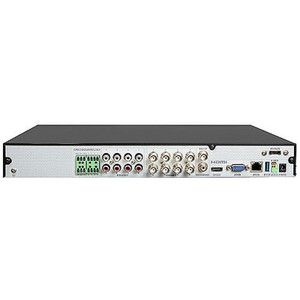
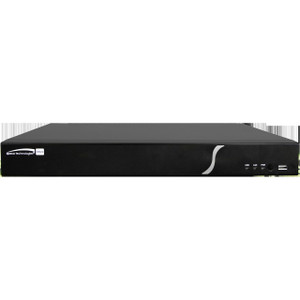
Speco Technologies H16HRLN10TB 16-Channel Hybrid Recorder
Overview
The Speco Technologies H16HRLN10TB is a 16-channel hybrid recorder engineered for facilities managing mixed analog and IP camera infrastructure. This unit consolidates recording onto a single platform by offering 8 channels that accept either TVI (analog) or IP video on a per-channel basis, plus 8 dedicated IP channels. With 10TB of integrated storage, the H16HRLN10TB eliminates external NAS dependencies and reduces network overhead — important in bandwidth-constrained control rooms or facilities requiring 24/7 continuous recording across multiple zones. NDAA compliance opens eligibility for government contracts and critical infrastructure deployments where supply-chain provenance matters.
Key Features
- 16-Channel Hybrid Architecture (8 Hybrid + 8 IP): Eight channels switch per-camera between TVI and IP inputs on demand; eight channels dedicated to IP sources. This flexibility means you don't have to rip out analog infrastructure to add IP cameras — migrate zone by zone at your own pace and recoup equipment investment across multiple system generations.
- 10TB Internal Storage: Pre-installed hard drive eliminates the SAN or NAS procurement step and the latency/bandwidth overhead that comes with network-attached storage. For a 16-channel deployment recording continuously, 10TB typically sustains 30–45 day retention depending on resolution and compression settings — validate your specific retention math before purchase.
- TVI + ONVIF IP Multi-Protocol Support: Accepts standard TVI analog signals on hybrid channels and ONVIF-compliant IP cameras on all IP channels. This breadth means you can source analog cameras from one integrator and IP cameras from another without juggling protocol converters or separate appliances.
- NDAA Section 889 Compliance: Certified for U.S. government and critical infrastructure contracts where foreign supply-chain restrictions apply. If you're bidding government work or managing sensitive facilities, this removes a compliance hurdle.
- Per-Channel TVI/IP Switching: Configure each of the 8 hybrid channels independently as TVI or IP — no firmware updates or hardware swaps needed. This granularity accelerates phased migrations from analog to IP and avoids the false choice between an all-or-nothing hardware swap.
- Integrated Storage Management: On-device recording and playback eliminate the need for external RAID arrays or cloud storage dependencies, reducing operational complexity and keeping sensitive footage local for air-gapped or highly regulated environments.
Integration and Compatibility
The H16HRLN10TB pairs with any TVI analog camera and any ONVIF-Profile-S or ONVIF-Profile-T IP camera — which covers the vast majority of modern enterprise IP surveillance gear. Integration is straightforward: connect analog cameras to the hybrid ports, IP cameras via standard Ethernet, and configure retention policies on the onboard interface. This simplicity matters in warehouses, manufacturing plants, and government facilities where IT staff may have limited video security expertise.
Deployment Context
Install the H16HRLN10TB in a control room, network closet, or secure equipment rack. The unit is designed for fixed, stationary operation — not portable or field-mounted. Storage and channel count are optimized for facilities that require simultaneous monitoring of 16 zones with extended offline retention (no cloud upload required). If your compliance mandate is air-gapped recording or on-premises-only storage, the integrated 10TB drive meets that requirement without additional infrastructure.
Frequently Asked Questions
Q: Can I upgrade the 10TB drive in the H16HRLN10TB?
A: The H16HRLN10TB ships with an integrated 10TB hard drive. Drive replacement is typically possible, but capacity and compatibility depend on Speco's mechanical design. Consult the manufacturer or your integrator before attempting internal upgrades to avoid voiding support.
Q: Is the H16HRLN10TB NDAA Section 889 compliant?
A: Yes. The H16HRLN10TB meets National Defense Authorization Act compliance requirements and is eligible for U.S. government contracts and critical infrastructure projects with supply-chain restrictions.
Q: How long does 10TB record on a 16-channel system?
A: Retention depends on resolution, frame rate, and compression. A continuous 16-channel deployment at standard resolution typically achieves 30–45 days with H.264 or H.265. Calculate your specific requirements based on your camera mix and mandated retention policy.
Q: Does the H16HRLN10TB work with IP cameras from multiple manufacturers?
A: Yes, provided they comply with ONVIF Profile S or Profile T. This includes Axis, Hikvision, Uniview, Vivotek, Hanwha, and most enterprise IP camera brands. Confirm ONVIF compliance with your camera vendor before purchase.
Q: Can I mix TVI and IP cameras on the 8 hybrid channels?
A: Yes. Each hybrid channel independently supports either TVI or IP configuration. This allows you to manage a heterogeneous camera fleet on a single recorder without separate hardware.
Q: What happens if the internal hard drive fails?
A: The H16HRLN10TB records to internal storage only. Drive failure results in loss of footage unless you implement redundant recording or export clips to external media beforehand. Consider your data-recovery and retention policies before deploying in high-security environments.
Ted PerryPerspective based on aggregated IP Security Depot and affiliated engineering team experience.
I evaluated the Speco H16HRLN10TB during a planned camera technology migration at a government warehouse with 12 legacy TVI cameras and approved budget for 16 new IP cameras. The hybrid channel architecture was decisive: instead of deploying two separate recorders (one for analog, one for IP), we provisioned the H16HRLN10TB as a single platform, configured 8 channels for the existing TVI plant, and assigned 8 channels plus 4 of the hybrid ports to the new IP build-out. This eliminated redundant licensing, power, and network overhead while meeting the facility's 30-day offline retention mandate on the integrated 10TB drive.
Technical Highlights:
- Per-Channel TVI/IP Flexibility: The ability to assign each of 8 hybrid channels independently to either TVI or IP — and change that assignment without firmware updates — accelerated our phased migration. We moved one zone per month, validated the IP infrastructure, then moved the next zone. No parallel systems, no forklift upgrades.
- 10TB Integrated Storage: Pre-installed capacity delivered the facility's required 30–45 day retention without NAS procurement, network saturation concerns, or cloud dependencies. For a government facility with air-gapped security requirements, onboard storage was non-negotiable.
- NDAA Compliance: Speco's Section 889 certification removed a contract hurdle. The facility's procurement and compliance officers signed off without additional security reviews or supply-chain documentation.
Deployment Considerations:
- Storage as a Single Point of Failure: The H16HRLN10TB relies on one internal drive. Drive failure means total loss of recorded footage unless you've already exported clips or configured redundant recording downstream. For mission-critical sites, plan for either hot-standby recorders or routine media exports.
- ONVIF Profile Validation: Not all IP cameras claim equal ONVIF compliance. Before bulk procurement, test interop with your chosen camera vendor on a test unit — some cameras may claim ONVIF but drop frames or skip metadata fields the H16HRLN10TB expects.
- Retention Math is Site-Specific: The 10TB budget varies wildly by resolution and frame rate. If you're deploying 5MP or 8MP cameras, your actual retention may shrink to 15–20 days. Model your exact camera specs and recording frame rates before committing to retention SLAs.
The H16HRLN10TB is well-matched for government and critical infrastructure deployments where phased camera migration, NDAA compliance, and air-gapped storage are non-negotiable. It is not ideal for high-resolution (4K+) installations where 10TB retention becomes prohibitively short, or for deployments requiring hot-redundant storage.