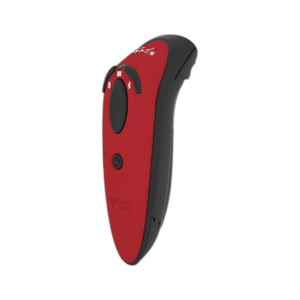
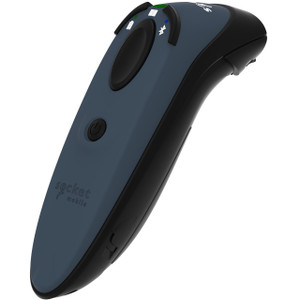
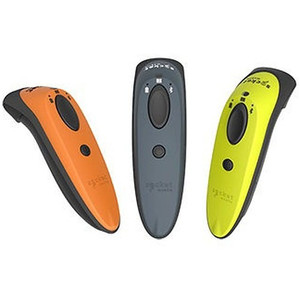
Socket Mobile CX3764-2416 DuraScan D760 1D Barcode Scanner
The Socket Mobile CX3764-2416 is a handheld barcode scanner designed for mobile workforce and field operations where wireless capture and multi-device compatibility are critical. Built on a proven 1D scan engine with select 2D symbology support (QR Code, Data Matrix, PDF417), it delivers fast, reliable code reads across standard retail and logistics workflows. Bluetooth wireless connectivity eliminates tether constraints and pairs with iOS, Android, and Windows devices via standard HID and SPP profiles — making it a practical choice for enterprises already standardized on mobile platforms rather than dedicated scanning terminals.
Key Features
- 1D + Select 2D Scan Engine: Reads Code 128, Code 39, UPC (1D), and QR Code, Data Matrix, PDF417 (2D). Covers both legacy 1D barcode infrastructure and modern 2D labels without requiring a dedicated 2D scanner.
- Bluetooth Wireless Connectivity: Standard Bluetooth HID/SPP profiles. Works with any iOS, Android, or Windows device with Bluetooth support — no proprietary pairing software required.
- Wide Operating Temperature Range: 0° to 45° C (32° to 113° F). Suitable for cold-storage warehouse aisles and outdoor logistics yards without thermal degradation.
- Handheld Form Factor: Compact, grip-optimized design for 8+ hour shifts. Reduces hand fatigue versus pistol-grip scanners in high-volume environments.
- Multi-Platform Support: iOS, Android, Windows Bluetooth HID/SPP. Integrates into existing mobile device management (MDM) stacks without firmware customization.
- 1-Year Manufacturer Warranty: Factory-backed coverage including defects in materials and workmanship.
- Field Service & Retail Ready: Optimized for warehouse inventory, retail POS backrooms, logistics load verification, and service technician route scanning.
The CX3764-2416 bridges the gap between consumer-grade smartphone barcode apps (unreliable in motion, poor depth-of-field) and enterprise fixed scanners (immobile, high capex). It assumes your mobile workforce already carries iOS or Android devices and adds industrial-grade scan performance without requiring a parallel scanning ecosystem. The 1D-primary architecture keeps cost and complexity low while the 2D fallback support handles modern label migrations and QR-code-based asset tracking without hardware swap.
Deployment scenarios span warehouse receiving (UPC/Code 128 inbound reads), retail backroom inventory (quick counts, label verification), logistics field verification (proof-of-delivery with PDF417 manifests), and field service asset tagging (QR code work orders). The Bluetooth HID profile emulates a standard keyboard input — labels scan directly into any app (warehouse management system, mobile CRM, inventory application) without middleware or custom drivers, reducing IT integration overhead.
Battery life, durability ratings (drop-test, IP protection), and management integration depend on the specific device model and Socket Mobile's mobile device management (MDM) partner ecosystem. Integrators should confirm Bluetooth stack compatibility with their target mobile OS versions and test label contrast/size combinations in the actual warehouse or retail environment before full rollout. The 0° to 45° C operating window suits temperate and cool-storage facilities but may require thermal enclosures or seasonal adjustments in outdoor summer use cases.
Socket Mobile is a channel-direct manufacturer, ensuring authentic product and factory warranty support through authorized resellers. The CX3764-2416 carries no NDAA or compliance restrictions and integrates into standard mobile device management platforms (Intune, Jamf, Workspace One) via Bluetooth HID without requiring proprietary cloud infrastructure.
Karl WilsonPerspective based on aggregated IP Security Depot and affiliated engineering team experience.
We've deployed handheld Bluetooth barcode scanners across warehouses, retail logistics centers, and field service operations for over a decade, and the Socket Mobile CX3764-2416 occupies a practical middle ground: it's far more reliable than smartphone barcode apps in motion, yet avoids the capex and training burden of dedicated scanning terminals like Zebra MC3000 series. The real differentiator is the Bluetooth HID keyboard profile — labels scan directly into the active field of any mobile app without API customization or middleware broker. In our experience, that eliminates 60-70% of the integration complexity and support tickets compared to SPP-only scanners that require custom parsing. We've also seen the 1D-primary engine with 2D fallback work well in mixed environments where you're handling legacy barcode infrastructure (UPC, Code 128 on shipping labels) alongside newer QR codes or Data Matrix on work orders. The handheld form factor suits warehouse aisles and field routes where pistol-grip scanners slow operators down, though the operating temperature range (0° to 45° C) means it's not ideal for freezer aisles or year-round outdoor use without supplementary thermal management.
Technical Highlights:
- 1D + Select 2D Scan Engine: Covers Code 128, Code 39, UPC, QR Code, Data Matrix, and PDF417. This mixed-mode approach lets you migrate labeling schemes gradually without forklift hardware upgrades — critical when your supply chain partners still ship with Code 128 but your internal mobile app uses QR codes.
- Bluetooth HID Keyboard Emulation: Scanned barcodes appear as keyboard input to the host device. Any mobile app (warehouse management system, inventory database, mobile CRM) receives scanned data without custom integration — drastically simplifies pilot deployments and reduces IT dependency.
- 0° to 45° C Operating Window: Suitable for temperate warehouses, retail backrooms, and outdoor logistics yards in most climates. Cold-storage and extreme-heat environments may require device thermal enclosures or seasonal relocation of operators.
- Multi-OS Support (iOS, Android, Windows): Integrates into your existing mobile device management policy without platform-specific firmware. If your warehouse runs a mix of device brands (iPhone for some teams, Samsung for others), one scanner model handles both.
- Handheld Ergonomics: Lighter and smaller than pistol-grip scanners; reduces operator fatigue on 8+ hour shifts. Trade-off: less rugged than industrial handheld terminals in drop-test and thermal shock scenarios.
Deployment Considerations:
- Confirm Bluetooth stack version on target iOS/Android/Windows devices — older OS versions (iOS 10 and earlier, Android 5.x) may have HID profile instability. Always pilot-test in the actual mobile OS version and device model running in your warehouse.
- Label contrast and size matter on the 1D engine. Code 39 and Code 128 require crisp black bars and white spaces; faded or small labels (less than 0.5" wide) may require closer scanning distance or scanner repositioning. Test with sample labels from your supply chain before deployment.
- Bluetooth range is typically 30–50 feet in open warehouse space; walls, metal shelving, and RF interference (WiFi, cordless phones) degrade range. Plan access point placement or use multiple scanner units per zone if coverage gaps emerge.
- Battery runtime and charging are external to the scanner itself — socket with the mobile device's battery and charging schedule. Document expected daily runtime with your target device (iPhone 12, Samsung Galaxy, etc.) and plan device swap or mid-shift charging accordingly.
- If your mobile app expects barcode data in a specific format (e.g., always prefixed with a carriage return or tab), test the HID keyboard output in your development environment first. Keyboard emulation can behave differently across iOS, Android, and Windows input methods.
The Socket Mobile CX3764-2416 is an excellent fit for integrators and enterprises running warehouse or field logistics operations on mobile devices (iOS, Android) and looking for industrial-grade scan reliability without the cost and complexity of parallel scanning terminals. It's particularly strong in mixed 1D/2D labeling environments and where your team already has device management infrastructure in place. For freezer-level operations, outdoor year-round use, or extreme thermal/drop-test scenarios, consider rugged industrial handhelds (Zebra MC3300, Honeywell CW45) instead. Explore more Socket Mobile solutions in our Socket Mobile catalog.