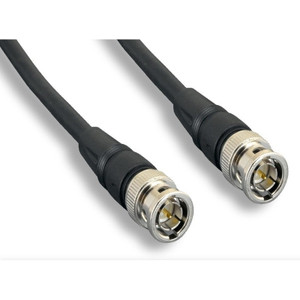
Comnet CLFE16EOC Sixteen-Channel Ethernet over Coax Extender with Pass-Through PoE
Overview
The Comnet CLFE16EOC is a 16-channel Ethernet-over-coax extender purpose-built for extending IP networks across existing copper infrastructure in security surveillance and access control deployments. This model passes through IEEE 802.3af PoE while delivering full 10/100Mbps Ethernet in both directions — solving the real problem of reaching IP cameras, door controllers, and network appliances far beyond standard UTP limits without trenching new cable. The CLFE16EOC handles 16 simultaneous channels, making it the logical choice for larger distributed installations where multi-point extension isn't negotiable.
Key Features
- 10/100Mbps Full Duplex Ethernet: User-selectable via DIP switch between 10 or 100 Mbps per channel. Full duplex means upstream and downstream traffic share the same bandwidth without collisions — critical for IP video and real-time access control where you can't afford packet loss or latency.
- Pass-Through PoE (IEEE 802.3af): Delivers power to remote IP cameras, readers, and edge devices alongside Ethernet data. No separate power run required at the far end — one coax cable carries both, reducing installation labor and conduit congestion in existing CCTV plant.
- Extreme Transmission Distance on Coax: Reaches 1524 meters (5,000 feet) at 10 Mbps and 600 meters (1,970 feet) at 100 Mbps over coaxial cable. On standard UTP (CAT-5), extends to 914 meters at 10 Mbps and 600 meters at 100 Mbps. Distances are measured with PoE at 50V — meaningful for parking lots, campuses, and warehouse perimeters where alternative infrastructure doesn't exist.
- Sixteen Independent Channels: One device handles 16 extender pairs simultaneously. Each channel is configurable separately via DIP switches for data rate (10/100), UTP pair count (1 or 4 pairs), and local versus remote sourcing. Reduces rack footprint and complexity compared to 16 single-channel units.
- Extended Operating Temperature Range (-40°C to +75°C): Rated for outdoor equipment cabinets, rooftop enclosures, and unheated vaults. Humidity tolerance to 95% non-condensing handles salt-spray coastal sites and humid storage facilities. Critical spec when equipment sits in a parking-lot pedestal or roof-mounted box without active climate control.
- Minimal Power Draw (20W for 16 channels): 9–15 VDC input on the multi-channel units. At 20W total for all 16 channels, a small 24 VDC DIN-rail supply handles the entire extender stack. Compares favorably to alternatives requiring individual power supplies per channel or higher-voltage demands.
- RFC 2544 Compliance and Symmetric Throughput: Certified for TCP/IP, UDP, and HTTP/HTTPS over distance. The symmetric architecture ensures equal uplink and downlink speeds, preventing bottlenecks in dual-direction video analytics or two-way intercom deployments.
- MTBF >100,000 hours: Statistically translates to better than 11+ years of continuous 24/7 operation. Matters for unattended remote sites where field replacement is expensive.
Integration & Compatibility
The CLFE16EOC operates transparently — from a network protocol perspective, the extender is invisible. Any IP camera, access control panel, or edge device that speaks Ethernet and PoE will function across the extended link without driver or firmware changes. The device supports Multicast, Unicast, and Jumbo Frames, so surveillance VMS traffic (often multicast-heavy) and large packet payloads pass through unmodified. DIP switches allow per-channel bandwidth and pair selection, enabling mixed 10 and 100 Mbps channels on the same device if a deployment has legacy 10 Mbps devices alongside newer 100 Mbps cameras.
The 16-channel variant operates as a rack-mountable 1U unit (4-channel version fits in 1 rack slot; 16-channel is desktop or wall-mounted). Power connection is via 2-pin terminal block for local supply on the 4/8/16-channel models, or via PoE input on the single-channel version. LED indicators show link and activity per Ethernet port and per coax/extended interface, simplifying field diagnostics when troubleshooting long runs.
What's in the Box
Package contents for the CLFE16EOC are not specified in available technical documentation. Contact the supplier or manufacturer directly for exact included items such as mounting hardware, terminal blocks, or patch cables.
Frequently Asked Questions
Q: Can the CLFE16EOC extend PoE to a 90W high-power device like a PTZ camera?
A: No. The extender passes through IEEE 802.3af PoE, which supplies maximum 15.4W at the remote end. High-power devices (PoE+ 30W and beyond) require a separate high-power supply at the remote location or a PoE injector between the extender output and the device.
Q: What happens if I mix 10 and 100 Mbps channels on the same CLFE16EOC unit?
A: Each of the 16 channels is independently configurable via DIP switch. You can set some channels to 10 Mbps and others to 100 Mbps on the same device. The speeds do not interfere; each channel operates at its selected rate.
Q: Does the CLFE16EOC require any software or driver installation?
A: No. The device is transparent to Ethernet and PoE. Once powered and cabled, it requires no configuration beyond DIP switch settings. No drivers, firmware, or VMS integration are needed.
Q: What is the maximum distance on coax if I use 10 Mbps mode?
A: The CLFE16EOC reaches 1524 meters (approximately 5,000 feet) on coaxial cable at 10 Mbps with 50V PoE supply. At 100 Mbps, maximum distance drops to 600 meters due to signal attenuation at higher speeds.
Q: Is there a difference in performance between the 4-channel, 8-channel, and 16-channel models?
A: All models use the same core technology and deliver identical per-channel performance. The difference is channel count and physical form factor. The 4-channel version fits a single rack slot; the 8 and 16-channel versions are larger desktop or wall-mount units.
Q: What certifications or standards does the CLFE16EOC meet for traffic control or utilities?
A: The device is tested and certified for compliance with NEMA TS-1/TS-2 and CALTRANS environmental requirements for traffic control equipment, covering temperature shock, mechanical vibration, humidity with condensation, and transient overvoltage protection.
The CLFE16EOC solves a real problem I see on every campus and parking-lot retrofit: you've got coax in the ground already from the analog CCTV days, and you don't want to trench new copper or fiber. With the CLFE16EOC, you push 10/100 Ethernet and PoE down existing coax runs — 1524 meters at 10 Mbps, or 600 meters at 100 Mbps. That's enough distance to reach the far corners of most deployments without a second power source at the remote camera or reader. The 16-channel density means one box handles what used to require a rack of single-channel extenders.
Technical Highlights:
- Pass-Through PoE (IEEE 802.3af): Delivers 15.4W maximum to the remote device alongside Ethernet data on a single coax run. Eliminates the need for a separate 24 VAC or VDC supply at the far end — one cable, one run, one conduit.
- Coax Range at 10 Mbps (1524m) vs. 100 Mbps (600m): Choose the speed that fits your distance and bandwidth need. Legacy 10 Mbps for very long runs or when video bitrate is under 1 Mbps per camera; 100 Mbps for higher-quality or multi-camera segments under 600 meters. DIP switches let you pick per channel.
- 16 Independent Channels in One Unit: Configurable separately for speed, pair count (1 or 4 pair UTP), and local/remote power. One extender handles 16 camera runs or access-control loops, shrinking your equipment footprint from a full rack to a single 1U or compact desktop box.
- MTBF >100,000 hours at -40°C to +75°C: This device survives rooftop vaults and unheated cabinets. Humidity to 95% non-condensing is realistic for coastal or humid sites. When your extender is in a weatherproof pedestal on the property line, this specification difference matters.
- Transparent Ethernet Bridge: RFC 2544 compliance and support for Multicast, Unicast, and Jumbo Frames mean surveillance traffic passes through unmodified. No packet loss or reordering over distance — your VMS multicast streams and access-control polling work as if the extender wasn't there.
Deployment Considerations:
- Do not attempt to extend PoE+ (30W) or PoE++ (90W) devices through this extender. It passes 802.3af only (15.4W max). High-power PTZs, high-end analytics appliances, or powered switches need a separate supply at the remote end or a higher-power extender in the same family.
- At 100 Mbps on coax, you're limited to 600 meters. If your camera site is 1500 meters away, you must drop to 10 Mbps. Confirm your camera's bitrate at 10 Mbps before committing to that speed — some IP cameras won't perform well at 10 Mbps Ethernet regardless of bitrate capability.
- Each channel's DIP switch configuration is permanent until someone physically accesses the unit. Document which channels are set to which speeds and power modes, or you'll waste time troubleshooting mismatched settings in the field.
The CLFE16EOC is the right extender for campus security retrofits and warehouse perimeter networks where analog coax is already in place and you can't justify fiber or new copper runs. It's equally at home in utility SCADA networks where long-distance IP control is required but you're forced to use existing paired or coaxial cabling. For parking lots, loading docks, and remote gate positions — situations where Ethernet distance and PoE power converge — this is the standard choice.