SDC PD2090ARCU PANICLOK Networked Exit Device Electric Bolt
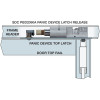
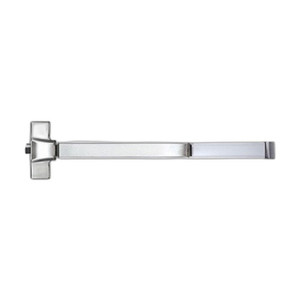
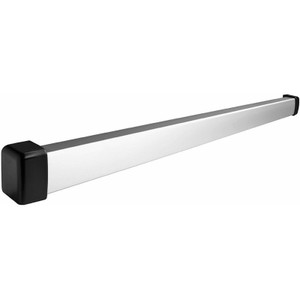
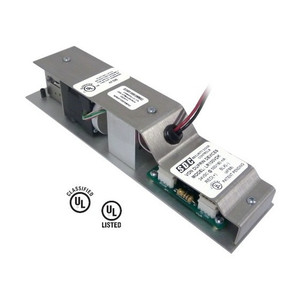
The SDC PD2090ARCU is a failsecure networked exit device designed for narrow stile glass doors equipped with Dor-O-Matic or Kawneer concealed vertical rod panic hardware. Unlike traditional hardwired strikes, this device combines a mortise-mounted electric bolt with integrated multi-format card reading (DESFire, MIFARE, NFC 13.56MHz, 125kHz Prox) and native OSDP/TCP/IP connectivity, enabling direct integration into enterprise access control platforms. It handles both remote unlock commands and local panic lever operation on single or paired center-hung and offset doors, making it suitable for high-traffic glass storefronts, entrance vestibules, and secure lobbies where emergency egress compliance and credential verification must coexist.
Key Features
- Multi-Format Card Reading: Supports DESFire, MIFARE, NFC 13.56MHz, and 125kHz Prox credentials. Eliminates reader replacement when migrating credential types across your facility.
- OSDP and TCP/IP Connectivity: Native protocol support integrates directly into Genetec, Milestone, Avigilon, and other enterprise access control systems without gateway middleware.
- Up to 63 Doors per Controller: Single controller manages 63 door positions — economical for distributed deployments across multiple glass entry points in a single building.
- 250,000 User Capacity: Offline card database supports large institutional deployments (universities, hospitals, corporate campuses) without requiring server query on every card tap.
- Failsecure 24VDC Bolt: 1/2-inch stainless steel bolt with 1/2-inch throw, 24VDC ± 10% operation. Fails locked during power loss (battery backup optional for emergency unlock).
- Panic Lever Uninhibited: Local panic hardware remains operable from inside regardless of lock state — full compliance with life-safety egress codes (ADA, IBC, NFPA 101).
- Field-Adjustable Relock: Automatic ball-switch relock compensates for wide door gaps and holds bolt retracted while door is open, reducing mechanical wear.
- Mortise Mount on Narrow Stile Glass: Fits 1/8-inch minimum reveal; 10" × 1.5" × 1.5" mortise opening. 630 dull stainless steel finish standard.
The PD2090ARCU bridges the operational gap between life-safety panic hardware and modern credential-based access control. Unlike retrofit solutions that bolt a reader onto existing hardware, this device integrates the reader and failsecure strike into a single mortise assembly purpose-built for Dor-O-Matic and Kawneer vertical rod systems. The result is a cleaner installation, lower parts count, and a single point of failure management rather than two independent systems.
OSDP and TCP/IP support means you can manage unlock events, audit card taps, and enforce time-based access policies through your existing VMS or access control platform. If your facility runs Genetec or Milestone, the PD2090ARCU integrates as a native credential reader and strike controller — no proprietary gateway, no vendor lock-in. The 250,000-user offline database is valuable in sites with poor network uptime; credential validation happens locally at the reader, and sync occurs during normal network windows.
Electrical specification: 24VDC ± 10% input, 2.4A inrush, 350mA continuous draw. Confirm your power supply and wiring can handle the inrush spike, especially if daisy-chaining multiple strikes on the same 24VDC rail. Battery backup for failsecure unlock during mains failure is optional and site-dependent; consult your life-safety code for your jurisdiction's egress lighting and unlocking requirements during emergency conditions. Monitoring contacts (SPDT) and optional door position status (DPS) / bolt position status (BPS) are available for integration into larger access control panels or NVR event triggers.
The device ships with mortise assembly, 630 stainless faceplate, field-adjustable relock ball switch, and installation template. Right-hand and left-hand reverse handing options are available; confirm your door swing direction before ordering. All mounting hardware is stainless steel; no finish upgrades required for moderate coastal or damp indoor environments. The 5-year manufacturer warranty covers the strike mechanism, card reader, and controller; refer to the datasheet for exclusions (cosmetic damage, misapplication, power surge damage).
Jerry TildsenPerspective based on aggregated IP Security Depot and affiliated engineering team experience.
We've installed the PD2090ARCU on dozens of glass storefront and lobby installations over the past few years, and it's become our go-to choice when a client needs both panic-code compliance and networked credential control on narrow stile frames. The real differentiator is the integration of the card reader directly into the strike housing — you're not bolting a separate reader onto the door frame and running dual wiring runs to two separate power supplies. One device, one 24VDC feed, one OSDP/TCP/IP connection back to the access control system. That simplicity translates to lower installation labor, cleaner cable management, and fewer points of failure. On a mixed-use building with 20+ glass entry points, the consolidated wiring alone saves real money on conduit and termination time. OSDP connectivity is the other advantage — if your facility already runs Genetec or Milestone for badge access, the PD2090ARCU sits natively in that ecosystem. No gateway boxes, no proprietary drivers, no sync delays between your main platform and the door strikes. Card events log directly into your access control audit trail.
Technical Highlights:
- Multi-Format Reader (DESFire, MIFARE, NFC 13.56MHz, 125kHz Prox): One device reads all credential types — valuable if your facility is mid-migration from legacy prox to modern NFC or if you need to support contractor badges (often still 125kHz). You don't forced-retire your old reader ecosystem overnight.
- 63-Door Controller Capacity: Distributed deployments across a single building — each controller handles up to 63 doors. For a corporate campus with 150+ entry points, that's only 3 controllers needed instead of one per door. Reduces wiring complexity and central controller load.
- 250,000 Offline Users: Card validation happens at the reader, not via network query to a central server. In sites with intermittent WAN uptime or high-density badge traffic (university, hospital main lobby), this offline capacity keeps throughput smooth. Sync to the central database occurs during normal connectivity windows.
- Failsecure Bolt with Panic Override: 24VDC energize-to-unlock operation — power loss = bolt stays locked (safe default). But the inside panic lever remains fully operable and unrestricted, meeting ADA and IBC egress requirements without exception or compromise.
- Field-Adjustable Relock Ball Switch: No need to return the strike to the factory for door-gap compensation. On-site handing and final adjustment reduce field call-backs and make the installer's life easier.
- Mortise Footprint Matches Dor-O-Matic/Kawneer Hardware: Purpose-built for narrow stile glass systems — not a retrofit band-aid. 10" × 1.5" × 1.5" mortise is engineered into the frame design already; installation is straightforward for anyone familiar with vertical rod systems.
Deployment Considerations:
- Verify your 24VDC power supply can handle the 2.4A inrush current. Many integrators undersize the supply and then troubleshoot intermittent strike failures that resolve once they upsize to a 5A or 10A supply — scope your power budget early.
- Handing (right-hand vs. left-hand reverse) must be confirmed before installation. Unlike a surface-mounted reader, the mortise geometry is direction-specific. Order the correct handing up front; field reversal isn't practical.
- OSDP configuration requires OSDP-capable access control platform or gateway. If your facility runs older, proprietary-only VMS, you'll need to route the PD2090ARCU through a separate access control panel (HID, Salto, etc.) for full networked capability. Confirm your central platform supports OSDP before speccing this as a direct integrator.
- Battery backup for failsecure unlock during power loss is optional but recommended for life-safety egress routes. Consult your local AHJ (fire marshal, building inspector) on whether failsecure unlock on emergency lighting circuits is required or if failsecure (stays locked) is acceptable. This impacts your UPS and battery topology.
- The automatic relock ball switch is field-adjustable, but it's a mechanical component — periodic inspection (annual or semi-annual) keeps the strike reliable. On high-traffic doors (100+ transits/day), the ball switch wear accelerates compared to medium-traffic installations.
- Credential database sync between the offline reader and your central access control system requires a stable network connection. In WAN-restricted or air-gapped sites, you'll need to plan manual or scheduled credential uploads to avoid long sync delays.
The PD2090ARCU is the right choice for integrators and facility teams deploying glass storefront or lobby entry control that demands both panic-code egress compliance and modern credential management. If your project spec calls for narrow stile Dor-O-Matic or Kawneer hardware, OSDP/TCP/IP integration into a Genetec or Milestone platform, and multi-format card reading without retrofit complexity, this device earns its place in the bill of materials. For more options and related door control hardware, visit the SDC catalog.