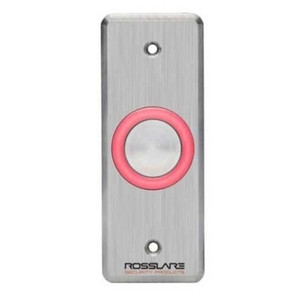
SDC PCB114B01-A 1580 Series EmLock Terminal Controller
The SDC PCB114B01-A is a terminal-level credential processor for the 1580 Series electromagnetic lock platform, designed to handle HID credential decisions at the door rather than centralizing all authorization logic at a main panel. In multi-tenant buildings, campuses, and distributed access scenarios, this controller eliminates bottlenecks by pushing authentication down to individual entry points—reducing latency, improving fault isolation, and scaling credential processing across dozens of doors without overloading a single control node. This is the right fit when you need modular, per-door access intelligence with standard 12V/24V power and HID reader integration.
Key Features
- Terminal-Level Architecture: Processes HID credentials at the door. Credential verification happens locally, not through a distant panel—faster response and better resilience if network or central controller fails.
- HID Credential Support: Native integration with HID credential readers (proximity, smart card, mobile). No third-party gateway translation required.
- 1580 Series EmLock Integration: Paired with SDC 1580 electromagnetic strikes and compatible door hardware. Tight coupling ensures reliable latch control and power management.
- 12V/24V Dual Voltage: Flexible power environment compatibility. Accommodates 12V or 24V supply infrastructure typical in commercial door control installations.
- Distributed Scalability: Add controllers at each door without straining a central access control panel. Ideal for campuses, multi-floor buildings, or multi-tenant complexes with independent access policies per door or zone.
- Electromagnetic Lock Compatibility: Works with standard 1580 Series EmLock strikes. Handles inrush current management for reliable solenoid engagement without nuisance faults.
- Lifetime Warranty: Factory-backed warranty coverage across the product lifecycle—reduces spare inventory and replacement cost pressure.
Distributed Access Architecture & Deployment Context
Traditional centralized access control routes every credential read back to a main panel for verification, then commands the door strike—a single point of failure and a bandwidth/latency bottleneck at scale. The PCB114B01-A inverts that model: each door carries its own intelligence. An integrator loads credential policy (user groups, time windows, door assignments) into the controller at installation or remotely, and the door authenticates in real time. If the central panel goes offline or the network link fails, the door still functions—credential decisions are cached locally. This architecture is essential in buildings with 20+ independent doors or tenants who demand autonomous access management without waiting for corporate IT approval on every credential change.
Electromagnetic locks are inductive loads that draw peak current far exceeding steady-state consumption during solenoid engagement. The PCB114B01-A is engineered to manage that inrush without false faults. However, power budgeting is critical: if you're controlling four doors on a single 24V supply, you must size that supply for simultaneous peak draws (worst-case latch-all-four-doors-at-once scenario). Undersized supplies cause voltage sag, incomplete latching, and controller resets. Work with your integrator to calculate total load—HID readers + controllers + all lock solenoids—and select appropriate power infrastructure upfront. A 24V/10A supply might seem fine on paper but fail under peak load if four doors trigger within milliseconds of each other.
Integration with existing door hardware is straightforward if you're starting fresh—HID readers wired to the controller, controller wired to the 1580 strike and 12V/24V supply. If retrofitting into an existing non-SDC system, confirm electrical and protocol compatibility first. The PCB114B01-A is locked into the 1580 ecosystem; repurposing it into a Salto, Gallagher, or other third-party platform requires custom integration that voids warranty and increases support burden. New deployments or SDC-committed upgrades are the right use cases; field retrofits in mixed-vendor environments carry integration risk.
Lifetime Warranty & Support Posture
SDC's lifetime warranty on this controller reduces long-term cost of ownership and spare parts pressure. Over a 10-year building lifecycle, a defective controller can be replaced at no material cost—important for facilities managers planning budgets around predictable capex. Pair this with ONVIF-compatible or SDC-native access control software (depending on your VMS choice) for centralized monitoring, audit logging, and credential provisioning across multiple controllers, and you maintain operational intelligence without sacrificing distributed door autonomy.
Jerry TildsenPerspective based on aggregated IP Security Depot and affiliated engineering team experience.
We've deployed the PCB114B01-A in office parks, multi-tenant medical buildings, and university campuses where the distributed architecture eliminates the false dichotomy between centralized control and per-door autonomy. The real differentiator versus older monolithic panel designs is resilience: if your central access panel crashes, every door on a legacy system goes into fail-safe (locked) or fail-open (unlocked) until the panel recovers. With the PCB114B01-A, each door is a self-contained credential processor. That doesn't mean disconnected—you can still provision credentials remotely, audit every access event, and set time-based policies—but the door doesn't lose function if the network hiccups. In our experience, that's worth the additional per-door hardware cost in any building with more than 10 independent access points. The 1580 ecosystem is mature and has good integrator support; SDC's lifetime warranty is genuinely risk-reducing on a 5–10 year budget cycle. The main gotcha we see in the field is power supply undersizing—integrators size for steady-state consumption and discover during commissioning that simultaneous lock engagement causes voltage sag and intermittent controller resets. Always budget for peak inrush, not average draw.
Technical Highlights:
- Terminal-Level Credential Processing: HID credentials are authenticated at the door controller, not relayed to a central panel. Eliminates round-trip latency (50–500ms saved per access event) and reduces dependency on network uptime. Each door is a credential island—if one controller fails, others remain functional.
- 12V/24V Dual-Supply Architecture: Supports both 12V and 24V power environments without field modifications. Useful when integrating into buildings with mixed power infrastructure or when upgrading from 12V legacy systems to higher-draw 24V setups.
- HID Native Integration: Direct support for HID proximity cards, smart cards, and credential formats. No gateway translation, no proprietary bridging—reduce integration friction and maintenance burden versus third-party credential converters.
- 1580 Series Electromagnetic Lock Compatibility: Engineered to handle solenoid inrush current and power sequencing. The controller manages lock engagement state, reducing nuisance faults and extending strike hardware life by smooth current ramps instead of hard on/off switching.
- Scalable Multi-Door Provisioning: Load credential policies (user groups, time windows, door assignments) once per controller. Changes propagate instantly at the door level without waiting for central panel sync cycles. Useful in large campuses where credential turnover is frequent.
- Lifetime Factory Warranty: Eliminates spare parts pressure and reduces 10-year cost of ownership. On a 50-door installation, one board failure doesn't trigger emergency purchasing or OEM lead-time bottlenecks.
Deployment Considerations:
- Power supply sizing is non-negotiable. Electromagnetic locks draw 2–5A peak inrush for 100–500ms per engagement. If you're controlling four doors on a single 24V supply, size for simultaneous worst-case peak (e.g., four locks at 3A each = 12A worst case). Undersized supplies cause intermittent resets and nuisance faults. Always calculate peak load with your integrator before installation.
- The PCB114B01-A is locked into the 1580 ecosystem. Retrofitting into Salto, Gallagher, or other vendor systems requires custom bridging that voids warranty. Use this for greenfield 1580 deployments or SDC-committed upgrades, not mixed-vendor retrofit projects.
- Credential provisioning is local to each controller. If you have 50 doors and need to revoke a badge system-wide, you either push updates to all 50 controllers individually or integrate with SDC software that handles batch provisioning. Plan for management overhead versus a central panel where one command affects all doors.
- Network uptime is not a hard dependency, but audit logging and remote provisioning require connectivity. Design your network path with redundancy (mesh or dual Ethernet uplinks) if compliance audit trails are mandatory—otherwise, door access logs are cached locally and must be pulled from each controller periodically.
- Environmental ruggedness is controller-specific. The PCB114B01-A itself is rated for indoor/protected mount in standard door frames. If you need outdoor readers or controllers in harsh environments (freezers, loading docks, outdoor shelters), confirm environmental ratings before ordering—SDC has ruggedized variants but not all 1580 components are identical in environmental specs.
The PCB114B01-A is the right choice for integrators and facilities managers building new multi-door campuses, upgrading from centralized monolithic panels to distributed architecture, or managing high-turnover credential environments where per-door autonomy and fault isolation matter more than simplicity. For single-door or small 2–3 door installations, a simpler panel-based approach may be more cost-effective. See the SDC catalog for the full 1580 Series ecosystem and alternative controller options.