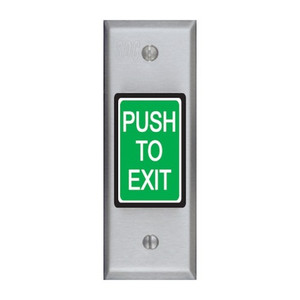
SDC 413PNU Pneumatic Timer Controller 63-Door Access
The SDC 413PNU is a pneumatic timer controller engineered for mid-to-large multi-door access control deployments. It manages up to 63 doors with support for 250,000 user credentials, making it a practical choice for office complexes, apartment buildings, and enterprise facilities requiring timed egress control. The device consolidates credential processing and pneumatic strike timing into a single networked controller, eliminating the need for discrete pneumatic timers at each door and reducing both wiring labor and failure points.
Key Features
- Multi-Door Scalability: Supports up to 63 doors on a single controller. Credential database capacity of 250,000 users accommodates growth without system replacement.
- Pneumatic Timer Integration: Native pneumatic strike control with configurable hold times — simplifies delayed-egress installations and stairwell door automation without external timer relays.
- Multi-Protocol Communication: OSDP and TCP/IP protocols ensure compatibility with Genetec, Milestone, and other enterprise access control platforms. Both protocols run simultaneously for redundancy and flexibility.
- Broad Credential Support: DESFire, MIFARE, 13.56MHz NFC, and 125kHz proximity card compatibility. Existing reader investments remain operational during upgrades; new deployments can mix credential types on the same network.
- 24VDC Power Requirement: Standard low-voltage supply simplifies cabling and reduces transformer footprint. PoE options available through integration with compatible readers and network access control platforms.
- Pneumatic Strike Type: Optimized for pneumatic solenoids and time-delayed egress applications. Integrated timer eliminates external relay logic, reducing installation footprint and service calls.
- Lifetime Warranty: Factory-backed warranty covers controller hardware, reflecting manufacturing confidence in long-term reliability in access control environments.
The 413PNU's pneumatic timing function is particularly valuable in delayed-egress and code-compliant stairwell scenarios. Rather than managing timing logic through external relay modules or programmable controllers, the 413PNU embeds the delay timing directly, reducing cost of control circuitry and simplifying field troubleshooting. The credential capacity of 250,000 users supports enterprise deployments where centralized credential management is impractical, and the multi-protocol output ensures the controller integrates with existing systems without requiring gateway devices or protocol translation.
OSDP protocol compliance enables real-time tampering detection at the reader level and two-way communication for secure credential updates, which is critical in high-security environments. TCP/IP fallback ensures that if OSDP is not supported upstream, the controller maintains access logging and network visibility through standard IP infrastructure. This dual-protocol approach is common in enterprise campuses where legacy HVAC and IT networks may coexist with newer security platforms.
Credential type flexibility is a practical differentiator for integrators managing facilities with mixed card populations. Existing 125kHz proximity card readers continue to function alongside newer DESFire and NFC systems, reducing the financial burden of reader replacement. The 413PNU can enforce per-reader access policies (e.g., 125kHz cards access ground floor only, DESFire cards full campus), supporting phased migration strategies across multi-building sites.
The 413PNU is frequently deployed in corporate office buildings requiring stairwell security and egress control, residential access control systems with delayed-unlock features, and industrial facilities where pneumatic actuation is preferred over electronic strikes. Integrators commonly spec this controller in retrofit scenarios where existing pneumatic infrastructure must remain operational during access control system upgrades.
Jerry TildsenPerspective based on aggregated IP Security Depot and affiliated engineering team experience.
We've installed the 413PNU across corporate campuses and multi-tenant buildings where pneumatic actuators are the de facto standard for door hardware. The real operational advantage here is consolidation: instead of managing 20 or 30 discrete pneumatic timers across a 50-door facility, you have one networked controller handling all timing logic. That reduces service calls dramatically — no more field techs walking stairwells adjusting mechanical dwell timers. Configuration changes (e.g., extending stairwell egress delay from 3 to 5 seconds across 15 doors) happen at the controller once, not at each individual door. The 250K credential capacity is rarely a constraint except in very large university or healthcare systems, but it gives you room to consolidate multiple buildings under one controller if your network topology allows it. The pneumatic timer function itself is bulletproof — it's electro-mechanical, not firmware-dependent, so a power cycle doesn't reset hold times or require network re-auth. That matters in any facility where uptime and code compliance override convenience. One caveat: OSDP and TCP/IP are both running, which is good for redundancy, but it means you need to understand which protocol your access control platform is actually commanding. We've seen sites where OSDP is configured but the VMS is still using TCP/IP polling, creating a false sense of real-time feedback. Get that clarified in commissioning.
Technical Highlights:
- Integrated Pneumatic Timer: Hold times are configurable per door and stored locally in the controller — you don't need external relay modules or time-delay solenoids. On a 63-door campus, that's 60+ fewer single-points-of-failure and lower capex on supplementary hardware.
- Dual-Protocol Output (OSDP + TCP/IP): OSDP provides tamper detection and cryptographic credential validation at the reader; TCP/IP ensures fallback integration with legacy VMS platforms. Run both simultaneously for 24/7 visibility without protocol switching logic.
- 250K Credential Store: Offload credential provisioning from your central VMS for 24/7 local authentication even if the network link fails. Useful in decentralized deployments where VMS latency or WAN outages can't be tolerated.
- 24VDC Power Bus: Standard facility voltage — easily sourced from existing fire alarm or BMS power supplies. No need for dedicated UPS branches if you're already feeding 24VDC emergency lighting or door hardware elsewhere.
- Multi-Credential Type Native Support: DESFire, MIFARE, 125kHz, and NFC all work on the same controller without gateway translation or middleware. Phased migration from legacy proximity to modern encrypted cards happens at reader replacement, not at the controller level.
Deployment Considerations:
- Pneumatic timing is suited for egress and delayed-unlock scenarios, not rapid turnover access points. Door dwell times of 2–8 seconds are typical; if you need sub-second response or rapid queuing (e.g., high-traffic entry turnstiles), confirm pneumatic actuation aligns with your occupancy model.
- OSDP configuration requires your access control platform to support OSDP as a native protocol or via a gateway. If your VMS only speaks TCP/IP polling, the security benefits of OSDP (tamper alerts, encrypted credential delivery) are forfeited — plan your protocol stack at design time.
- Credential replication from VMS to the 413PNU is not automatic; your access control platform must push updates to the controller's 250K store on a defined schedule. If you have high-churn guest badge scenarios, confirm sync latency is acceptable (typically 5–15 minutes on well-tuned platforms).
- Pneumatic solenoids and timing logic are separate — a solenoid failure doesn't affect the controller's timing function or other doors. Isolate pneumatic lines with shutoff valves per door for easier field service without powering down the entire 63-door bank.
- The 413PNU is a controller, not a reader enclosure. Readers (with built-in OSDP or TCP/IP modules) connect to the 413PNU via Ethernet or RS-485 depending on your topology. Plan your cabling and network architecture to support parallel reader deployment.
The 413PNU is the right choice for integrators managing facilities where pneumatic door hardware is already in place and access control upgrades must integrate cleanly without hardware replacement. It's equally valuable in new builds where pneumatic actuation is preferred for code compliance (e.g., stairwell egress with mechanical backup). For facilities moving toward all-electronic strikes or building-wide IP-based door control, evaluate whether the pneumatic architecture still aligns with your long-term maintenance model. For mixed-environment campuses, the multi-credential support and 63-door scalability make this a practical hub controller. Explore the full range of SDC controllers and integrations in the SDC catalog.