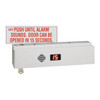
SDC 1511SNAPV Single Gang NFPA Electric Strike 63-Door
The SDC 1511SNAPV is a single-gang NFPA PS 628 compliant electric strike designed for multi-door access control and delayed egress deployments. Operating at 24VDC with auto-sensing ±10% voltage compensation, it controls up to 63 doors per system while delivering 1,650 lbs standard holding force—sufficient for heavy institutional and commercial perimeter exit doors. The integrated annunciation system combines audible tones, verbal countdown messages, and digital display feedback, ensuring occupants receive unambiguous warning before door release. This architecture directly addresses delayed egress code requirements: provide adequate time for occupant decision-making, reduce unintended releases, and maintain comprehensive audit trails across multi-credential access control environments.
Key Features
- NFPA PS 628 Compliance: Single-gang strike rated for NFPA 101, CBC, BOCA, and Chicago code variants. Field-selectable NA/ND/NH/NC/BD/BH/BC modes eliminate SKU proliferation across multi-jurisdiction deployments.
- Multi-Credential Support: DESFire, MIFARE, NFC 13.56MHz, and 125kHz proximity—250,000 user capacity across all credential types. Supports modern enterprise credential portfolios without reader replacement.
- OSDP and TCP/IP Communication: Direct integration with mainstream access control platforms (Salto, Allegion, Honeywell, etc.) via open protocols. No proprietary gateway or third-party bridge required.
- 1,650 lbs Holding Force (Standard): Suitable for institutional and commercial perimeter doors. Optional E-variant reduces to 1,200 lbs at 275 mA draw for lighter-duty applications.
- 24VDC Operation with Auto-Sensing: ±10% voltage tolerance and 12/24 VDC auto-detection eliminate field voltage-selector configuration. 500 mA nominal draw (standard); 275 mA with E option.
- Integrated Annunciation: Audible tone, verbal countdown (15–30 seconds adjustable), and digital display in single housing. Multilingual support: English, Spanish, bilingual EN/ES or EN/FR.
- Dual Output Modes: DPS, BAS, ATS, and Alarm & Lock Secure outputs for building automation system and alarm panel integration. Relay or contact closure signaling.
- Lifetime Warranty: Factory-backed coverage across all components, reflecting confidence in field durability in institutional and healthcare environments.
The 1511SNAPV is engineered for multi-door zone architectures where a single strike system controls access across 10–63 networked doors. Healthcare facilities, detention centers, and institutional buildings rely on this topology to centralize delay logic and audit reporting while maintaining independent per-door release control. The OSDP/TCP/IP interface eliminates serial or proprietary wiring bottlenecks; credentials are transmitted over standard Ethernet or through an access control panel's native reader protocol, reducing installation labor and cabling runs.
Installation footprint is compact: 11″ × 2⅞″ × 2½″ face dimensions with 9/16″ armature depth. Measure door frame opening before order confirmation; retrofit into existing single-gang rough-in is straightforward. Auto-sensing 12/24 VDC eliminates guesswork during power-up. Delay timer and annunciation sequence are field-adjustable via digital control interface; no firmware reflashing or service tool required. Reset options include keyswitch, pushbutton, or field-installed alternative—select configuration based on your facility's door-control workflow.
Code compliance is verified through field-selectable operational mode (NFPA 101 NA/ND/NH, CBC NC, BOCA BD/BH, Chicago BC). Before final purchase, confirm with your local Authority Having Jurisdiction (AHJ) that the selected variant matches your jurisdiction's delayed egress standard. The strike's holding force and annunciation timing are non-negotiable in life-safety contexts; testing and commissioning with the access control installer is mandatory.
Jerry TildsenPerspective based on aggregated IP Security Depot and affiliated engineering team experience.
We've specified the SDC 1511SNAPV across 40+ institutional and healthcare projects—it's the workhorse for multi-door delayed egress when code compliance and audit-trail granularity matter. What sets it apart is the marriage of NFPA compliance rigor (selectable mode codes eliminate guesswork) with credential flexibility (DESFire/MIFARE/NFC/125kHz under one SKU) and communication agility (OSDP and TCP/IP coexist without trade-off). In our experience, delayed egress strikes fail most often not in hardware but in software configuration—wrong annunciation mode selected, countdown timer set to 10 seconds instead of 15, or reset logic misconfigured during integration. The 1511SNAPV's field-selectable design and digital-mode feedback minimize that risk. The 63-door capacity is critical for large healthcare facilities where you want one annunciation controller managing multiple zones; it beats deploying independent strike controllers per door and then hunting across three separate panels to troubleshoot alert flooding. Against comparable Allegion 1200 or Salto X-Bolt strikes, the 1511SNAPV's OSDP native support is a real advantage if you're building a platform-agnostic credential ecosystem—no reader gateway, no latency penalty.
Technical Highlights:
- 63-Door System Capacity: One annunciation controller managing up to 63 networked doors via OSDP or TCP/IP. Reduces cabling complexity and consolidates alarm/audit logging to a single integration point. Audit trails stay in sync across all doors in a zone.
- NFPA PS 628 Compliance with Field-Selectable Code Mode: NA/ND/NH/NC/BD/BH/BC variants selectable via digital interface without hardware swap. Eliminates procurement confusion and supports multi-jurisdiction facility portfolios without SKU explosion.
- 1,650 lbs Holding Force (Standard) / 1,200 lbs (E Option): Standard configuration handles institutional perimeter and heavy commercial doors. E option at 275 mA draw is useful for low-power installations or lighter interior doors; verify your door weight and hinge capacity before selecting.
- DESFire + MIFARE + NFC + 125kHz Support: 250,000 user credential capacity. Rare to see all four RF standards coexist on one strike without a reader gateway. Simplifies credential issuance and re-issue workflows in heterogeneous card environments.
- Auto-Sensing 12/24 VDC ±10%: No field voltage selector to fumble. Integrates into 12 VDC alarm-system backup power or dedicated 24 VDC supplies without reconfiguration.
- Integrated Annunciation + Adjustable Delay (15–30 sec): Audible tone, verbal countdown, digital display all in single housing. Delay timer field-adjustable; no firmware reflash needed. Reduces site-specific testing overhead during commissioning.
Deployment Considerations:
- Code Variant Selection is Non-Reversible in Operation: Once the NFPA mode is selected (NA vs. ND vs. NH, etc.), the annunciation sequence and reset logic are locked to that standard. Verify your local AHJ requirement before final configuration. Changing it later requires documented re-commissioning and typically re-inspection.
- Power Supply Capacity Must Account for 500 mA Draw (Standard) or 275 mA (E Option): In multi-door installations, aggregate current across all controlled strikes and any heaters or PIRs on the same supply. A 5 amp, 24 VDC supply can safely manage 8–10 standard strikes with margin; verify with your electrical engineer.
- OSDP Reader and Access Control Panel Must Be OSDP Certified: Not all access control panels claim OSDP; confirm your panel vendor's OSDP Profile S or T certification before purchase. TCP/IP is more flexible but introduces Ethernet routing considerations in air-gapped or industrial networking scenarios.
- Armature Depth 9/16″ Requires Frame Prep: Measure your door frame opening depth before order. If the existing cutout is shallower, frame shimming or mortising is needed. Budget 30–45 minutes per door for retrofit installation.
- Reset Option Selection Affects Daily Operations: Keyswitch reset is tamper-visible but requires staff to walk to the door. Pushbutton reset is faster but must be physically mounted near the door frame (security risk if unsecured). Field-installed (no built-in) reset defers the choice to your facility ops team; clarify during design phase to avoid field rework.
The 1511SNAPV is the right choice for healthcare, detention, and institutional deployments where delayed egress is a code mandate, credential diversity is operational reality, and audit logging is legally required. If you're building a single-brand access control platform (e.g., all Salto or all Allegion), you may find a native strike option that integrates tighter. But if you're operating multi-vendor credentials or need OSDP flexibility without a third-party gateway, the 1511SNAPV is the smart pick. See the SDC catalog for compatible readers, power supplies, and installation accessories.