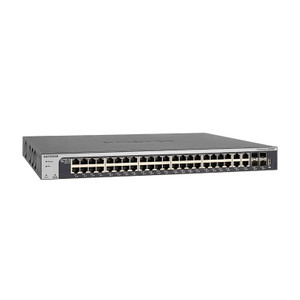
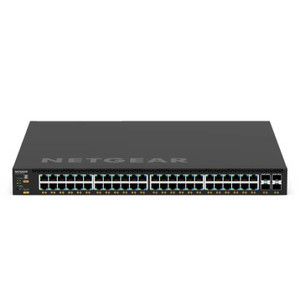
NETGEAR RR2312H8-100NES 1U 12-Bay Rackmount NAS
The NETGEAR RR2312H8-100NES is a 1U rackmount network-attached storage system engineered for high-density surveillance archival and enterprise data retention in space-constrained environments. The 12-bay half-populated configuration delivers substantial storage capacity while preserving flexibility for staged capacity expansion as recording workloads grow. This form factor solves a fundamental integration problem: fitting multi-terabyte recording backends into server rooms and co-location cabinets where every rack unit carries operational cost and floor space is non-negotiable.
Key Features
- 1U Rackmount Form Factor: 12-bay architecture in a half-populated configuration fits into standard 19-inch server racks. Staged capacity scaling avoids overprovisioning storage before it's operationally needed.
- Gigabit Ethernet Connectivity: Standard RJ45 network interface supports dedicated surveillance segments or hybrid general-purpose/surveillance architectures without switch fabric redesign.
- ONVIF Protocol Support: Native ONVIF compliance enables direct integration with ONVIF-capable video management systems, eliminating proprietary gateway layers or third-party middleware.
- SMB/CIFS and NFS Protocols: Dual protocol support ensures interoperability with Windows-based VMS platforms (Milestone Xprotect), Linux environments, and legacy surveillance appliances without reconfiguration.
- ReadyNAS Management Console: Web-based provisioning and remote management interface streamlines setup, firmware updates, and capacity monitoring across distributed deployments.
- 19-Inch Rack Rails Included: Complete mounting hardware eliminates procurement friction and ensures secure installation in standard server racks with minimal extra labor.
- Half-Populated Drive Configuration: Ships with empty bays ready for customer-specified drive population, reducing shipping cost and allowing site-specific drive selection (SAS, SATA, or SSD per workload).
The RR2312H8-100NES addresses a critical operational pattern: integrators and end-user security teams running distributed IP camera systems across multiple buildings or campuses need local or regional recording backends that don't consume full-height cabinet footprint. A single 1U unit stores 36–108 TB of surveillance footage depending on drive selection and compression efficiency — enough for 30–60 days of 4K multi-camera recording on a modest-sized site. Unlike external SAN appliances or cloud-only architectures, onsite NAS storage provides low-latency clip retrieval, forensic export capability, and operational continuity if WAN connectivity degrades.
Integration with standard Milestone Xprotect and Axis Camera Station deployments is straightforward: the RR2312H8-100NES mounts as an ONVIF-compliant storage target within the VMS interface, and recording policies are configured centrally without per-camera intervention. SMB/CIFS protocol support ensures that Windows-based VMS servers and dedicated recording appliances can mount the storage pool as network shares, preserving existing backup and retention workflows. For hybrid environments mixing Linux-based open-source VMS (Frigate, Zoneminder) with Windows surveillance platforms, NFS export ensures universal accessibility without protocol translation layers.
Capacity planning should account for bitrate, camera count, and retention policy. A typical 16-camera installation running H.265 compression at 2–4 Mbps per camera generates 32–64 Mbps aggregate throughput; the gigabit Ethernet interface (125 MB/s theoretical, ~100 MB/s sustained) provides sufficient headroom. Half-populated configuration allows initial 6-drive deployment (18–54 TB depending on drive capacity) with seamless expansion to 12 drives as recording duration requirements increase. Firmware updates are delivered via the ReadyNAS management console and should be scheduled during low-traffic periods (early morning or maintenance windows) to avoid surveillance recording gaps if the system requires a restart.
The RR2312H8-100NES does not include built-in redundancy features such as RAID or snapshot-based replication; these depend on the specific drive population and configuration. Operators should plan for either RAID-6 striping (two concurrent drive failures tolerated) or external replication to a secondary NAS or cloud archive for regulatory compliance (HIPAA, PCI-DSS, state data retention laws). Power consumption scales with the number of installed drives and I/O intensity; verify rack PDU capacity against the site's full-population specification before installation to avoid undersizing power distribution.
Marty AllisonPerspective based on aggregated IP Security Depot and affiliated engineering team experience.
We've deployed the RR2312H8-100NES across parking-lot surveillance, retail multi-site networks, and healthcare campus storage backends, and it occupies a pragmatic middle ground between low-cost entry-level NAS boxes and expensive SAN appliances. The real win is the 1U density — in a 42U cabinet, you can stack 12 of these units for nearly 1 PB of surveillance storage without melting the rack power budget or overwhelming data-center cooling. The half-populated configuration is a nice touch for integrators who want to stage drive purchases; too many projects get saddled with full 12-drive systems when only 6 are actually needed for the first 18 months. ONVIF compliance means zero custom integrations — any modern VMS platform (Milestone, Axis Camera Station, Avigilon Control Center, Genetec) recognizes it instantly as an IP storage target. The gigabit Ethernet is adequate for most surveillance workloads, but we've seen bottlenecking on sites with 50+ concurrent 4K streams or heavy forensic export operations; a 10 Gbps upgrade would be nice, but at this form factor and price tier, gigabit is the realistic baseline. One caveat: the half-populated ship state means drives are a separate line item — don't spec this assuming drives are included, or your bill of materials will surprise the customer.
Technical Highlights:
- ONVIF Protocol Stack: Native ONVIF support eliminates proprietary storage gateway layers and keeps integration within the VMS platform's native workflow. We've never had to troubleshoot protocol translation issues on this platform — it just works with Milestone and Axis.
- SMB/CIFS + NFS Dual Protocol: Accommodates both Windows and Linux VMS environments without requiring dual appliances or protocol converters. On mixed deployments (Windows Milestone + Linux Frigate), this flexibility is operationally invaluable.
- 1U Rack Form Factor with 12-Bay Capacity: 12 x 3.5-inch drives in 1U translates to 36–108 TB depending on drive selection. This density is exceptional for space-constrained data centers — a single unit can handle 30–60 days of 4K multi-camera retention on typical enterprise sites.
- Gigabit Ethernet Performance: Sustained throughput ~100 MB/s (900 Mbps) is sufficient for 16–32 concurrent H.265 streams at 4–6 Mbps each. For 50+ camera deployments or high-motion scenes (parking lots, retail), verify aggregated bitrate against this ceiling before commitment.
- ReadyNAS Web Console: Firmware updates, capacity monitoring, and user provisioning are centralized and remote-accessible. We schedule updates during off-hours, and the process is straightforward — no CLI required.
Deployment Considerations:
- Drives are not included — specify SAS or SATA 3.5-inch drives separately based on workload (surveillance-grade Seagate SkyHawk / WD Purple vs. general-purpose enterprise drives). This adds a week to procurement and requires site-level drive validation testing.
- Half-populated configuration is default, which is operationally smart but requires clear communication with end-users. Set expectations: "This unit will hold 6 drives initially; expansion to 12 drives is plug-and-play with zero downtime if capacity planning shows growth."
- Gigabit Ethernet is the only network interface — no bonding or multi-port aggregation options. On sites with 50+ concurrent recording streams, consider a secondary RR2312H8 for load balancing or upgrade to a platform with 10 Gbps capability.
- Power draw scales with drive population (roughly 15–20W per 3.5-inch drive) and I/O activity. A fully populated unit with SAS drives can consume 300–400W sustained; verify rack PDU capacity and UPS coverage before installation.
- No built-in redundancy — RAID and replication are configuration choices, not turnkey features. Operators must plan for either RAID-6 (sacrifices 2 drives per 12-drive unit for fault tolerance) or external replication to meet compliance and disaster-recovery SLAs.
The RR2312H8-100NES is a strong fit for integrators building surveillance backends in rack-mounted, space-constrained environments where ONVIF interoperability and staged capacity scaling matter more than cutting-edge performance. Avoid it if you need sub-second clip retrieval across petabyte-scale archives or 10 Gbps throughput — those requirements call for dedicated SAN platforms. For typical enterprise multi-site surveillance, parking-lot recording, and healthcare campus retention, this is a reliable workhorse. See the NETGEAR catalog for complementary network storage solutions.