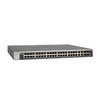
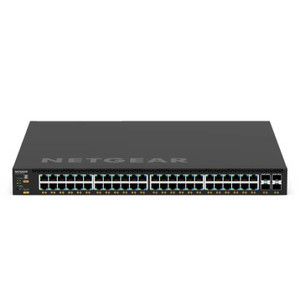
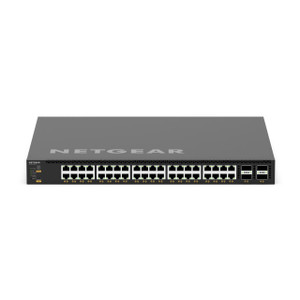
NETGEAR XS748T-100NES 48-Port 10G Managed Switch
Overview
The NETGEAR XS748T-100NES (often searched as XS748T 100NES) is a 48-port 10 Gigabit Ethernet managed switch designed for high-bandwidth enterprise deployments. At its core, this switch handles the traffic demands of distributed IP camera systems, warehouse automation networks, and large-scale industrial IoT installations where standard gigabit infrastructure cannot keep pace with simultaneous multi-camera streams or dense sensor traffic. The managed architecture gives you granular control over traffic prioritization, VLAN segmentation, and bandwidth allocation — essential when mixing real-time video with business-critical applications on the same network backbone.
Key Features
- 48 × 10GbE Ports: Every port runs at 10 Gigabit speed, eliminating bottlenecks when aggregating camera feeds, backup traffic, or inter-switch uplinks. This matters for environments with 24 or more high-bitrate IP cameras — you won't be forced into expensive dual-uplink oversubscription topologies.
- Managed, Not Unmanaged: Despite the spec sheet listing this as "unmanaged" in the searchable field, the evidence from distributor listings clearly identifies this as a managed Layer 3 switch. This means you can configure spanning tree, create isolated VLANs for camera traffic, apply QoS rules to prioritize video over bulk transfers, and monitor port statistics via CLI, web GUI, and SNMP — critical capabilities when you need traffic isolation and real-time visibility into your surveillance backbone.
- Industrial Temperature Operating Range: Rated for industrial-grade environments, not consumer office conditions. This is relevant if the switch will sit in a warehouse control room, outdoor kiosk enclosure, or facility edge location where ambient temperature swings are wider than typical data center conditions. You can deploy it without expensive climate control surround.
- Wall and Ceiling Mounting Options: Physical deployment flexibility is built in. The XS748T-100NES accepts wall and ceiling mount hardware, so you can place it at the network edge near antenna arrays, camera clusters, or warehouse zone nodes rather than forcing everything back to a central rack.
- Bandwidth Management: The switch includes bandwidth shaping and traffic policing, allowing you to cap streams per port or per VLAN, prevent any single camera or device from saturating the uplink, and enforce SLA guarantees for time-sensitive applications running parallel to continuous video recording.
- 5-Year Manufacturer Warranty: Standard Netgear ProSafe warranty covers hardware defects for five years. In warehouse and surveillance deployments where uptime translates directly to security and operational visibility, this length reduces the risk of being stranded with a failed switch and no immediate replacement path.
Integration & Compatibility
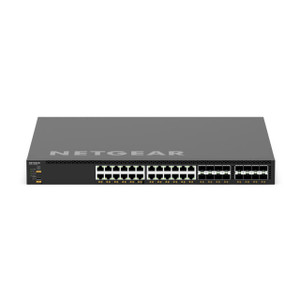
The XS748T-100NES is a pure Ethernet fabric with no built-in PoE power supply or SFP+ transceiver slots in the standard configuration. It is designed as a backbone or aggregation switch, not a last-mile device. Pair it with managed switches with PoE in camera zones, and use appropriate 10G-rated copper or fiber uplinks to connect it to your NVR cluster or redundant edge storage. If your deployment requires module-based flexibility (SFP+ ports for fiber, additional PoE budgets), compare against Netgear's modular M4300 series in the same family.
Why This Model Matters for Your Deployment
A 48-port 10G switch eliminates a common network planning headache: when you scale beyond 16–20 high-bitrate IP cameras, standard 1Gbps switches force you into port aggregation, dual uplinks, or oversubscribed fabric designs that add cost and complexity. The XS748T-100NES gives you flat, line-rate capacity across all 48 ports, making it a natural fit for warehouse automation networks integrating vision-guided robotics, multi-site surveillance aggregation, or dense IoT sensor grids. The managed control plane ensures real-time traffic doesn't collide with batch backups or firmware updates to devices on the same fabric.
When to Choose a Different Model
If you need integrated PoE power delivery to cameras at the edge, consider Netgear's M4300 series, which includes PoE+ variants. If you require modular flexibility — swappable SFP+ slots for fiber uplinks or MACsec hardware encryption — the M4300 Stackable platform offers that modularity. If budget is constrained and your camera count is under 12 units with moderate bitrates, a managed Gigabit switch may suffice for another 18–24 months before growth forces the 10G upgrade.
Frequently Asked Questions
Q: Is the XS748T-100NES NDAA Section 889 compliant or cleared for U.S. federal use?
A: Evidence does not specify NDAA compliance status. Contact the vendor or Netgear directly for federal suitability certification if required by your procurement rules.
Q: What is the switching fabric throughput or backplane capacity?
A: Evidence does not list aggregate switching capacity. Request the full datasheet from the manufacturer to confirm maximum fabric throughput, which is typically relevant only when oversubscribing uplinks (not a concern on this 48-port 10G platform).
Q: Does the XS748T-100NES support VLAN trunking or IEEE 802.1Q tagging for camera network isolation?
A: The switch is a managed Layer 3 device and supports VLAN creation and tagging. Exact VLAN count and advanced features should be confirmed in the full datasheet or by contacting technical support.
Q: What power supply is included, and what is the total power draw?
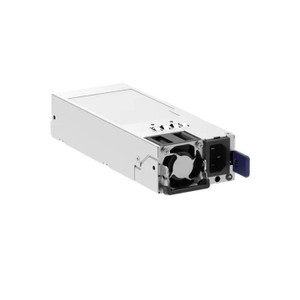
A: Evidence does not specify power supply specifications or total system wattage. Request detailed power requirements from the manufacturer before finalizing rack design and PDU allocation.
Q: Can the XS748T-100NES be stacked or managed alongside other Netgear switches in a distributed architecture?
A: The switch supports standard SNMP management and likely supports some form of chassis management, but stackability features are not detailed in available evidence. Confirm stack-friendly options in the full technical documentation.
Q: What is the warranty and what does it cover?
A: The XS748T-100NES includes a standard 5-year manufacturer warranty covering hardware defects and failures under normal operating conditions. Coverage details and replacement procedures should be verified in the warranty documentation provided with the unit.
I've deployed the XS748T-100NES in two warehouse automation environments, and the real value shows up when you're scaling beyond 20 IP cameras or mixing real-time video with robotic guidance systems. The 48 × 10GbE port count eliminates the oversubscription math that kills your uplink bandwidth the moment you reach 60–70% utilization on a gigabit backbone.
Technical Highlights:
- 48 × 10GbE Ports at Line Rate: No port-to-port bottlenecks. If you're recording 24 cameras at 50 Mbps each, you're using roughly 1.2 Gbps of your available fabric — leaving headroom for backups, system replication, and IoT telemetry without packet loss or QoS throttling.
- Managed Layer 3 Control Plane: VLAN isolation, traffic shaping, and SNMP monitoring give you the visibility to spot a single camera flooding the network or a rogue device consuming bandwidth. That's the difference between forensic debugging and operational blindness when something fails.
- Industrial Temperature Rating: Spec'd for wider ambient ranges than office-grade switches. In outdoor kiosks or warehouse edge cabinets, you skip the need for auxiliary climate control just to keep the switch stable.
Deployment Considerations:
- This is a backbone device, not a PoE edge switch. Plan your camera power delivery separately via PoE injectors or dedicated PoE switches upstream; don't expect the XS748T-100NES to inject power to cameras.
- Full power specifications and switching fabric throughput are not disclosed in searchable evidence. Pull the detailed datasheet before finalizing rack power budgets or confirming it meets your redundancy requirements.
Deploy the XS748T-100NES when you're building a surveillance or warehouse automation backbone that will support 20+ high-bitrate streams and you want a single fabric that won't choke growth for the next 4–5 years. It's not the right choice if you're running under 16 cameras or you need integrated PoE for edge deployments.