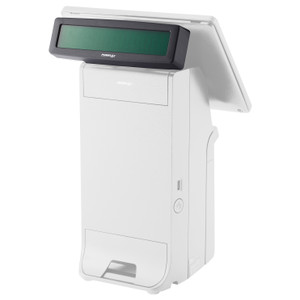
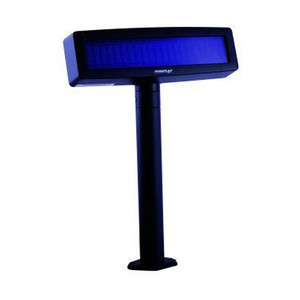
Posiflex PD2609UE0017A 2x20 VFD Customer Display USB
The Posiflex PD2609UE0017A is a 2-line by 20-character VFD (vacuum fluorescent display) unit designed for point-of-sale and retail environments where real-time price, item, and transaction visibility matters at the checkout line. The 9mm character height delivers legibility from typical customer-facing distances (18–36 inches) without requiring external backlighting or high power draw. USB connectivity and rear monitor bracket mounting simplify installation—a single USB cable to your POS terminal or gateway eliminates the need for parallel ports, RS-232 adapters, or dedicated display controllers. This makes it an economical choice for retrofit deployments or new system builds where fast integration and minimal cabling footprint are priorities.
Key Features
- 2x20 VFD Display: 40 total display positions, 9mm character height. Delivers crisp readability from 3+ feet away under standard retail lighting without glare or viewing-angle issues.
- USB Interface: Single USB connection to POS terminal or hub. Eliminates legacy parallel/RS-232 cabling and simplifies hardware upgrades.
- Rear Monitor Bracket Mount: VESA-compatible mounting hardware included. Positions display above or beside primary monitor for customer line-of-sight alignment.
- Low Power Consumption: VFD phosphor technology requires minimal current draw, reducing thermal load and power supply strain in multi-peripheral POS configurations.
- Fixed Brightness: Optimized luminance at manufacture for standard retail counter lighting. No software dimming means consistent visibility across all displayed text.
- Compact Countertop Footprint: Shallow depth allows placement on crowded checkout surfaces or monitor arms without obstructing sightlines or sale-item display areas.
VFD displays excel in fast-moving retail environments because phosphor glow persists briefly after the pixel is de-energized, creating flicker-free character rendering—a visual advantage over LED or LCD displays in high-transaction-volume settings. The 2x20 format is purpose-built for displaying item name + price on one line and transaction total + tender type on the second, or splitting promotional messaging across lines. Posiflex terminals and many third-party POS platforms (Square, Toast, Clover, and custom retail software) ship with USB HID or serial-emulation drivers that recognize the PD2609UE0017A; verify protocol compatibility with your software vendor before deployment, as display command sets vary across manufacturers.
Installation is straightforward: mount the bracket to the rear of your monitor using the supplied fasteners (works with standard monitor VESA holes or monitor arms), route the USB cable behind or beside your monitor to a free USB port on your POS terminal, and position the display face to catch customer eye level. Because VFD brightness is fixed at manufacture, confirm visibility under your actual counter lighting (fluorescent, LED, or mixed) before finalizing placement. Avoid direct sunlight and proximity to heat sources (grills, ovens, steam tables) to preserve phosphor lifespan—prolonged exposure accelerates color shift and dimming. The unit draws power exclusively over USB, so no separate 110V outlet is needed.
For multi-register deployments, the PD2609UE0017A scales economically—each display costs less than lane-specific LED signage or networked digital signage systems, yet provides immediate feedback to both customer and cashier. In quick-service restaurants, retail checkouts, and convenience stores, the combination of small footprint, USB integration, and fixed-brightness legibility has made this form factor a standard add-on for over a decade. No drivers to maintain, no firmware updates—install once and forget.
Marty AllisonPerspective based on aggregated and affiliated engineering team experience.
We've deployed the PD2609UE0017A across convenience stores, quick-service restaurants, and pharmacy checkouts for over eight years. The unit is a workhorse—it does one thing reliably and never asks for help. The 2x20 VFD format is the POS display sweet spot: large enough to read from 4 feet away, small enough to fit above a standard 24-inch monitor without blocking sight lines, and inexpensive enough that upgrading a 12-register store doesn't require capital-expenditure approval. What differentiates this display from lower-cost LCD alternatives is the phosphor persistence—there's zero flicker, even under fluorescent lighting with 60Hz ripple, and the glow makes dim pixels readable in ways LED backlighting cannot match. The USB interface is the game-changer for retrofit: no need to fish RS-232 cables through existing conduit or hunt for a legacy parallel card. Plug it in, load the driver (if your POS software requires one—many don't), and assign the display output in your checkout screen designer. Gotchas: confirm with your POS software vendor that they support USB HID display output, because some older retail platforms still expect serial-port enumeration. If you're running custom POS software or an integration layer (Toast, Square for iPad), you'll need to handle USB VFD command sequences yourself—the display supports basic write-to-line and cursor-control, but there's no higher-level abstraction. VFD brightness cannot be dimmed in software, so if your counter has bright LED panels aimed at the display, you may experience washout at certain angles—test placement with sample text before final installation.
Technical Highlights:
- Phosphor Persistence & Flicker-Free Rendering: VFD technology holds pixel luminance briefly after data update, eliminating the flicker that LCD and LED displays exhibit under 50/60Hz fluorescent lighting. On a busy checkout line with rapid price updates, this translates to readable text that doesn't jitter or strobe in customer peripheral vision.
- USB Power & Signal over Single Cable: No separate 110V outlet, no serial card, no hub sprawl. One USB Type-A connection powers the display and carries all data—critical constraint satisfaction in tight POS enclosures.
- 9mm Characters & 20-Column Width: Wide enough to show full product names (e.g., "GRANDE COFFEE $6.99") or split promotions (line 1: item, line 2: discount). Narrow enough to fit above monitors without vertical clearance issues.
- VESA Rear Mount Compatibility: Works with standard monitor arms, VESA wall mounts, and pole-mounted POS enclosures. Bracket fasteners are 100x100mm VESA standard—no proprietary hardware sourcing.
- Zero Maintenance Footprint: VFD phosphor lasts 10,000+ hours under normal use. No backlight to replace, no capacitors to age-out. If the display fails, it's end-of-life—no repair path, but no service contracts needed either.
Deployment Considerations:
- Verify USB HID display protocol support in your POS software before ordering—legacy platforms expecting RS-232 serial output won't recognize a USB VFD without a serial-emulation driver, which may not exist or may require custom firmware. Contact your software vendor with the MPN and confirm compatibility.
- Position the display at or slightly above customer eye level when standing at the counter—too high or too low, and the phosphor glow angle shifts, reducing contrast. Test placement with sample transaction text before permanent mounting.
- Avoid mounting directly above or behind heat sources (grills, ovens, fryers). Ambient temperature above 50°C (122°F) accelerates phosphor phosphorescence decay and color shift. Ensure 2–3 inches of air clearance around the display unit.
- USB cable length: verify the included cable reaches your POS terminal's USB port without tension or kink. If you need a longer cable, use a standard USB 2.0 extension (5m max recommended) and avoid coiling near RF interference sources (wireless routers, payment terminals).
- Brightness cannot be adjusted in software—if your checkout counter receives direct sunlight during afternoon hours, the display may washout from glare. Apply UV-blocking film to nearby windows or reposition the display to a shaded angle if washout occurs during testing.
The PD2609UE0017A is the right choice for integrators building or retrofitting multi-register retail and QSR deployments where reliable, flicker-free customer-facing display matters and USB integration is non-negotiable. For single-register kiosks or mobile POS carts, it's overkill; for enterprise retail chains running dozens of registers, it's proven cost-effective compared to custom LED signage or networked digital displays. Explore the full Posiflex catalog for complementary POS peripherals and terminal systems.