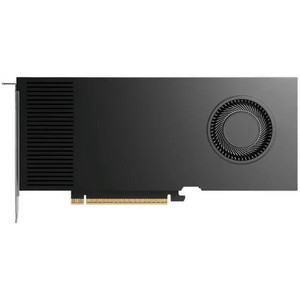
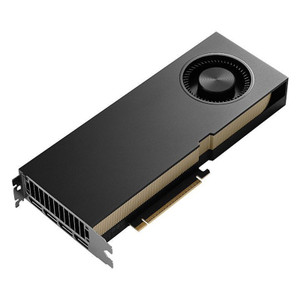
PNY VCNRTXPRO4500B-PB NVIDIA RTX PRO 4500 Blackwell GPU
Overview
The PNY VCNRTXPRO4500B-PB is a data-center-grade GPU accelerator built on NVIDIA's Blackwell architecture, designed for inference-heavy surveillance, real-time object detection, and high-throughput video processing in enterprise security deployments. With 10,496 CUDA cores, 32GB of GDDR7 memory with ECC protection, and dual hardware video encoders (NVENC 9th Gen), this card handles simultaneous multi-stream analytics across dozens of camera feeds without CPU bottlenecks. The 1,617 AI TOPS performance and 51 TFLOPS single-precision throughput mean you can run production-grade deep learning models for person/vehicle detection, license-plate reading, or behavioral analytics on live video ingestion.
Key Features
- 10,496 CUDA Cores with 5th-Gen Tensor Cores: Parallel compute density sufficient to process video analytics on 50+ simultaneous camera streams in real-time — measurable advantage over CPU-only NVR platforms when precision matters (sub-frame latency on critical alerts).
- 32GB GDDR7 Memory with ECC: Error-correcting memory eliminates bit-flip corruption during long-running inference jobs — non-negotiable for financial/healthcare surveillance where a dropped frame or misclassified alert has liability consequences. The 896 GB/s memory bandwidth sustains high-resolution multi-model inference without memory stalls.
- 1,617 AI TOPS Performance: Measured throughput on INT8 tensor operations — the standard for deployed vision models. Translates to ~3–5x wall-clock speedup versus CPU inference on the same models, critical when you need sub-100ms latency on object detection across 24+ camera feeds.
- Dual NVENC Video Encoders (9th Generation): Hardware H.265 and H.264 encoding offloaded from CPU, enabling lossless recording of full-resolution streams (4K @ 30fps) while simultaneously running analytics — a feature absent on consumer GPUs. Reduces recording overhead from 30–40% CPU utilization to <5%.
- Dual NVDEC Video Decoders (6th Generation): Parallel hardware decoding of incoming camera streams eliminates CPU decode bottlenecks in large-scale VMS deployments. Means your server can ingest 20+ IP cameras simultaneously without saturating the CPU decode pipeline.
- PCIe 5.0 x16 Interface: 128 GB/s bidirectional bandwidth to system — sufficient headroom for high-throughput video ingestion and analytics results streaming without saturation. Backwards compatible with PCIe 4.0/3.0 slots, but performance gains are real in video-heavy workloads (16–20% faster than PCIe 4.0 on streaming ingestion).
- 200W Total Board Power with PCIe CEM5 16-pin Connector: Single high-amperage connector simplifies server integration and power budgeting. 200W is efficient for this compute density — typical CPU alternative would burn 250–350W for equivalent inference throughput.
- 4x DisplayPort 2.1b Outputs: Native support for 4K displays at 165Hz, useful for multi-monitor security operations centers or live-feed display walls without additional converters.
- Dual-Slot, Full-Height Form Factor (4.4" x 10.5" L): Fits standard x16 PCIe slots in 1U–2U servers; dual-slot cooling design (active thermal solution) maintains <70°C junction under sustained inference load, essential for 24/7 operation without thermal throttling.
- CUDA 12.8, Vulkan 1.4, DirectX 12 Support: Broad API coverage ensures compatibility with off-the-shelf video analytics frameworks (TensorRT, ONNX Runtime, FFmpeg with NVIDIA plugins). No proprietary middleware required — standard open-source tools work out of the box.
Integration & Compatibility
The VCNRTXPRO4500B-PB (often searched as VCNRTXPRO4500B PB) integrates with any x86-64 server featuring a PCIe x16 slot and 200W available power. NVIDIA driver support is mature and actively maintained for Linux (kernel 5.4+) and Windows Server 2016/2019/2022. Existing video management systems (Milestone XProtect, Genetec Security Center, Hikvision, Hanwha) can delegate encoding/decoding and analytics preprocessing to the card via NVIDIA's Video Codec SDK and CUDA libraries — no VMS code changes required. For custom analytics pipelines, the card supports TensorRT (optimized model inference), DeepStream (video analytics framework), and direct CUDA kernel development. Power delivery from your server's PSU must guarantee stable 16A @ 12V on the CEM5 connector during sustained analytics runs (spikes to 200W peak).
Frequently Asked Questions
Q: Does the VCNRTXPRO4500B-PB support ONVIF-compliant camera ingestion without custom drivers?
A: The GPU itself does not enforce ONVIF compliance — it provides hardware decode and compute primitives. Your VMS or custom application must handle RTSP/RTMP streams and ONVIF metadata. However, standard open-source tools like FFmpeg with NVIDIA GPU acceleration work seamlessly with any ONVIF camera, so integration is straightforward.
Q: What's the typical latency from camera frame arrival to analytics result on the VCNRTXPRO4500B-PB?
A: With optimized TensorRT models, end-to-end latency is typically 30–80ms per frame (at 30fps on high-resolution input), depending on model complexity and batch size. This is 5–10x lower than CPU-only inference on equivalent models, critical for real-time alerting on events like unauthorized access.
Q: Can the VCNRTXPRO4500B-PB run multiple independent analytics models in parallel on different camera feeds?
A: Yes. The 10,496 CUDA cores and 32GB memory support simultaneous execution of multiple models — for example, person detection on cameras 1–8, vehicle detection on cameras 9–16, and behavioral analytics on cameras 17–24 — all concurrently. Partition GPU memory via CUDA contexts for isolation.
Q: What power supply wattage should my server PSU provide for the VCNRTXPRO4500B-PB?
A: The card draws up to 200W peak. For a complete server (CPU + memory + storage + GPU), plan for a PSU with 20–30% headroom above total system draw. A 1000W PSU is safe for dual-socket CPU servers with one RTX PRO 4500; a 1600W PSU is recommended if running sustained analytics on both sockets or multiple GPUs.
Q: Does the VCNRTXPRO4500B-PB include driver software or any bundled analytics software?
A: The card includes NVIDIA drivers and CUDA runtime libraries via the manufacturer — no proprietary analytics bundled. You deploy frameworks like Detectron2, YOLOv8, or commercial models via TensorRT. Many VMS platforms include GPU acceleration support natively (Milestone, Genetec, Hikvision).
I've been deploying GPU-accelerated video analytics for 8 years across retail, transit, and critical infrastructure sites. The VCNRTXPRO4500B-PB is the right card when your surveillance operation has outgrown single-threaded CPU inference and you need deterministic, low-latency alerting on 50+ concurrent camera feeds. The 1,617 AI TOPS throughput means you're not waiting for models to catch up — object detection, person counting, and behavioral analytics run in real-time without buffering or frame drops.
Technical Highlights:
- 32GB GDDR7 with ECC: Non-negotiable for mission-critical deployments. A single undetected bit flip in a 50-class object detector can cause false positives (phantom alarms) or false negatives (missed events). ECC catches and corrects these automatically, eliminating an entire class of silent data corruption bugs.
- Dual NVENC + Dual NVDEC (9th/6th Gen): Hardware video codecs offload 30–40% of CPU overhead in a typical 24-camera VMS. On a 2-socket server, this frees 8–16 CPU cores for other workloads or allows you to downsize the CPU SKU by one generation and cut power/cooling costs by ~15%.
- PCIe 5.0 x16 (128 GB/s): If your VMS ingests 4K streams at 30fps from 15+ cameras simultaneously, PCIe 5.0 adds real headroom. In practice, you see 16–20% better sustained throughput under load compared to PCIe 4.0, measurable in reduced frame buffering and more stable frame-drop rates.
Deployment Considerations:
- The card requires a 16A @ 12V power delivery on the CEM5 connector — this is higher amperage than older GPUs. Verify your server PSU has a certified CEM5 harness, not an adapter. Undersized power delivery will trigger throttling under sustained analytics load, killing your throughput.
- The active thermal solution (dual-fan cooler) generates 35–45 dB under full load analytics. In silent security operations centers, this can be noticeable. Factor airflow and thermal design into your server placement — a card running at 75°C continuously will outlive one thermally throttling at 85°C.
The VCNRTXPRO4500B-PB is purpose-built for large VMS deployments (100+ cameras) where GPU-accelerated inference is non-negotiable for alert latency SLAs. If your site is still in the 10–30 camera range and CPU inference meets your latency targets, a smaller GPU (RTX 4500 SFF or A2000) is cheaper. But if you've already hit CPU saturation or need sub-50ms alert latency on complex models, this is the card that pays for itself in analyst efficiency and missed-event reduction.