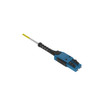
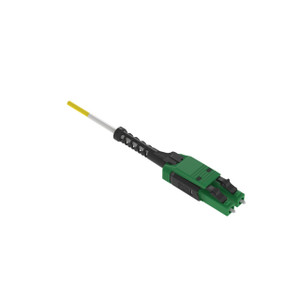
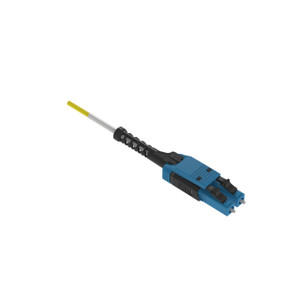
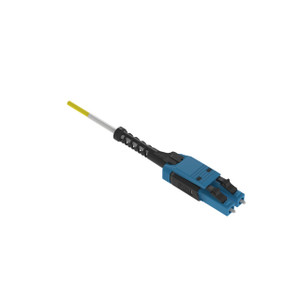
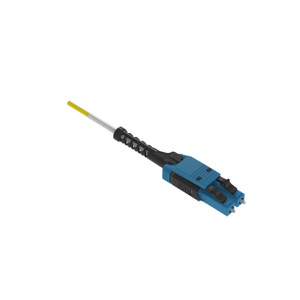
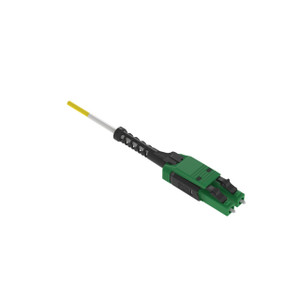
Panduit F92RPU1U1ONM014 Opti-Core 14m OS2 Uniboot LC Fiber Patch Cord
Panduit's F92RPU1U1ONM014 Opti-Core fiber patch cord delivers the duplex connectivity datacenter and enterprise network installers need with half the footprint of traditional LC assemblies. This 14-meter OS2 single-mode cable uses a uniboot LC connector design that cuts switch-port density requirements in half while maintaining full polarity-reversal capability without re-termination. Plenum-rated jacket construction meets NEC Article 300 requirements for installation in air handling spaces, and factory-optimized insertion loss ensures margin headroom on 10G, 40G, and 100G links where transceiver sensitivity and link budget matter.
Key Features
- Uniboot LC duplex connectors on both ends - 50% smaller footprint than dual-LC assemblies
- OS2 9/125μm single-mode fiber - supports 10GBASE-LR, 40GBASE-LR4, 100GBASE-LR4 up to 10km
- Optimized insertion loss specification - tighter tolerances than generic patch cords
- Plenum (OFNP) jacket rating - compliant for installation above ceiling tiles and in return-air plenums
- Tool-free polarity reversal - flip transmit/receive without connector swap or re-termination
- 14-meter (46-foot) length - pre-sized for cross-connect and horizontal distribution applications
- Factory-terminated and tested - eliminates field-termination failures and reduces install labor
- Yellow jacket color - industry-standard OS2 single-mode visual identification per TIA-598-D
- TIA-568-C.3 and ISO/IEC 11801 compliant - meets structured cabling performance standards
- RoHS compliant - approved for sale and installation in EU and California markets
The uniboot LC connector design solves the port-density problem every datacenter and telecom room installer faces when switch and patch panel front-panel real estate runs out before fiber count does. Traditional duplex LC patch cords use two separate connector bodies that occupy two side-by-side adapter ports; Panduit's uniboot assembly houses both transmit and receive fibers in a single compact body that plugs into a duplex LC adapter with half the lateral width. In high-density switches where every RU of front-panel space carries 48, 72, or 96 ports, this footprint reduction translates directly to usable port count - you can terminate twice as many links in the same rack space, or achieve the same connectivity in half the units. The pull-tab boot design provides positive strain relief and makes disconnect force manageable even in fully loaded panels where finger access is limited, and the polarity-reversal mechanism is built into the connector housing: flip the internal fiber positions with a fingernail or small screwdriver, no special tools or adapter gender-changers required. This is critical when deploying duplex links in transmit/receive polarity-sensitive applications like Fibre Channel SAN fabrics or when correcting polarity mismatches discovered during link bring-up without pulling and re-landing cables.
OS2 single-mode fiber construction delivers the bandwidth-distance product enterprise and carrier networks require for 10-Gigabit Ethernet and faster protocols. The 9μm core diameter and 1310nm/1550nm wavelength window support 10GBASE-LR (10 km), 40GBASE-LR4 (10 km), and 100GBASE-LR4 (10 km) transmission distances as specified in IEEE 802.3, giving you the reach to interconnect buildings on a campus, connect main distribution frames to intermediate distribution rooms across a large facility, or bridge datacenter rows and pods without requiring additional fiber enclosures or breakout panels. Panduit's optimized insertion loss specification tightens the manufacturing tolerance window beyond the 0.75 dB maximum allowed by TIA-568-C.3, reducing transceiver power budget margin erosion and improving link reliability on long runs or high-split-count passive optical networks. Better insertion loss means fewer link flaps caused by borderline receive sensitivity, lower bit error rates under thermal stress, and extended transceiver service life because the laser doesn't have to run at maximum output power to maintain signal quality. This matters most in 40G/100G deployments where four or eight lanes run in parallel and the weakest-performing lane determines overall link stability.
The 14-meter overall length is pre-sized for typical structured cabling cross-connect applications: connecting telecommunications rooms on the same floor, linking main distribution area patch panels to equipment distribution area switches, or running horizontal cable segments where wall-outlet-to-patch-panel distance exceeds the 3-meter and 5-meter standard lengths but doesn't justify a 20-meter or 30-meter spool. Pre-terminated fiber assemblies eliminate the field-termination labor, specialized fusion-splicing or mechanical-splice tooling, and post-termination OTDR testing required when pulling bulk cable and landing connectors on-site, cutting installation time per link from 30-45 minutes to under 5 minutes and removing the single largest source of fiber link failures - improper cleave angle, contaminated end-face, or inadequate epoxy cure. Panduit factory-terminates and tests every Opti-Core assembly to TIA-604-3 (FOCIS-3) end-face geometry standards and TIA-568-C.3 insertion loss limits before it leaves the plant, so the cable you pull from the box is guaranteed to meet link performance requirements without additional field verification beyond a visual inspection and basic continuity check.
Plenum (OFNP) jacket flammability rating ensures NEC Article 300 and IBC Chapter 8 code compliance when installing cable in air handling spaces, above suspended ceilings, or in return-air plenums where building codes prohibit standard riser or general-purpose cable jackets. The low-smoke, flame-retardant jacket material limits fire propagation and toxic fume generation in the event of a fire, meeting the safety requirements enforced by building inspectors, fire marshals, and insurance underwriters in commercial office buildings, hospitals, schools, and government facilities. Installing non-plenum cable in a plenum space is a code violation that will fail inspection, void building occupancy permits, and create liability exposure if a fire occurs. The yellow jacket color provides instant visual identification of single-mode fiber per TIA-598-D color coding standards, reducing the risk of accidentally cross-connecting multimode and single-mode links during adds, moves, and changes - a mistake that causes immediate link failure because multimode transceivers and single-mode fiber are optically incompatible, and yellow vs. aqua jacket distinction is the fastest way to prevent that error in a dark telecom room with a headlamp and 200 cables to land before morning.