


Product images are provided for reference and may not represent the exact model, configuration, or included
components.
Overview
SKU:
SL-350QFR
Condition:
New
Availability:
Usually ships in 24 hours
Warranty
Manufacturer Warranty
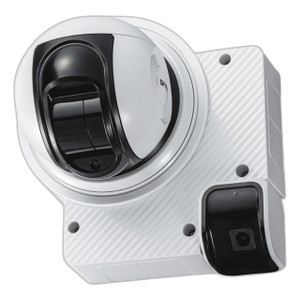
Optex SL-350QFR
Optex SL-350QFR Outdoor Motion Detector Overview The Optex SL-350QFR is a quad-element outdoor motion detector designed for perimeter security applic…

Optex SL-350QFR
$1,286.00
$1,188.99
Your recommended setup
Review items below — quantities update pricing automatically.
Item
Qty
Status
Price
Optional Add-Ons recommended
Services optional
Bundle Summary
Bundle Subtotal:
$0.00
Optional Add-Ons:
$0.00
Services:
$0.00
Total:
$0.00
Overview
SKU:
SL-350QFR
Condition:
New
Availability:
Usually ships in 24 hours
Warranty
Manufacturer Warranty
Description

Optex SL-350QFR Outdoor Motion Detector
Overview
The Optex SL-350QFR is a quad-element outdoor motion detector designed for perimeter security applications, including fence-line and building envelope protection. The SL-350QFR combines passive infrared (PIR) detection with quad-element sensing architecture to deliver reliable presence detection across demanding outdoor environments. This detector is engineered for integrators and security managers deploying medium-range perimeter monitoring where false alarm reduction and consistent detection performance are critical.
Key Features
- Quad-Element Sensor Array: Four individual infrared sensor elements provide enhanced detection accuracy and directional sensing capability, reducing false alarms from environmental interference
- Outdoor-Rated Construction: Built for outdoor deployment in varying weather conditions, supporting fence-line and building perimeter applications
- Medium Detection Range: Covers typical perimeter distances with consistent infrared sensitivity across the detection zone
- Integrated Motion Detection: Passive infrared technology detects thermal signatures of moving targets, providing presence-based alerting for access control and alarm systems
- Weather-Resistant Design: Sealed optics and robust housing protect sensor elements from dust, moisture, and temperature fluctuations in outdoor environments
- Easy Integration: Standard relay or digital output interface compatible with mainstream alarm panels, access control systems, and security management platforms
Deployment Applications
The SL-350QFR is suited for outdoor perimeter security, including property boundaries, fence-line protection, and building envelope monitoring. Integrators commonly deploy this detector as a component of layered perimeter security strategies where motion-based alerting supplements video surveillance or access control systems. The quad-element design addresses the challenge of false alarm reduction in outdoor environments where temperature gradients, wind-blown vegetation, and solar heating can trigger conventional dual-element detectors.
Technical Characteristics
The quad-element infrared architecture differentiates this detector from dual-element alternatives by providing independent sensing paths through the detection zone. This approach enables the detector to distinguish between genuine motion signatures and thermal transients such as direct sunlight on surfaces, radiant heating, or brief environmental changes. The detector uses passive infrared sensing, requiring no active transmission and operating independently of visible light conditions.
Outdoor installation locations include fence posts, building corners, and elevation-mounted positions. The detector's optics are optimized for horizontal coverage patterns typical of perimeter applications, with adjustable sensitivity settings to accommodate site-specific conditions such as vegetation proximity or radiant surface exposure.
Electrical Integration
The SL-350QFR outputs motion detection signals via standard relay contacts or digital logic interfaces, enabling compatibility with conventional alarm control panels, building management systems, and access control platforms. Power supply requirements are low-voltage DC, delivered either directly or via dedicated power supplies included in security system architecture. Integration documentation specifies wiring methods, terminal assignments, and relay rating parameters necessary for secure panel connection.
Environmental Performance
Sealed housing protects internal optics and sensor elements from outdoor moisture, dust, and temperature extremes. The detector maintains performance across operating temperature ranges typical of North American outdoor environments, supporting year-round deployment without seasonal adjustments. UV-resistant materials and weather-sealed connectors extend field life in direct-sunlight and high-moisture locations.
Eden Phillips
I've specified the Optex SL-350QFR on multiple perimeter security projects where false alarm rates were a documented problem with dual-element detectors. The quad-element sensing architecture genuinely reduces nuisance triggers from solar heating and environmental thermal gradients, which is a practical field advantage when you're managing monitoring center costs and responder fatigue.
Technical Highlights:
- Quad-Element Architecture: Four independent sensor paths enable thermal signature analysis that dual-element designs cannot replicate, resulting in measurably lower false alarm counts in outdoor environments
- Outdoor Durability: Sealed optics and weather-resistant housing withstand extended UV exposure and moisture ingress typical of fence-line and building perimeter installations
Deployment Considerations:
- Mount the detector away from direct solar exposure on south-facing surfaces; radiant heat on detection optics remains the primary false alarm source even with quad-element design
- Verify relay output voltage and current ratings match your alarm panel's motion detection input specifications before field installation
- Schedule annual sensitivity recalibration if the detector is installed in locations with seasonal vegetation changes or new reflective surfaces nearby
The SL-350QFR is a legitimate choice for integrators prioritizing perimeter reliability over feature complexity. Quad-element detection is real signal processing advantage, not marketing differentiation. Specify it when your site analysis identifies false alarm risk, and you'll see operational benefit.
Specifications
Form Factor:
Motion Detector
Mount Type:
Fence post; Building elevation
Have Questions?
Ask an Expert.
RELATED PRODUCTS

System Design, Deployment & Technical Support
Support services and planning resources for commercial surveillance, access control, and infrastructure deployments.
Fixed scope • Fixed price
System Design Assistance
- Get help validating product compatibility
- Coverage requirements
- Storage planning and deployment architecture before you buy.
Deployment & Configuration Support
- Access fixed-scope support for rollout planning
- User setup guidance
- Migration and system standardization across single-site or multi-site deployments
Guides, Tools & Calculators
- PoE requirements
- Storage retention
- Camera selection and deployment methodology