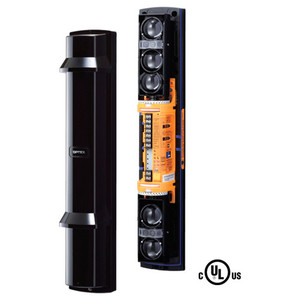
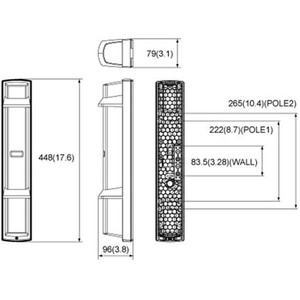
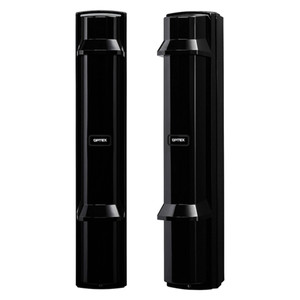
Optex SL-350QFR Outdoor Quad-Element PIR Motion Detector
Overview
The Optex SL-350QFR is a quad-element outdoor passive infrared (PIR) motion detector engineered for perimeter security applications including fence-line protection, building envelope monitoring, and property boundary surveillance. The SL-350QFR distinguishes itself from standard dual-element detectors through its four independent infrared sensor elements, which independently analyze thermal signatures across the detection zone — a practical advantage when outdoor environments generate thermal noise from wind-blown debris, solar-heated surfaces, and temperature gradients that would otherwise trigger false alarms on conventional designs.
Key Features
- Quad-Element Sensor Array: Four independent infrared elements analyze motion signatures separately, allowing the detector to reject thermal transients (direct sunlight on metal, brief wind-induced changes, radiant heating from surfaces) while maintaining sensitivity to genuine moving targets — cuts nuisance alarms in vegetated or high-traffic perimeter zones.
- Passive Infrared Detection: Requires no active transmission and operates independently of visible light, meaning it performs equally on clear days, fog, or complete darkness — useful for 24/7 boundary monitoring where environmental lighting varies.
- Outdoor-Rated Housing: Sealed optics and robust construction withstand dust, moisture, and temperature swings typical of fence posts, building corners, and elevation-mounted positions; maintains operational integrity across seasonal temperature fluctuations.
- Medium Detection Range: Optimized coverage spans typical perimeter distances with consistent infrared sensitivity across the horizontal detection zone — eliminates the need to deploy multiple detectors for standard property-line applications.
- Adjustable Sensitivity: Site-specific tuning accommodates proximity to vegetation, radiant surfaces, or high-traffic areas, allowing integrators to optimize detection thresholds without site redesign.
- Standard Relay or Digital Output: Motion detection signals route via relay contacts or digital logic interfaces, ensuring compatibility with mainstream alarm control panels, building management systems, and access control platforms without proprietary gateway hardware.
- Low-Voltage DC Power: Draws minimal current, typically supplied via dedicated low-voltage power supplies already present in security system architecture — no separate power infrastructure required.
- Layered Perimeter Strategy Integration: Deploys as the motion-detection layer within multi-technology perimeter defense, supplementing video surveillance or access control to reduce operator burden and alert false-positive noise.
Deployment Applications & Installation Context
Integrators typically mount the SL-350QFR on fence posts at 4–6 feet elevation, building corners, or elevation-mounted positions where horizontal coverage patterns align with property boundaries. The quad-element architecture directly addresses the false-alarm challenge that plagues dual-element detectors in outdoor environments: a conventional detector cannot distinguish between a thermal transient (a gust moving warm vegetation) and a genuine intrusion event, but the SL-350QFR's independent sensing paths allow the detector to require corroborating signatures across multiple elements before triggering an alarm. This is particularly valuable on properties with mature trees, landscaping, or south-facing walls that radiate heat during day-to-night transitions. The detector integrates into layered security strategies where video cameras provide forensic detail, access control systems manage credential flow, and PIR motion detection supplies the first-alert signal — reducing the volume of video clips operators must review and cutting response time on genuine intrusions.
Integration & Electrical Compatibility
The SL-350QFR outputs motion signals via standard relay contacts or digital logic levels, compatible with mainstream alarm control panels (Honeywell, Bosch, GE, Tyco platforms), building management systems, and access control controllers. Wiring methods follow industry-standard terminal assignments; integration documentation specifies relay rating parameters and voltage requirements for secure panel connection. Power supply requirements are low-voltage DC, typically 12V or 24VDC depending on configuration, delivered via dedicated power supplies already integrated into security system architecture. This design eliminates the need for specialized interfaces or protocol conversion, reducing project timeline and integration cost.
Environmental Performance & Specifications
Sealed housing protects internal optics and sensor elements from outdoor moisture, dust, and temperature extremes. The detector maintains consistent performance across operating temperature ranges typical of outdoor installations, supporting year-round deployments in temperate and moderate-climate regions. Weather-resistant design means rain, snow, and dust accumulation do not degrade detection performance, though integrators should confirm mounting location does not expose the sensor window to direct, prolonged water spray.
Frequently Asked Questions
Q: Will the SL-350QFR work in direct sunlight without false alarms?
A: The quad-element design distinguishes between thermal transients (like direct sunlight on a metal fence post) and genuine motion signatures, significantly reducing false alarms compared to dual-element detectors. However, extreme radiant heating (e.g., a south-facing dark surface above 140°F) may still trigger nuisance alerts; site-specific sensitivity adjustment and physical shading can mitigate this.
Q: Can the SL-350QFR integrate with my existing alarm panel?
A: Yes, the detector outputs motion signals via standard relay contacts or digital logic interfaces. It is compatible with mainstream alarm control panels (Honeywell, Bosch, GE, Tyco) and access control systems that accept dry-contact or digital inputs. Confirm your panel's input type and voltage requirements with your integrator.
Q: What is the detection range?
A: The SL-350QFR covers medium perimeter distances with consistent infrared sensitivity across a horizontal detection zone optimized for fence-line and building envelope applications. Exact range depends on target size, approach angle, and environmental conditions; consult integration documentation for site-specific coverage patterns.
Q: Does the detector require any special power supply?
A: The SL-350QFR draws minimal current and operates on low-voltage DC (typically 12V or 24VDC) supplied via dedicated power supplies already present in security system architecture. No separate or proprietary power infrastructure is required.
Q: How do I reduce false alarms from wind-blown vegetation?
A: The quad-element architecture inherently rejects thermal transients from vegetation movement. If nuisance alarms persist, adjust sensitivity settings during commissioning to raise the motion-signature threshold, or consider physical barriers (e.g., fencing redesign) to minimize vegetation proximity to the detection zone.
Q: Can I mount the SL-350QFR indoors?
A: The SL-350QFR is engineered for outdoor deployment. While the housing is durable, performance is optimized for outdoor perimeter applications; indoor variants from the Optex catalog may be more appropriate for building interiors.
James EverettPerspective based on aggregated IP Security Depot and affiliated engineering team experience.
The Optex SL-350QFR's quad-element architecture solves a real perimeter-security problem: false alarms from thermal noise. Standard dual-element detectors cannot distinguish between a wind-blown shrub and an actual intrusion because both generate thermal transients. The SL-350QFR requires corroborating signatures across independent sensor elements, which practically eliminates the kind of nuisance alarms that drive operators to ignore motion alerts and disable coverage out of frustration.
Technical Highlights:
- Quad-Element Independent Sensing: Four separate infrared elements analyze the detection zone independently, rejecting thermal transients that fool conventional dual-element designs — real benefit for high-vegetation or radiant-surface environments.
- Passive Infrared (No Active Transmission): Operates identically on clear days, fog, or complete darkness; no active IR beam means no active "fingerprint" for adversaries to detect or spoof, and no range limitations from atmospheric absorption.
- Standard Relay Output: Integrates into Honeywell, Bosch, GE, and Tyco panels without proprietary interfaces — reduces integration complexity and keeps commissioning time predictable.
- Low Power Draw: Minimal current consumption means the detector runs off existing low-voltage security infrastructure; no separate power supply overhaul required for retrofit deployments.
Deployment Considerations:
- Outdoor-rated housing handles environmental stress, but mount the detector away from direct, sustained water spray (gutters, downspout splash zones) — IP ratings protect against rain and dust, not saturation.
- Watch for extreme radiant heating in south-facing applications (dark surfaces above 140°F may trigger nuisance alarms); confirm site conditions during commissioning and adjust sensitivity if needed.
- Vegetation proximity matters — quad-element rejection is effective, but thick, overhanging foliage directly in front of the lens window will degrade coverage over time as dust and debris accumulate on the optics; plan maintenance access.
The SL-350QFR is the practical choice for fence-line and building perimeter installations in temperate climates where vegetation, solar heating, or high wind are present. If your site is heavily landscaped or has significant day-to-night thermal swings, the quad-element design will pay for itself in reduced false-alarm response costs and operator fatigue.