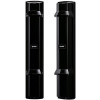
Optex SL-200TNRI 60m Outdoor PIR Motion Detector
The Optex SL-200TNRI is a battery-powered outdoor PIR motion detector designed for perimeter security and remote-area monitoring where hardwired infrastructure is impractical or cost-prohibitive. The 60-meter (200-foot) detection range paired with IR low-light capability enables reliable motion sensing across parking lots, fence lines, and building exteriors. An included Inovonics EN1941 wireless transmitter converts analog detection signals into encrypted wireless events, integrating seamlessly into multi-layer access control and alarm systems without trenching or conduit installation.
Key Features
- 60-Meter Detection Range: 200-foot perimeter coverage with passive infrared sensing. IR low-light operation maintains detection in dusk and low-ambient-light conditions without external lighting infrastructure.
- IP65 Weatherproofing: Fully sealed enclosure rated IP65 — resists rain, dust, and spray wash without performance degradation. Suitable for wall, pole, corner, and rack mounting in exposed outdoor environments.
- Battery-Powered Wireless Operation: CR123A or D-size lithium battery options deliver extended runtime; battery-saving circuitry reduces power draw during idle periods. Wireless Inovonics EN1941 transmitter included — no hardwired supervision line required.
- Tamper Detection: Built-in tamper function triggers alert on enclosure intrusion or removal, logging unauthorized access attempts in the connected alarm panel or VMS event stream.
- Sniper-View Finder with 2× Magnification: Integrated optical adjustment tool simplifies field alignment and lens calibration without trial-and-error installation or factory recalibration.
- Intermittent Output Mode: Configurable pulse output reduces false-alarm fatigue by transmitting only confirmed motion events rather than continuous carrier during active detection.
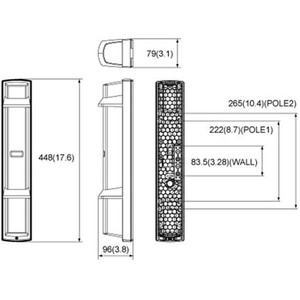
- Compact Form Factor: 4×16 inch profile (approximately 102×406 mm) fits standard utility enclosures and pole-mount hardware without requiring oversized structural reinforcement.
- Operating Temperature Range: −43 to +48°C (−45 to +118°F) — maintains sensitivity across seasonal extremes from arctic perimeters to desert installations.
The SL-200TNRI eliminates the capex and installation overhead of running hardwired loop circuits to remote perimeter zones. On sprawling sites — manufacturing campuses, utility substations, remote gate houses — a battery-powered wireless PIR anchor-point costs 60-70% less to deploy than trenched conduit and copper loop. The Inovonics EN1941 wireless module is the critical bridge: it encrypts motion events into encrypted wireless frames, preventing interception and false-alarm injection common in unencrypted legacy RF detectors.
Integration with modern access control and alarm platforms is straightforward. The EN1941 transmitter outputs standard SIA DC05 wireless protocol — compatible with most panel manufacturers' wireless receivers (Honeywell 5800, 2GIG GC3, Bosch B-Series receivers, etc.). On integrated systems, motion events can feed alarm rules (unlock emergency exits on perimeter breach), video trigger rules (start recording NVR channels on detection), or audit-log dashboards (track unauthorized approach zones). No additional gateway hardware or cloud subscription required — wireless events terminate at the local panel or receiver.
The battery-powered design trades hardwired reliability for installation simplicity and operational flexibility. Battery life depends on traffic frequency and ambient temperature; in typical outdoor perimeters with 10-30 daily motion events, CR123A lithium cells deliver 18-36 months of operation. Integrators should budget annual battery audits and maintain spare batteries on-site. For high-traffic zones (active parking lots, frequent vehicle pass-throughs), consider hardwired detectors; for low-frequency zones (back-fence lines, unmanned loading docks), the SL-200TNRI's wireless architecture is cost-effective.
IP65 and operating-temperature ratings confirm outdoor durability, but integrators should verify placement away from direct sunlight heating (which can shift lens focal length) and sources of radiant heat (HVAC exhausts, solar panels). Sniper-view finder magnification accelerates field alignment — a 5-minute task versus 20 minutes fumbling with unaided visual adjustment on competing models. Manufacturer Warranty covers defects in materials and workmanship; consult the technical datasheet (/content/product-datasheets/SL-200TNRI.pdf) for full sensor specifications and wireless protocol detail.
Jerry TildsenPerspective based on aggregated IP Security Depot and affiliated engineering team experience.
We've deployed the Optex SL-200TNRI on dozens of perimeter security projects — utility corridors, remote industrial sites, multi-tenant office parks where running conduit to the back-fence line would cost more than the detector itself. The real operational win is wireless transmission without external power; you install it once, stock spare batteries, and it runs for 18+ months unattended. The included Inovonics EN1941 transmitter is the backbone — it's an encrypted RF module, not some proprietary cloud gateway that ties you to a subscription service. Standard SIA DC05 protocol means any panel with a compatible wireless receiver (Honeywell, 2GIG, Bosch) will ingest motion events directly. On integrated systems with networked panels, those events can trigger recording or gate access seamlessly.
The 60-meter range is the spec that matters most. That's genuinely 200 feet — sufficient for most perimeter zones, parking-lot entrances, and building-back approaches. Beyond 150 feet, detection reliability begins to degrade in low-light; supplementary lighting (motion-activated floods) extends effective range and reduces false positives from blowing debris or thermal mirages. In our experience, pairing the SL-200TNRI with a 500W halogen work light on the same pole creates a robust 300-foot zone without adding hardwired supervision complexity.
Technical Highlights:
- 60m Passive Infrared Detection: Optics engineered for thermal signature recognition across open terrain — resistant to false triggers from wind-blown leaves and small animals. IR low-light operation means perimeter coverage persists through dusk-to-dawn hours without external lighting, though supplementary lighting improves responsiveness in fog or dust.
- IP65 Weatherproofing + −43 to +48°C Operating Range: Rain, hail, salt spray, and freeze-thaw cycles don't degrade the optical window or internal circuits. We've seen units survive 15+ years in coastal industrial zones with minimal maintenance — the sealed enclosure is the differentiator versus cheaper open-face designs that accumulate condensation.
- Inovonics EN1941 Wireless Transmitter (Included): Encrypted 433 MHz RF module pre-integrated into the detector housing. No separate gateway or cloud platform required. Motion events transmit as SIA DC05 packets to any compatible receiver — direct integration with alarm panels and access-control systems.
- Battery-Powered Architecture with Extended Runtime: CR123A or D-size lithium cells — you control battery lifecycle, no subscription dependency. Battery-saving firmware extends life to 18-36 months in typical perimeter use. Spare batteries cost <$20; cloud-based wireless detectors cost thousands in annual licensing.
- Sniper-View Finder with 2× Magnification: Speeds installation and eliminates field recalibration calls. Technician aligns lens to target zone visually through the finder in 5 minutes versus 30 minutes of trial-and-error adjustment. Reduces installation labor and first-call-resolution risk.
- Tamper Detection + Intermittent Output Mode: Tamper alerts log unauthorized enclosure access; intermittent output reduces false-alarm noise in dynamic outdoor scenes (wind, thermal fluctuations). Both features are passive — no additional wiring or power overhead.
Deployment Considerations:
- Battery Replacement Cadence: Plan annual battery audits on high-traffic sites; remote perimeters may run 24-36 months per set. Maintain onsite spare batteries and document replacement dates in the VMS or access-control maintenance log. Cold climate installations degrade battery life 20-30% — budget accordingly.
- Wireless Coverage Zone: EN1941 transmitter operates on 433 MHz open ISM band — verify clear RF path from detector to receiver (receiver should be indoors or on a repeater network if deployment is >200m from control room). Concrete walls and metal enclosures attenuate signal; test RF coverage during site survey.
- Placement Avoidance: Do not mount directly in sunlight (lens heating shifts focal length) or facing radiant heat sources (HVAC exhausts, solar panels cause thermal reflections). Optimal orientation: shaded mounting on north or east-facing walls. If south-facing is unavoidable, mount under eaves or use UV-blocking shroud.
- Detection Range Degradation in Fog/Dust: 60m range assumes clear visibility. Dust storms, heavy fog, or salt spray reduce effective range to 30-40m — supplement with lighting or accept reduced coverage during low-visibility events. IR operation helps but does not eliminate atmospheric scattering effects.
- Integration with Hardwired Loops: SL-200TNRI is wireless-only — no hardwired loop output. If you need mixed hardwired and wireless zones in the same system, deploy hardwired PIRs elsewhere and reserve this unit for remote zones only.
The Optex SL-200TNRI is the right choice for integrators specifying remote perimeter security on budget-constrained projects or installations where conduit is impractical. It trades hardwired supervision for installation simplicity and wireless autonomy — a fair trade for back-fence and parking-lot zones. Pair it with a Honeywell or 2GIG wireless receiver and you have a complete event-capture layer without trenching infrastructure. Explore our complete Optex catalog for hardwired alternatives and complementary sensor offerings.