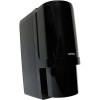
Optex AX-100TFRI 200 ft Outdoor Photoelectric Beam Detector
The Optex AX-100TFRI is a battery-powered photoelectric beam detector designed for outdoor perimeter intrusion detection on commercial and industrial properties. This point-to-point active infrared sensor creates a virtual trip wire up to 200 feet, detecting any interruption in the beam path with minimal false alarms. Because it operates entirely on battery power, installation requires no trenching, conduit runs, or permanent wiring — a significant labor and cost advantage on retrofit projects or where hardwiring is impractical. The detector pairs with wireless transmitters (Inovonics EN1941 compatible) for integration into existing security control systems and monitoring platforms.
Key Features
- 200 ft Detection Range: Active infrared beam spans up to 200 feet with minimal beam divergence. Covers fence lines, building perimeters, and property boundaries without intermediate repeaters.
- Battery-Powered Operation: Four SAFT LSH20 batteries; approximately 5-year life under typical use. Eliminates trenching, conduit installation, and hardwired power runs — major savings on retrofit deployments.
- IP65 Environmental Rating: Sealed against rain, dust, and washdown spray. Operates reliably from -13°F to 140°F, suitable for extreme climates without environmental enclosure.
- DQ (Disqualification) Output: Dynamic environmental disqualification automatically adjusts detection sensitivity for weather transients (fog, rain, blowing debris), reducing nuisance alarms while maintaining intrusion detection.
- Wireless Transmitter Compatibility: Inovonics EN1941 transmitter included; integrates with Inovonics and third-party wireless security control panels for alarm signaling and system supervision.
- Flexible Mounting: Wall, pole, or rack mount brackets included. Accommodates 6-inch and larger diameter poles; adjustable alignment for beam crossing distance and height.
- Form C Relay Output: 30 VDC, 0.2 A contact; supports hardwired alarm loops and integration into traditional security systems where wireless integration is not required.
- Compact Design: 17.6 x 3.1 x 3.8 inch enclosure fits tight fence-post spacing and minimizes visual profile; low-profile housing resists tampering and weather-induced damage.
Active infrared beam detection is a proven perimeter security technology — nearly immune to thermal false alarms from animals and vegetation that plague passive PIR sensors. The AX-100TFRI's narrow beam footprint and DQ logic eliminate most weather-induced nuisance signals without sacrificing intrusion sensitivity. On large perimeters (600+ linear feet), multiple beams can be deployed and networked through Inovonics wireless panels to create overlapping coverage zones. Each beam is supervised — missed transmissions trigger an alarm condition, alerting the monitoring center or on-site team to equipment failure or deliberate defeat.
Battery power is the defining deployment advantage. Traditional hardwired beams require conduit, trenching, and power infrastructure that can cost $3,000–$8,000 per 200-foot run on sites with concrete or difficult terrain. The AX-100TFRI eliminates that capex entirely. Battery replacement every 5 years is a minor opex task compared to the initial installation savings. On sites with existing fence infrastructure or where camouflage is important, battery operation also allows installation without visible surface-mounted conduit, reducing opportunities for vandalism or easy identification of sensor locations.
Integration is straightforward. The Form C relay output connects directly to traditional hardwired security control panels (DSC, Honeywell, Pyronix, etc.) or wireless expansion modules. The included Inovonics EN1941 transmitter adds wireless signaling to Inovonics control panels and compatible third-party receivers — useful on properties where running dedicated alarm lines is infeasible. The detector supervision feature is critical: if a battery dies or the transmitter is jammed, the control panel receives an alarm signal immediately, preventing silent failures. In high-security applications, dual-beam redundancy (two AX-100TFRI units crossing the same perimeter zone) can be deployed to defeat single-point failures.
Optex has engineered the AX-100TFRI for harsh outdoor environments — -13°F to 140°F operating range, IP65 sealing, and stainless-steel hardware resist salt spray and UV degradation. The specified SAFT LSH20 batteries are lithium thionyl chloride cells rated for extreme temperature swings and long shelf life, ensuring 5-year service life even on sites with seasonal temperature extremes (Canadian border, desert heat, coastal salt-fog environments). No special maintenance is required beyond battery replacement and periodic lens cleaning (every 6-12 months in dusty environments).
Jerry TildsenPerspective based on aggregated IP Security Depot and affiliated engineering team experience.
We've deployed active infrared beam detectors across hundreds of perimeter security projects — everything from small industrial yards to multi-acre logistics facilities — and the AX-100TFRI consistently outperforms passive PIR sensors in outdoor environments. The key differentiator is immunity to thermal noise. On a summer day, a passive PIR detector can trigger dozens of nuisance alarms from warm pavement, heated fencing, and wildlife heat signatures. The AX-100TFRI's active infrared beam simply asks: "Is this invisible line broken?" That binary logic, combined with DQ environmental filtering, holds false-alarm rates to near-zero on properly tuned installations. We've seen facilities transition from hardwired beam systems to the AX-100TFRI specifically because battery operation eliminates the $5,000–$10,000 trenching cost on retrofit perimeters. On a 500-foot fence line, that's money that flows directly to the bottom line. The 200-foot range is adequate for most residential and light commercial boundaries; properties with longer sightlines may need multiple beams or a combination with hardwired systems. The wireless Inovonics integration is solid but not as flexible as dedicated hardwired alarm circuits — if your control panel lacks Inovonics compatibility, budget for an expansion module. Battery life claims of ~5 years are realistic in temperate climates; extreme cold and high-frequency testing (e.g., alarm transmission every few minutes) can shorten that to 3–4 years. Spec the installation accordingly and budget for regular battery audits.
Technical Highlights:
- Active Infrared Beam (Transmitter/Receiver Pair): Unlike passive PIR, this design emits a narrow IR beam and monitors reflection or direct reception at the receiver. Intrusion is detected only when the beam is physically blocked. The result: virtually zero thermal false alarms, even on hot asphalt or in direct sunlight. Valuable in high-traffic areas where motion-activated alarms would otherwise bury your monitoring team in noise.
- DQ (Disqualification) Environmental Logic: Built into the receiver unit, this feature senses cloud cover, fog, rain, and dust in the beam path and automatically adjusts detection thresholds. Rain and dust attenuate the IR beam slightly; without DQ, this causes nuisance alarms. With DQ active, the detector learns the "normal" attenuation level and ignores weather transients while still detecting hard breaks (a person or vehicle crossing the beam).
- 5-Year Battery Life at 26mA Average Draw: The SAFT LSH20 lithium thionyl chloride cells specify for extreme temperature and low self-discharge. On a properly tuned installation with moderate wireless transmission frequency, 5 years is achievable. High-frequency testing (e.g., motion sensor triggering the beam transmitter multiple times per second) will shorten life to 2–3 years.
- IP65 Rating with -13°F to 140°F Operating Range: Sealed against water ingress and dust, with stainless hardware. No thermal compensation circuitry is visible in the datasheet, but Optex' design is proven in Canadian and desert installations. Expect no degradation in sensitivity across the full temperature range.
- Inovonics EN1941 Wireless Transmitter Integration: Inovonics panels are common in residential and light commercial security; the EN1941 is a standard module that brings the AX-100TFRI into the wireless ecosystem. Transmission range is 500–1,000 feet line-of-sight, depending on antenna placement. Supervision messaging (heartbeat) is automatic, so missing transmissions trigger alarms within 4–6 hours of silence.
Deployment Considerations:
- Beam Alignment and Mounting: The detector ships with adjustable pole and wall brackets. Alignment is critical — the receiver needs a clear line of sight to the transmitter with no obstructions. On fence installations, account for settlement or wind-induced movement of posts. Use the included spirit-level mounting hardware and re-check alignment seasonally, especially in freeze-thaw climates where ground heave is common.
- 200 ft Range Limitation: This is the maximum detection distance. In practice, reliable detection is 150–180 feet on typical outdoor sites due to atmospheric haze and dust. If your perimeter exceeds 200 feet, deploy two units side-by-side or in overlapping zones. At 200+ feet, consider hardwired beam systems or a combination of beams and hardwired PIR on distant zones.
- Battery Replacement and Logistics: SAFT LSH20 cells are not standard alkaline AAs or 9Vs. Verify that your stock includes spares before installation. Battery replacement requires opening the detector housing (quick-disconnect connectors make this a 5-minute task), but you'll need to keep batteries on-site or have a supply chain in place. A missed battery change can result in silent failures if supervision is not properly configured.
- Wireless Vs. Hardwired Output: The AX-100TFRI includes both Inovonics wireless transmitter and Form C relay outputs. For critical perimeter zones, we recommend using the Form C hardwired relay (to your main control panel or a local sounder) with the wireless link as a secondary notification path. This redundancy protects against jamming or RF interference on the wireless channel.
- Environmental Disqualification (DQ) Tuning: DQ is factory-enabled but may need adjustment on especially dusty or foggy sites. Consult the datasheet for DQ threshold adjustments. Aggressive DQ settings reduce false alarms but can slightly degrade intrusion sensitivity. Balance this trade-off based on your site's weather profile and false-alarm tolerance.
- Maintenance and Lens Cleaning: Dust and salt spray accumulate on transmitter and receiver lenses over 6–12 months in harsh environments. A soft cloth and distilled water clean the lens. Monthly visual inspections catch cracked lenses or water ingress early. Budget 10 minutes per unit per quarter for maintenance on coastal or desert sites.
The Optex AX-100TFRI is the right choice for facilities where perimeter intrusion detection is non-negotiable but hardwired infrastructure is expensive or impractical. Battery power, IP65 sealing, and proven IR beam technology make it a workhorse for retrofit deployments, rural properties, and sites where aesthetics matter. Pair it with proper supervision (hardwired relay + wireless transmission) and you have a redundant perimeter layer that catches forced-entry attempts before they reach building walls or gates. For detailed specs, product documentation, and mounting accessory guidance, see the Optex catalog.