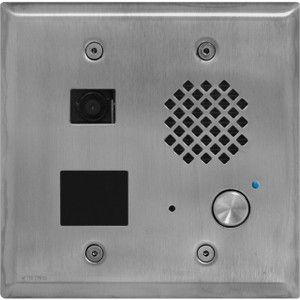
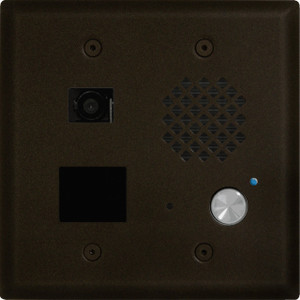
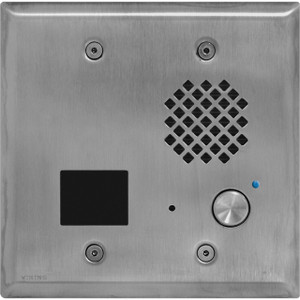
Viking Electronics E-70-BN Oil Rubbed Bronze Entry Phone with Proximity Card Reader
The Viking Electronics E-70-BN is a telephone-line-powered entry phone combining hands-free two-way audio with a built-in 125kHz proximity card reader — purpose-built for commercial entry points where you need audio intercom and credential-based access control on a single device. The oil rubbed bronze finish (satin dark brown powder paint with fine copper metallic) suits upscale lobbies, multi-tenant residential, and hospitality environments where a standard stainless steel panel would look out of place. Browse the full Viking Electronics entry phone line to compare models across the E-Series.
Overview
The E-70-BN (often searched as E 70 BN) mounts flush in a standard double-gang electrical box or surface-mounts with the optional VE-5x5 enclosure — giving you flexibility to retrofit existing rough-in boxes or install fresh without cutting drywall. It's telephone-line powered, drawing a minimum of 20mA loop current at 18V DC minimum battery voltage, so no separate power supply or PoE infrastructure is required. The 18-gauge 304 stainless steel faceplate sits behind the bronze finish, keeping the structure rigid against casual vandalism while the IP67-rated push button switch handles direct spray and temporary immersion without failure. For a broader look at intercom and entry phone systems, the E-Series covers everything from basic audio to video-integrated models.
Key Features
- 125kHz Proximity Card Reader (1.25"–2.0" read range): Supports Viking PRx-C, PRx-C-ISO, PRx-FOB, HID, and AWID credentials — meaning you can deploy against most existing commercial card stock without re-issuing badges. The 26-bit Wiegand output integrates directly with standard access control panels, so this isn't a proprietary island. Read range of 1.25" to 2.0" is intentionally short — this keeps tailgating risk low at credential-only doors.
- Telephone Line Powered: The E-70-BN draws power directly from the telephone line (minimum 18V DC, 20mA loop current), eliminating a separate transformer or PoE switch port at the door. For facilities with existing analog POTS infrastructure or on-premise PBX systems, this is a genuine installation simplifier — one pair of wires does audio AND power.
- IP66 Weather and Vandal Resistance: The IP66 rating means sustained heavy rain and direct water jets won't penetrate the enclosure — suitable for covered exterior entry points. The IP67-rated push button adds a further layer: that specific component handles temporary immersion, so pooling water at the button face isn't a service call. For fully exposed exterior installations, consider whether additional shelter is warranted.
- Operating Range -34°C to 65°C with Up to 100% Humidity: This temperature range covers cold-climate loading dock doors, heated garages, and direct-sun southern exposures without needing a heated housing or auxiliary thermostat. The 100% humidity tolerance means coastal and high-moisture interior environments (pool houses, food processing lobbies) are within spec.
- 62dB Maximum Speaker Volume @ 1m: Loud enough for a busy lobby or a noisy entry vestibule — conversations at normal commercial ambient levels remain intelligible. Not intended as a parking-lot intercom where distances exceed 2–3 meters; plan speaker volume against your expected ambient noise floor.
- Blue LED and Automatic Disconnect: The blue LED provides visible feedback confirming the unit is powered and ready, which reduces end-user frustration at unmanned entry points. The automatic CPC disconnect (300ms minimum) ends calls cleanly via central office loop current drop, preventing phantom open lines that eat up POTS channels on a PBX.
- 26-Bit Wiegand Output: Industry-standard Wiegand is supported by virtually every commercial access control panel from Lenel to Software House to DSX. You're not locked into a Viking-specific controller — wire the Wiegand output to whatever panel already governs your facility.
- Compact Phone Module (72mm x 46mm x 42mm), Flush or Surface Mount: The phone module itself is compact enough to fit the double-gang box without modification. The 123.8mm x 125.4mm x 4.3mm faceplate keeps the profile slim against the wall — a clean install in finished lobbies. Pair it with a compatible access control panel to complete the credential-to-door-strike loop.
Integration & Compatibility
The E-70-BN connects to any analog telephone system — on-premise PBX, VoIP gateway with FXS port, or POTS line — via standard two-wire loop. The ring voltage requirement is 25V AC RMS minimum, which any standard FXS port or CO line delivers. The REN of 0.8A keeps it well within the 5.0 REN limit of most analog lines, so loading multiple devices on the same line is feasible. For Wiegand integration, the 26-bit format pairs with Wiegand-compatible access panels without additional converters. HID and AWID card compatibility means enterprise customers running either credential ecosystem can deploy E-70-BN units without re-carding. Viking PRx-C and PRx-FOB credentials are also supported for facilities standardizing on Viking's own access ecosystem.
Frequently Asked Questions
Q: What proximity card technologies does the E-70-BN support?
A: The E-70-BN supports Viking PRx-C, PRx-C-ISO, PRx-FOB, HID, and AWID credentials at 125kHz with a 26-bit Wiegand output. It does not support 13.56MHz MIFARE or DESFire credentials.
Q: Does the E-70-BN require a separate power supply?
A: No. The E-70-BN is telephone line powered, requiring a minimum of 18V DC at 20mA loop current from the connected analog line or FXS port. No transformer or PoE switch is needed at the door.
Q: Can the E-70-BN be installed in exposed outdoor locations?
A: The E-70-BN is rated IP66 for weather resistance and operates from -34°C to 65°C at up to 100% humidity, making it suitable for covered or partially exposed exterior entry points. The push button is independently rated IP67. For fully unprotected rain exposure without overhead cover, the EWP (Enhanced Weather Protection) variant should be evaluated instead.
Q: What electrical box does the E-70-BN require for flush mounting?
A: The E-70-BN is designed for a standard double-gang electrical box for flush mounting. Surface mounting is supported with the optional VE-5x5 surface mount enclosure.
Q: What is the read range of the proximity card reader?
A: The card reader reads credentials at 1.25" to 2.0". This short range is intentional — it reduces the risk of unintended reads and tailgating at credential-controlled doors.
Q: Will the E-70-BN work with my existing Wiegand access control panel?
A: Yes. The E-70-BN outputs standard 26-bit Wiegand data, which is supported by virtually all commercial access control panels including those from HID, Lenel, Software House, and DSX. No proprietary controller is required.
The E-70-BN stands out in the entry phone category specifically because of its telephone-line-powered architecture — drawing just 20mA at 18V DC minimum, it requires no separate power run to the door, which simplifies retrofit installs in buildings where pulling a new circuit to every entry point isn't budgeted. Combine that with 26-bit Wiegand output and support for HID credentials, and you have a unit that integrates cleanly into existing enterprise access control infrastructure without ripping out card stock.
Technical Highlights:
- CPC Auto-Disconnect (300ms minimum): The automatic disconnect on central office loop current drop is critical for PBX environments — it prevents zombie open calls from consuming analog ports. On a 4-port FXS card serving a small facility, one stuck connection is a real operational problem. This spec eliminates it.
- IP66 + IP67 Push Button: The split rating matters in practice. The enclosure's IP66 keeps weather out; the IP67 button rating means even pooled water at the button face after a rainstorm won't cause failure. Both ratings are required independently — you don't get IP67 enclosure protection from an IP66 unit, so the button-specific rating is the design detail that makes this installation-reliable outdoors.
- Operating Temperature -34°C to 65°C: This range covers unheated parking structure entries in northern climates and sun-loaded southern vestibules in the same product spec. At -34°C, most standard entry phones require auxiliary heat — this one doesn't. That's a meaningful difference in total installed cost for cold-climate deployments.
Deployment Considerations:
- The 125kHz reader supports HID and AWID at a 1.25"–2.0" read range — wire the Wiegand output directly to your panel, but confirm your access panel accepts 26-bit format. Some older Bosch/DSC panels default to a different bit length and require a configuration change in the panel software before Wiegand data is interpreted correctly.
- Ring voltage requirement is 25V AC RMS minimum — verify your FXS port or ATA delivers this. Some budget VoIP ATAs spec 40V RMS but under load drop below 25V on longer cable runs. Test with a meter at the device end before close-out, especially on runs exceeding 200 feet.
The E-70-BN is the right specification for multi-tenant residential or hospitality lobby installs where the bronze aesthetic matters, an analog phone infrastructure is already in place, and the access panel is Wiegand-native — it avoids the cost and complexity of a separate card reader head while delivering credential access and intercom audio from a single flush-mounted device.