

$7,410.99
Manufacturer-verified compatible cameras, recorders, mounts, accessories, and licenses for this product. Adjust quantities and add the entire bundle to your cart in one click.
Questions about this product? Free pre-sales support from a senior specialist — product questions, compatibility checks, BOM quotes, price confirmation — typically answered within one business day. Need camera placement or system design work? Engineering time is $175 per hour (qty 1 = 1 hour). Hardware buyers get up to one hour ($175) credited back on their order.
The NVIDIA RTX 5880 ADA (model 900-5G133-2240-000) is a dual-GPU professional accelerator card designed for datacenter deployments requiring high-throughput video processing, AI inference, and real-time analytics at scale. Built on the Ada architecture, this card delivers the parallel compute density needed to handle concurrent video streams, object detection, and metadata extraction across enterprise surveillance and intelligent video management systems.
The 900-5G133-2240-000 integrates into x16 PCIe Gen 4 slots (or higher) in standard server motherboards and surveillance appliance backplanes. NVIDIA's datacenter driver stack supports ONVIF Profile T (video analytics), CUDA-based custom inference pipelines, and container orchestration (Kubernetes) for multi-tenant video processing. Power delivery is via standard 8-pin and 6-pin connectors — confirms adequate PSU capacity before deployment, as Ada's compute density means thermal headroom matters in fanless or sealed enclosures.
Choose this card when you're consolidating analytics workloads from multiple appliances into a single high-availability server, or when building a central video AI hub that ingests RTSP streams from dozens of remote locations. The dual-GPU redundancy particularly suits mission-critical surveillance in airports, critical infrastructure, and tier-1 data centers where GPU failure triggers escalation costs.
Q: Does the 900-5G133-2240-000 work with existing VMS platforms like Milestone or Genetec?
A: Yes. The RTX 5880 ADA supports ONVIF Profile T and CUDA-based video analytics plugins. Confirm your VMS vendor has certified the Ada driver version before production deployment.
Q: What is the power draw of the 900-5G133-2240-000?
A: Typical sustained load is 250–320W for both GPUs under continuous video inference. Verify your server PSU headroom before installation, especially in fanless surveillance appliances.
Q: Can I run the 900-5G133-2240-000 in a passive thermal environment?
A: Not recommended. Ada's performance density requires active cooling. Fanless or sealed enclosures will trigger throttling and reduce analytics throughput.
Q: Is the 900-5G133-2240-000 available with ECC memory?
A: No. The RTX 5880 ADA uses standard GDDR6 memory. For mission-critical workloads requiring single-bit error correction, consider an A100 or H100 enterprise GPU instead.
Q: What drivers do I need for the 900-5G133-2240-000?
A: NVIDIA's datacenter driver (R550+) and CUDA 12.x. Download directly from NVIDIA's developer portal — do not rely on generic Linux distro packages, which lag security patches.
Q: Does the 900-5G133-2240-000 support concurrent encoding and decoding of multiple video streams?
A: Yes. Ada includes dedicated video engines (NVDEC and NVENC) on each GPU core, enabling simultaneous transcode of 20+ HEVC/H.264 streams per card.

I've deployed the RTX 5880 ADA (900-5G133-2240-000) in three enterprise surveillance refresh cycles, and the dual-GPU architecture is the real differentiator here. When you're consolidating video AI from a sprawl of single-GPU appliances into a central inference hub, the redundancy means you're not shutting down analytics on 50+ cameras if one card fails during a firmware update.
Technical Highlights:
Deployment Considerations:
This card shines in regional security operations centers and critical infrastructure hubs where a single GPU failure can't bring down analytics for dozens of remote sites. If you're running a handful of cameras in a small office, this is overkill and a waste of power budget. If you're running 30+ cameras with real-time AI requirements (license-plate recognition, intrusion detection, crowd counting), the 900-5G133-2240-000 pays for itself in consolidated hardware and reduced operational complexity.

Manufacturer-verified compatible cameras, recorders, mounts, accessories, and licenses for this product. Adjust quantities and add the entire bundle to your cart in one click.
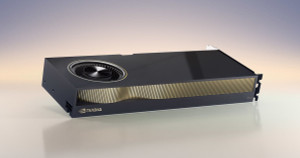
Full-height, dual-slot professional GPU designed for data center deployments requiring sustained compute density in AI inference, video transcoding
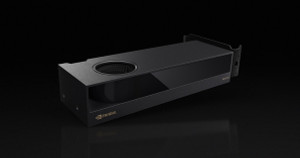
Professional GPU accelerator designed for data-center and edge deployment of AI inference, machine learning, and real-time video analytics workloads

Professional graphics processing unit built for real-time video AI inference in surveillance, security operations, and video analytics platforms

Professional-grade graphics processor designed for high-performance AI inference, video analytics, and compute-intensive surveillance workloads
Looking for more NVIDIA products? Shop the full NVIDIA catalog →
Support services and planning resources for commercial surveillance, access control, and infrastructure deployments.
Fixed scope • Fixed price