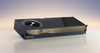
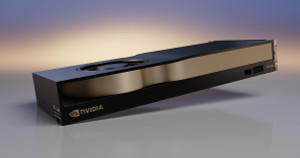
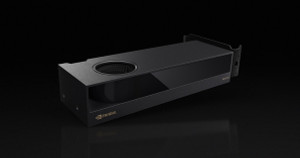
NVIDIA 900-5G133-2550-000 RTX 6000 ADA Professional GPU
Overview
The NVIDIA 900-5G133-2550-000 is a full-height, dual-slot professional GPU designed for data center deployments requiring sustained compute density in AI inference, video transcoding, and real-time graphics workloads. With 48 GB of GDDR6 memory and 18,176 CUDA cores, this card delivers 91.1 TFLOPS of single-precision performance—enough headroom to process multiple simultaneous high-bitrate video streams or run batch inference across dozens of security camera frames without CPU saturation. The RTX 6000 ADA is engineered for 24/7 operation in rack environments where thermal headroom and memory bandwidth matter.
Key Features
- 48 GB GDDR6 Memory: Eliminates memory bottlenecks when processing large batches of video frames or AI model weights. Surveillance workloads involving multi-camera inference or object detection models can fit entirely in GPU memory, cutting host-to-device transfer overhead and accelerating throughput.
- 18,176 CUDA Cores and 568 Tensor Cores: 91.1 TFLOPS single-precision and 1457.0 TFLOPS tensor performance enable real-time edge processing of video analytics without external accelerators. Tensor cores specifically optimize deep learning inference—vital if you're running object detection or person-counting models across a surveillance stream.
- 960 GB/s Memory Bandwidth (384-bit interface): This bandwidth-to-memory ratio is critical for video analytics pipelines. High-resolution frames (4K, 8K) can be read, processed, and written back without memory contention. In surveillance networks with 20+ concurrent video streams, this prevents analytics bottlenecks that would otherwise serialize frame processing.
- 3x Encode and 3x Decode Engines: Hardware video codec support (H.264, H.265, AV1 at full performance) means you can transcode incoming RTSP streams in real time without consuming CUDA cores. Useful in surveillance deployments where live streams must be re-encoded for different bitrate profiles or client types.
- PCIe 4.0 x16 Interface: 16 lanes of PCIe Gen 4 provide 32 GB/s sustained bandwidth to the host system. For applications pulling continuous video data from storage or network buffers, this avoids the PCIe 3.0 bottleneck (8 GB/s) that would starve the GPU during high-throughput analytics runs.
- 300 W Total Board Power: Efficient relative to performance density. A single 16-pin PCIe CEM5 power connector supplies the card; ensure your PSU has adequate headroom. In multi-GPU setups, thermal design and power distribution become planning factors.
- Active Thermal Solution: Dual-slot form factor with active cooling—necessary for sustained 300 W operation. In densely packed server racks, verify adequate airflow and chassis ventilation to avoid thermal throttling during 24/7 surveillance or AI inference jobs.
- 4x DisplayPort 1.4a Outputs (supports >4x 7680×4320 @ 60 Hz): Overkill for surveillance monitoring alone, but valuable if the server doubles as a visualization workstation or control-room display aggregator. Each display port can drive ultra-high-resolution tiles without leaving frames on the GPU.
Integration & Compatibility
The 900-5G133-2550-000 is compatible with any x86 server with a PCIe 4.0 slot and adequate power delivery. CUDA 11.6, OpenCL 3.0, Vulkan 1.3, DirectX 12, and OpenGL 4.6 support means it integrates with mainstream surveillance software stacks—VMS platforms using NVIDIA CUDA-accelerated analytics, custom Python inference frameworks (TensorFlow, PyTorch), or GStreamer-based video pipelines. RDMA (Remote Direct Memory Access) support enables low-latency data movement in clustered or distributed inference scenarios. Install requires standard double-wide PCIe slot, mechanical alignment verification (4.4" height, 10.5" length), and confirmation that your chassis cooling can handle the active thermal solution's exhaust.
Frequently Asked Questions
Q: What surveillance analytics can the RTX 6000 ADA handle?
A: With 18,176 CUDA cores and 1457.0 TFLOPS tensor performance, the card can run real-time object detection, person counting, and anomaly detection across 20–50 simultaneous 1080p streams, depending on model complexity and inference precision (FP32, FP16, INT8). Reduce bitrate or resolution if you need to scale beyond that.
Q: Do I need a special power supply?
A: The card draws up to 300 W and requires a single 16-pin PCIe CEM5 connector. Any enterprise-grade PSU rated for sustained server loads above 500 W will accommodate it, but confirm your current supply has spare capacity before adding the GPU.
Q: Can I use this in a multi-GPU setup?
A: Yes. Multiple RTX 6000 ADA cards can be installed in a single server if the chassis has available PCIe slots and adequate cooling. NVLink is not available on this generation, so GPUs communicate via PCIe—sufficient for surveillance parallelization but not for tight scientific computing clusters.
Q: What operating systems are supported?
A: Linux (driver support for major distributions), Windows Server, and Windows 10/11. Verify that your VMS or analytics software vendor certifies NVIDIA GPU acceleration on your target OS.
Q: Is the RTX 6000 ADA NDAA-compliant?
A: NVIDIA GPUs may fall under NDAA Section 889 restrictions depending on procurement context and end-use classification. Consult your legal/compliance team and NVIDIA's export control documentation for your specific application and geography.
I've deployed the NVIDIA 900-5G133-2550-000 in surveillance operations where real-time video analytics across 30+ camera streams would otherwise require distributed CPU inference or expensive multi-card setups. The 48 GB of GDDR6 memory and 960 GB/s bandwidth are the standout specs—they let you load an entire deep-learning model plus a batched frame buffer into GPU memory, eliminating the slow host-to-device transfers that cripple single-GPU surveillance pipelines.
Technical Highlights:
- 18,176 CUDA cores + 568 Tensor cores: Delivers 91.1 TFLOPS single-precision and 1457.0 TFLOPS tensor performance. For surveillance object detection at 30 fps across 30 cameras, you're looking at sustained tensor utilization without frame drops—the tensor cores are purpose-built for this workload.
- 3x encode/decode engines: Independent from CUDA cores, so you can transcode live RTSP streams (incoming H.264 to outgoing H.265, for example) while simultaneously running analytics inference. Real-time codec flexibility that CPU-only systems can't match.
- PCIe 4.0 x16 (32 GB/s bandwidth): Network-to-GPU pipeline doesn't starve. In a security operations center pulling raw video data from NVRs or edge devices, this bandwidth lets you ingest multiple 4K streams without PCIe bottleneck—PCIe 3.0 would cut throughput roughly in half.
Deployment Considerations:
- The 300 W power draw and active thermal solution require a server with both robust cooling airflow and a PSU with confirmed headroom. In cramped edge-compute racks, thermal throttling can silently degrade performance if airflow is restricted.
- Driver and framework maturity vary by OS and software stack. Confirm your VMS vendor or custom inference platform (TensorFlow, PyTorch, NVIDIA Triton) has production-grade CUDA support before committing to the architecture.
Best fit: security operations centers with multi-camera AI workloads (person detection, behavior analytics, threat scoring) that need to avoid latency and cost penalties of distributed inference. Also strong for medium-scale NVR environments doing real-time re-encoding to support variable-bitrate client streams without consuming server CPU.