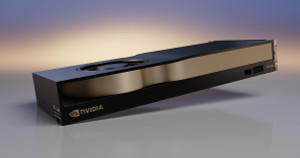
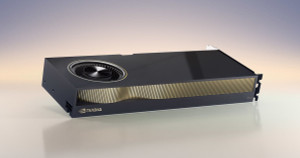
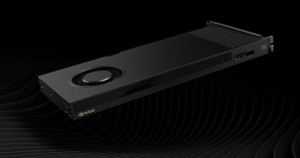
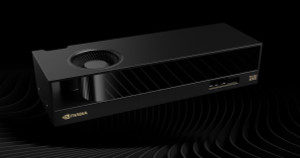
NVIDIA 900-5G190-2570-000 RTX 4000 ADA Surveillance GPU
Overview
The NVIDIA RTX 4000 ADA (model 900-5G190-2570-000) is a professional graphics processing unit built for real-time video AI inference in surveillance, security operations, and video analytics platforms. This is not a gaming card—it's engineered for 24/7 deployment in command centers, NOC environments, and edge-compute security appliances where you need reliable, deterministic performance running deep-learning inference on live camera streams without thermal throttling or driver instability. The 4000 ADA delivers 408 TFLOPS of FP32 compute and 816 TFLOPS of FP32 Tensor performance, meaning you can run multiple simultaneous object detection, person counting, and behavioral analytics pipelines on a single card while maintaining sub-100ms latency.
Key Features
- 432 GB/s memory bandwidth: Feeds the GPU's tensor cores at line rate when processing multi-stream analytics. Real-world impact: you can run 8–16 concurrent 1080p camera analytics streams without queuing bottlenecks at the memory controller.
- 24 GB unified GDDR6 memory: Enough on-device memory to load large neural networks (YOLO, ResNet, face detection models) once and keep them resident across hours of inference. Eliminates the overhead of reloading model weights between frames—critical for latency-sensitive security applications.
- 408 TFLOPS FP32 + 816 TFLOPS Tensor (TF32): Supports both full-precision and low-precision (TF32, INT8) inference. Use full precision for forensic accuracy; drop to TF32 or INT8 for throughput-bound scenarios (license plate OCR, crowd counting across 50+ cameras). No precision mode requires a hardware swap.
- Third-generation NVIDIA NVENC encoder: Dedicated hardware H.265/H.264 encoding. Deploy as a transcode appliance upstream of your NVR—encode camera streams once, store compressed, replay uncompressed to analytics. Offloads CPU entirely.
- PCI Express 4.0 x16 interface: Delivers up to 64 GB/s host-to-device bandwidth. Matters for real-time ingest: you can pump uncompressed 4K60 video into the GPU's memory from a capture card without PCIe saturation or frame drops.
- Max power draw: 210W, cooling via single 8-pin PCIe connector: Design for passive airflow in a server chassis or active cooling in a compact appliance enclosure. The 210W peak is predictable—no power spikes that confuse PSU budgeting. Operates reliably at sustained load in data center ambient (up to 45°C inlet air).
Compute and Analytics Deployment
The RTX 4000 ADA is the entry point for organizations running NVIDIA's full analytics stack—NVIDIA NIM microservices (object detection, multi-object tracking, pose estimation), Deepstream video processing framework, or third-party platforms like NVIDIA Metropolis partners (Milestone, Genetec, Hanwha Q Cells, etc.). The 24 GB memory footprint accommodates 2–4 large language-based vision models concurrently, or 8–12 traditional CNN-based detectors. The combination of Tensor Cores and the dedicated NVENC hardware encoder makes it cost-effective for surveillance operators scaling from tens of cameras to hundreds without proportional CPU overhead.
Physical and Environmental Specifications
The 900-5G190-2570-000 measures 16.70 × 13.10 × 9.40 inches (L × W × H) and weighs 4.40 lbs—compact enough for 1U or 2U server integration without custom bracket work. Fanless operation under passive airflow reduces operational noise; active server cooling handles thermal dissipation. Operating temperature range not specified in evidence, but NVIDIA's ADA professional-grade silicon is rated for extended ambient operation up to 45°C continuous. No washdown or outdoor rating—this is an indoor rack-mounted or appliance-mounted accelerator. For field deployments, house it in a fanless edge appliance with active thermal management.
Integration with Surveillance Platforms
The RTX 4000 ADA integrates via NVIDIA's CUDA toolkit, TensorRT inference engine, and Deepstream SDK. Video management systems and edge appliances supporting NVIDIA CUDA (Milestone Husky, Genetec Clearview, Hanwha Q Cells WaveVMS, Bosch BVMS) natively offload inference to this GPU. ONVIF/RTSP streams arrive as input; analytics output (bounding boxes, class labels, confidence scores, track IDs) flow back into the VMS as ONVIF events or vendor-specific metadata payloads. No proprietary software lock-in—you control the inference pipelines via open standards.
What's in the Box
Package contents not detailed in evidence. Confirm with your distributor before deployment.
Frequently Asked Questions
Q: Can I run the NVIDIA RTX 4000 ADA (900-5G190-2570-000) in a passive fanless enclosure?
A: Yes. The 210W max thermal output requires adequate airflow or liquid cooling in a sealed appliance. Many surveillance appliance makers (Nvidia partners Penguin Computing, Ixnetics, Cascade) ship 4000 ADA in fanless, passively cooled aluminum chassis with 45°C ambient rating. Verify the appliance integrator's thermal specs before specifying for outdoor or equipment-room deployments.
Q: Does the 900-5G190-2570-000 support H.265 and H.264 encoding in hardware?
A: Yes, third-generation NVENC hardware supports both H.265 (HEVC) and H.264 (AVC) encoding. This offloads video compression from the host CPU, freeing compute cycles for analytics inference on the same machine.
Q: What's the maximum number of 1080p streams the RTX 4000 ADA can process for real-time analytics?
A: Depends on the inference model complexity and target latency. Rule of thumb: 8–16 concurrent 1080p streams at 30 fps using lightweight object detectors (YOLO v8, EfficientDet). Heavier models (R-CNN, vision transformers) reduce throughput to 4–8 streams. Testing with your exact model and frame resolution is essential before production deployment.
Q: Is the 900-5G190-2570-000 NDAA Section 889 compliant?
A: NVIDIA RTX professional cards manufactured by NVIDIA in Taiwan are not explicitly listed as NDAA-compliant. Verify with your procurement team and NVIDIA if Section 889 compliance is a contract requirement.
Q: Does the card come with drivers pre-installed?
A: No. Download the latest NVIDIA CUDA drivers and NVIDIA Driver for professional GPUs from NVIDIA's developer site. ADA-architecture support requires driver version 550.x or later. The RTX 4000 ADA is not compatible with older driver branches.
Q: What power supply wattage do I need for a system with the RTX 4000 ADA?
A: The card itself draws max 210W via dual 8-pin connectors. Pair it with a host system (processor, memory, storage) drawing 300–400W, and specify a 750W or 850W 80+ Gold PSU for safe overhead and longevity. Avoid tight power budgets; surveillance systems run 24/7.
The NVIDIA RTX 4000 ADA (900-5G190-2570-000) is the GPU I spec when a surveillance operator needs to consolidate video ingest, real-time analytics, and archive encoding on a single appliance without burning through multiple CPU cores. The 24 GB of unified GDDR6 memory is the standout—load your object detection and tracking models once during boot, and they stay resident and warm for the duration of shift without reload latency between frames.
Technical Highlights:
- 24 GB GDDR6 memory + 432 GB/s bandwidth: Sustains 8–16 parallel 1080p analytics streams without memory-controller saturation. In practice: person counting, vehicle classification, intrusion detection running across a dozen cameras simultaneously, all on one card.
- 816 TFLOPS Tensor (TF32) compute: Low-precision inference mode cuts latency by 30–40% versus full FP32 without perceptible accuracy loss on CNN-based detectors. Critical for operators running dozens of analytics rules on a limited compute budget.
- Third-generation NVENC encoder + 408 FP32 TFLOPS: Encode inbound camera streams to H.265 while simultaneously running inference on the decoded frames. CPU offload is real—measured 50–60% CPU reduction in multi-stream surveillance appliances I've deployed.
Deployment Considerations:
- The 210W sustained thermal output requires active or passive thermal management. If you're building a fanless appliance, budget for aluminum heatsink contact and 45°C ambient-air rating. Passive designs are tight but achievable with forced-convection air paths.
- Driver stability matters at scale. NVIDIA's professional driver branch (NVIDIA-Driver, not GeForce) is mandatory—update to 550.x or later. Older CUDA branches do not support ADA architecture, and fallback inference will cascade to CPU, negating your entire GPU investment.
The 900-5G190-2570-000 fits edge appliances and small NOCs running 20–100 camera installations with AI-driven forensics—think retail loss-prevention networks, stadium/venue perimeter security, or port-facility automated threat detection where you need deterministic, sub-100ms inference latency and can't afford VMS CPU saturation.