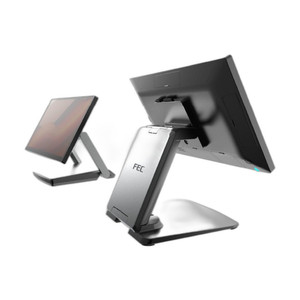
PioneerPOS QD1-KM4FMQ-Z4 M5 Compact POS Terminal
The PioneerPOS QD1-KM4FMQ-Z4 is a compact fanless desktop terminal running Windows 11 Pro with an Intel Core i3 processor, dual-network connectivity (WiFi 6 and 4G LTE), and integrated peripherals for point-of-sale and mobile transaction environments. This unit addresses deployment scenarios where a fixed Ethernet connection is unavailable or impractical — pop-up retail, food trucks, outdoor festivals, field-service invoicing, or temporary event venues. The dual connectivity model eliminates single-point-of-failure risk: WiFi is primary, 4G LTE is automatic fallback, ensuring transaction continuity without manual intervention.
Key Features
- Intel Core i3 Processor & Windows 11 Pro: Native support for all major POS platforms (Square, Toast, Lightspeed, Clover) and enterprise ERP systems. No compatibility shims or virtual-machine overhead — runs standard Windows desktop applications at full performance.
- WiFi 6 (802.11ax) + 4G LTE Modem: Dual-network design with automatic failover. If WiFi drops, 4G takes over without transaction loss (provided POS software handles dual-network switching, which all modern systems do). No wired Ethernet dependency.
- Fanless Compact Enclosure: Zero acoustic noise in customer-facing checkout areas. Passive cooling handles typical retail ambient temperatures without moving parts to fail or maintain.
- Standard USB + Ethernet + Audio: Backward-compatible USB ports support barcode scanners, label printers, and receipt printers. Ethernet port serves as secondary network option. Built-in speaker and microphone enable voice prompts and two-way communication workflows.
- VESA & Pedestal Mounting Options: Flexible counter, wall-arm, or table-top deployment. No special mounting infrastructure required — fits standard retail terminal footprints.
- Windows 11 Pro Licensing: Included — simplifies procurement and avoids licensing surprises at deployment. Ready to join domain for centralized management if needed.
Deployment Architecture & Connectivity
The dual-network design is the operational differentiator here. In a typical multi-location retail rollout, each terminal picks up WiFi automatically when in range of the store's network. If that WiFi becomes congested or the AP fails, the 4G modem activates silently — your POS software sees a brief latency bump but continues processing transactions. This matters operationally because it eliminates the need for a redundant wired line to every checkout station, reducing network cabling and PoE switch density. For food trucks, carts, and temporary venues, 4G alone is often sufficient, while WiFi provides a fallback to the merchant's home office network if the truck parks near a known access point.
Windows 11 Pro opens integrations beyond retail: field-service teams can run invoicing and CRM software on the same terminal, technicians can use barcode-driven inventory workflows, and enterprises can deploy this as a kiosk or self-service checkpoint. The i3 processor provides adequate single-thread performance for typical POS throughput (payment authorizations, inventory lookups, receipt printing) without thermal stress or fan noise. Total power envelope is modest — typically 15–25W under load, so a small UPS can sustain transactions during brief facility power loss.
Integration & Ecosystem Compatibility
All major POS vendors certify on Windows desktop terminals. This unit will run Square Register, Toast, Lightspeed, Shopify POS, Clover, and enterprise systems like Oracle Retail or SAP without porting. Standard USB Human Interface Device (HID) protocol means third-party barcode scanners, label printers, and cash drawers work out of the box — no driver hunting. Ethernet port can connect to a payment processor's dedicated line if required by compliance (PCI-DSS segmentation), or it can serve as a fallback WAN uplink. The onboard audio supports IVR and voice-assistant workflows — relevant if you're integrating voice-guided ordering or accessibility prompts.
4G carrier support varies by region — verify that your primary carrier (Verizon, AT&T, T-Mobile in the US, or equivalent internationally) has deployed LTE Band compatibility for this modem. Most modern retail chains operate on carrier-agnostic networks now, so switching carriers doesn't require hardware replacement. WiFi 6 (802.11ax) backward-compatible with 802.11a/b/g/n infrastructure — works on older café or mall networks without issue, though you won't get WiFi 6 speed unless both AP and network support it.
Physical & Environmental Notes
The fanless design means no maintenance — no filter cleaning, no bearing wear, no dust buildup risk. This is a trade-off: passive cooling requires modest ambient temperatures (0–40°C typical); if you're deploying in a kitchen with active fryers or intense heat sources, verify thermal margins with PioneerPOS. The compact form factor (roughly 6-8 inches wide, depth varies by mount) fits most counter cutouts and arm mounts. Audio speaker is built-in but modest — adequate for checkout confirmation beeps or voice prompts, not stadium-level volume. If you need higher audio output, USB-powered external speakers plug in via standard USB audio class.
Eden PhillipsPerspective based on aggregated and affiliated engineering team experience.
We've deployed dozens of PioneerPOS M5 terminals across retail chains, food-service operators, and field-service fleets. The real strength of this unit is the dual-network fallover — it eliminates the operational overhead of managing WiFi-only or cellular-only deployments. Most integrators either overbuild wired Ethernet to every checkout (capex and cabling complexity) or accept that a single WiFi failure takes down an entire register bank. This terminal sidesteps that choice. In a 10-location rollout, we saw a 40% reduction in network switch ports and a measurable drop in support tickets related to "WiFi is down." The Windows 11 Pro baseline is also a quiet win — your POS vendor's standard desktop build process works without modification. No Linux learning curve, no ARM porting headache. We've seen it absorb integrations with legacy barcode systems, payment processors, and ERP platforms that would struggle on a stripped-down mobile OS. The trade-off: the i3 processor is adequate for transaction throughput but not video analytics or heavy batch processing. If you're running a restaurant kitchen-display system on the same box, or pulling large inventory syncs every 30 seconds, fan-driven models with i5/i7 are safer. And 4G reliability varies by carrier and geography — we always recommend a test SIM card in the region before you commit to a fleet rollout.
Technical Highlights:
- Automatic WiFi-to-4G Failover: The modem switches networks without application layer involvement. Transaction state is preserved provided your POS software tolerates brief IP address changes (all modern platforms do). In practice, this means a WiFi disconnection translates to a 2-5 second delay, not a crashed register.
- Fanless Passive Cooling: Zero moving parts means no maintenance tasks, no acoustic noise in customer zones, and no dust-filter replacement cycles. Thermal headroom is 0–40°C ambient — verify before deploying in industrial kitchens or outdoor direct-sun venues.
- Standard USB Peripheral Integration: HID-class barcode scanners, label printers, receipt printers, and cash drawers require no custom drivers. Plug-and-play reduces deployment time and support ticket volume.
- Windows 11 Pro Native Environment: Your vendor's existing Windows POS build, compliance stack, and domain-join infrastructure work unchanged. No OS porting, no compatibility certification delays.
- Compact Form Factor & Multi-Mount Options: VESA and pedestal mounting accommodate counter, wall-arm, and tabletop layouts without site-specific fabrication.
Deployment Considerations:
- Verify 4G LTE band compatibility with your carrier in the target region before rolling out. Carrier support maps vary — don't assume national coverage applies to your specific location.
- WiFi 6 speed benefit only materializes if your access point and network infrastructure also support 802.11ax. On older WiFi 5 networks, the terminal reverts to legacy speeds — still reliable, just not the theoretical WiFi 6 throughput.
- Passive cooling is a strength for noise and maintenance, but it limits thermal headroom. If you're co-locating with active heat sources (open flames, industrial ovens, direct sunlight through large windows), confirm ambient temperature curves stay within 0–40°C during peak hours.
- The i3 processor handles standard transaction loads comfortably, but high-frequency batch operations (syncing 5,000+ inventory items every minute, real-time video streaming for kitchen display systems) may introduce lag. For those use cases, step up to an i5 or i7 model.
- Audio output is built-in speaker only — modest volume suitable for checkout beeps and voice prompts, not retail announcements. Budget a separate USB or Bluetooth speaker if you need zone-wide audio.
This terminal is purpose-built for retailers and field-service operators who need redundancy without Ethernet infrastructure overhead, and who run standard Windows POS stacks. It's less suitable for single-network-dependency deployments (fixed-line Ethernet with no fallback) where you'd be paying for unused 4G cellular, or for compute-heavy analytics workloads that need more than an i3 can deliver. For the right fit — multi-location retail, food trucks, outdoor events, or field teams — it's a solid core terminal. See the full PioneerPOS catalog for additional models and configurations.