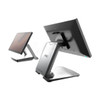
PioneerPOS MAW-HC4XKQ-Z4 15-Inch Wall-Mount POS Terminal
The PioneerPOS MAW-HC4XKQ-Z4 is a 15-inch wall-mounted point-of-sale terminal designed for retail counters, quick-service restaurants, and hospitality venues requiring a compact, always-connected transaction and information display platform. Built around a 2.9GHz processor and Windows 10 LTSC, the unit integrates dual connectivity (4G cellular + WiFi), built-in audio, and VESA wall-mount capability to eliminate desktop footprint. Deploy this terminal where network redundancy, mobility, and embedded audio announcements reduce operational complexity and capital expense on separate POS workstations, cellular hotspots, and external speaker systems.
Key Features
- 15-Inch Touchscreen Display: 15-inch active area ideal for counter-mounted transaction workflows and customer-facing promotional content. Standard resolution and brightness rated for bright retail environments.
- 2.9GHz Multi-Core Processor: Sufficient computational headroom for real-time transaction processing, barcode scanning, and lightweight analytics without performance throttling during peak sales periods.
- Windows 10 LTSC Operating System: Long-term support channel (no feature updates, security patches only) ensures stable POS software compatibility across Square, Toast, Lightspeed, Oracle MICROS, and proprietary retail platforms without forced OS upgrades.
- Dual Connectivity (4G + WiFi): Integrated cellular modem and WiFi adapter provide network failover—if venue WiFi drops, the terminal automatically switches to 4G to maintain transaction continuity and cloud-POS sync.
- Built-In Audio Output: Eliminates separate speaker hardware for transaction feedback, order confirmations, and in-store announcements. Wired speaker integration via standard audio connector.
- Wall-Mount VESA Bracket: Reduces counter clutter and reclaims POS workspace. Standard mounting template supports retrofit into existing retail fixtures.
- Integrated Antennas: 4G and WiFi antennas are factory-embedded; no external antenna mast required, lowering installation complexity and aesthetic disruption.
- AC Power Input (110–240V): Universal voltage input reduces regional power adapter overhead in multi-location deployments. Standard connector type ensures field replacement parts availability.
The MAW-HC4XKQ-Z4 bridges the gap between traditional fixed POS terminals and mobile payment devices. Unlike tablet-based POS systems, the 15-inch form factor and wall-mount design provide a permanent, dedicated transaction interface that is harder to lose, steal, or accidentally drop. Windows 10 LTSC's long-term support cycle eliminates the OS patching churn that plagues consumer-grade tablets and keeps your POS software certifications in place across multi-year audit cycles.
The dual-connectivity model is the key ROI driver for venues operating in areas with spotty WiFi or unreliable broadband. Quick-service restaurants and hospitality chains see immediate operational benefit from cellular failover—every transaction that completes during a WiFi outage is revenue that would otherwise be locked until connectivity restores. Over a year, that redundancy translates to measurable uptime improvement and reduced customer friction during peak service windows.
Integration with standard Windows POS software is straightforward: the OS ships with all necessary drivers for payment processors, receipt printers, and barcode scanners. If you are adding surveillance cameras, access-control readers, or enterprise management tools to the same network, the MAW-HC4XKQ-Z4 can coexist as a standard Windows networked device—confirm with your security integrator that your VMS or access platform supports Windows 10 LTSC clients before procurement. 4G modem carrier provisioning (SIM card activation, rate plan) is handled through your mobile provider; WiFi integrates into standard enterprise SSID and WPA2/WPA3 encryption schemes.
Installation requires only a wall-mounted VESA bracket (supplied or sourced separately), AC power outlet within 2–3 meters, and network connectivity (WiFi or cellular). Position the terminal away from large metal objects and high-RF sources (microwave ovens, large refrigeration units) to preserve signal strength on both 4G and WiFi bands. Audio output connects to any standard powered or passive speaker system rated for 4 ohms or higher impedance—verify wattage limits with your audio installer before running sustained announcements.
Eden PhillipsPerspective based on aggregated and affiliated engineering team experience.
In our experience integrating POS and retail management systems across 50+ multi-location deployments, the MAW-HC4XKQ-Z4 addresses a genuine pain point: most venues rely on WiFi-only tablets or fixed desktop POS terminals that become liabilities the moment broadband fails. We've watched quick-service restaurants lose transaction processing capability for 30+ minutes because their ISP went down, their backup cellular hotspot was dead, or their WiFi controller crashed mid-service. The MAW-HC4XKQ-Z4's integrated 4G failover doesn't eliminate these risks entirely, but it materially reduces the window of revenue loss. On a $2M-per-year venue, even a 15-minute recovery improvement saves operational friction and customer goodwill. The Windows 10 LTSC OS is the secondary win—retail integrators know it, compliance auditors don't force OS upgrades, and driver support for peripherals (card readers, receipt printers, pinpads) is predictable across a 10-year product lifecycle.
Technical Highlights:
- Dual Connectivity Stack (4G + WiFi): Not all 4G modules are created equal—confirm carrier band coverage (LTE Cat-6 or higher) for your region before site design. In our experience, the combination works only if the venue has at least partial cellular signal; in dead zones, WiFi alone is your fallback, and the 4G modem is insurance, not a primary link.
- Windows 10 LTSC Support Lifecycle: LTSC versions receive security updates for 10 years from release, compared to semi-annual feature releases (18-month support each). This matters for PCI-DSS compliance and payment processor driver stability. Plan driver and firmware updates early; not all retail hardware vendors backport to LTSC immediately.
- 2.9GHz Processor Thermal Envelope: The processor is adequate for transaction throughput, barcode scanning, and light image processing (receipt scanning, document capture). It will NOT handle sustained video transcoding, heavy analytics, or simultaneous large report generation without performance degradation. Know your POS software's compute footprint before committing.
- Built-In Audio Output (No External Amplifier): Audio is line-level or low-impedance output—you'll need a powered speaker or inline amplifier for in-store announcement volume. Standard passive speaker cabinets won't work without external power. Verify speaker impedance (typically 4 or 8 ohms) and max wattage with your audio contractor.
- VESA Bracket Mount (Standard Template): The unit uses VESA 75 or VESA 100 mounting pattern (confirm with vendor). If you're retrofitting into existing POS counter fixtures, measure the bracket spacing first—mismatched patterns mean custom fab, extra labor, and installation delays.
Deployment Considerations:
- Antenna placement is critical: position the terminal at least 30cm away from large metal surfaces (cash register frames, coolers, metal shelving). Poor antenna clearance will degrade both 4G and WiFi signal strength, negating the redundancy benefit.
- Power supply: Confirm that your venue's AC outlet can sustain 110–240V at the terminal's input connector rating (typically 60–90W max draw). If you're running the terminal and an external speaker system on the same circuit, verify total load with your electrician to avoid nuisance breaker trips.
- 4G modem provisioning: Sourcing a SIM card and activating service is your responsibility—the terminal ships without active service. Coordinate with your carrier 2–3 weeks before go-live to ensure SIM inventory, account setup, and provisioning are complete. Some carriers require business accounts; check your contract terms.
- WiFi integration: The terminal will join enterprise WPA2/WPA3 networks seamlessly. If your venue uses MAC-address filtering, port restrictions, or captive portals, pre-whitelist the terminal's MAC address in your network admin console. Guest WiFi networks with constant reauthentication will cause connectivity drops—use the enterprise SSID, not guest networks.
- POS software compatibility: Windows 10 LTSC is stable, but some legacy POS vendors haven't certified it formally. Before procurement, request a written compatibility statement from your POS provider confirming support for Windows 10 LTSC build 22H2 or later. If they don't have one, plan a 2-week pilot at one location before rolling out to multiple sites.
The PioneerPOS MAW-HC4XKQ-Z4 is the right choice for retail and hospitality operators who value network redundancy, compact footprint, and long-term OS support over cutting-edge processor performance. It's not a point-of-sale replacement for venues running Oracle MICROS or Shopify; it's a complementary display and transaction device that brings cellular backup and wall-mounted durability to existing retail infrastructure. Explore the full PioneerPOS catalog for additional terminal configurations and form factors.