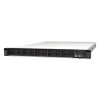
Lenovo 4XG7A63587 AMD EPYC 7663 56-Core Processor Option for ThinkSystem SR645
Overview
The Lenovo 4XG7A63587 is an AMD EPYC 7663 processor option kit engineered for the Lenovo ThinkSystem SR645 platform. Delivering 56 cores and 112 threads from a single Socket SP3 package at a 2 GHz base clock with 3.5 GHz boost, this processor targets memory-intensive workloads where raw thread count and memory subsystem bandwidth define throughput — virtualization hosts, in-memory analytics, and high-density containerized environments.
For data center architects evaluating server processor upgrades, this option fills the gap between mid-range EPYC SKUs and the top-bin 7003-series parts: more cores than most deployments will fully saturate on a per-VM basis, at a price point that makes high-core-count accessible for mid-size infrastructure buildouts.
Key Features
- 56 Cores / 112 Threads: At 112 logical processors per socket, this CPU can host dense virtual machine fleets without the scheduling bottlenecks that surface on lower-thread-count parts. A 32-VM host at 3 vCPUs each still leaves headroom — relevant on VMware or Hyper-V environments where vCPU-to-pCPU ratios matter.
- 2 GHz Base / 3.5 GHz Boost Clock: The 2 GHz base is conservative by design — AMD's EPYC power management trades base frequency for sustained all-core throughput under heavy multi-threaded loads. The 3.5 GHz boost applies where single-threaded latency is the bottleneck, such as legacy application tiers that don't parallelize well.
- 256 MB L3 Cache: This is among the largest L3 pools available in a single-socket EPYC package. 256 MB of on-die L3 dramatically reduces DRAM access latency for working sets that fit — database buffer pools, time-series analytics engines, and media processing pipelines where cache miss rate directly translates to query or frame latency.
- 204.8 GB/s Memory Bandwidth: Octa-channel DDR4-3200 delivers 204.8 GB/s aggregate bandwidth — the memory subsystem that historically constrained server throughput is no longer the bottleneck on bandwidth-hungry tasks like scientific compute, AI inference pipelines, or real-time video analytics at scale.
- Octa-Channel DDR4-3200: Eight independent memory channels mean memory controllers aren't shared or serialized across NUMA domains in the same way dual-socket architectures create cross-socket latency. For server memory planning: populate all eight channels symmetrically to realize the full 204.8 GB/s figure.
- Socket SP3 / 64-bit Architecture: Drops into the SR645's Socket SP3 motherboard — this is a factory-configured Lenovo option kit, not a generic retail processor. The option kit format ensures firmware compatibility, validated thermal interface material specs, and proper inventory tracking within Lenovo's service entitlement system.
- No Cooler Included: The SR645 chassis provides its own cooling infrastructure — the option kit ships without a discrete heatsink because server-class cooling is handled at the system level by Lenovo's chassis thermal design, not by aftermarket clip-on coolers. Do not source a third-party heatsink; the SR645's fan modules and airflow path are the thermal solution.
Integration and Compatibility
The 4XG7A63587 is qualified for the Lenovo ThinkSystem SR645 server platform. Compatibility is processor-to-platform, not generic Socket SP3 interchangeability — verify against Lenovo's published SR645 options list before ordering if your chassis revision is in question. The DDR4-3200 memory controller supports up to 3200 MHz DIMMs across eight channels; mixing DIMM speeds will downclock the entire channel. For workloads requiring NVMe-backed storage or GPU acceleration alongside this processor, confirm the SR645's PCIe lane allocation and power budget against your full BOM before ordering additional server components.
Frequently Asked Questions
Q: What server platform is the Lenovo 4XG7A63587 compatible with?
A: The 4XG7A63587 is a processor option kit validated for the Lenovo ThinkSystem SR645 server. It is not a generic retail processor — it is a Lenovo-qualified option for that specific platform.
Q: Does the 4XG7A63587 include a heatsink or cooler?
A: No. The SR645 chassis handles cooling at the system level via its own fan modules and airflow design. A separate heatsink is not included and should not be sourced independently.
Q: How many memory channels does the AMD EPYC 7663 support?
A: The EPYC 7663 supports octa-channel (8-channel) DDR4-3200, delivering up to 204.8 GB/s of aggregate memory bandwidth when all channels are populated symmetrically.
Q: What is the boost clock speed of the EPYC 7663 in the 4XG7A63587?
A: The processor runs at a 2 GHz base clock with a maximum boost frequency of 3.5 GHz, depending on thermal and power headroom.
Q: How much L3 cache does the EPYC 7663 include?
A: 256 MB of L3 cache — one of the largest on-die cache pools available in a single-socket server processor, which significantly reduces DRAM access latency for large working sets.
Q: Is this processor suitable for virtualization workloads?
A: Yes. With 56 cores and 112 threads, the EPYC 7663 supports high VM density on a per-socket basis. It operates in 64-bit mode and is positioned squarely in the server market segment for virtualization, in-memory analytics, and containerized workloads.
The 4XG7A63587 is the option kit to reach for when a ThinkSystem SR645 deployment is bottlenecked by thread count or memory bandwidth rather than raw single-core speed. The EPYC 7663's 256 MB L3 cache is the standout figure here — for in-memory database tiers or real-time analytics pipelines, that cache depth reduces DRAM round-trips in a way that clock speed improvements simply cannot replicate.
Technical Highlights:
- 56 Cores / 112 Threads: Sustains high-density virtualization without vCPU contention — a 3:1 vCPU-to-pCPU ratio across 30+ VMs is realistic without scheduler pressure under moderate per-VM loads.
- 204.8 GB/s Memory Bandwidth: Octa-channel DDR4-3200 is the right pairing for workloads like Cassandra, Redis, or time-series platforms where memory bandwidth, not compute, is the actual constraint.
- 3.5 GHz Boost: The conservative 2 GHz base isn't a limitation — it's how AMD sustains all-core throughput under sustained load without aggressive throttling. The 3.5 GHz ceiling handles single-threaded legacy app tiers when they appear in mixed workload environments.
Deployment Considerations:
- Populate all eight DDR4 memory channels symmetrically to realize the full 204.8 GB/s bandwidth figure — asymmetric DIMM population leaves meaningful bandwidth on the table and defeats the purpose of this processor tier.
- No cooler is included by design — the SR645 chassis thermal solution is the heatsink. Do not attempt to source or substitute a third-party heatsink; doing so voids the platform's thermal validation and may trigger BMC thermal alerts.
This option kit is the right fit for SR645-based infrastructure running high-VM-count VMware or OpenStack environments, or any in-memory analytics tier where 256 MB of L3 cache and 204.8 GB/s of memory bandwidth are the deciding factors — not for lightly-threaded workloads where a lower core count at higher base clocks would be more efficient.