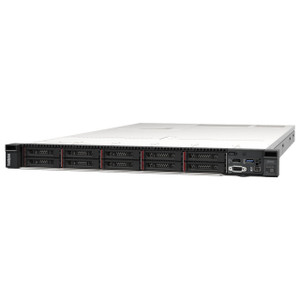
Lenovo 4XG7A63597 AMD EPYC 7343 16-Core Processor for ThinkSystem SR645
Overview
The Lenovo 4XG7A63597 is an AMD EPYC 7343 processor option for the ThinkSystem SR645 server platform — a 16-core, 32-thread CPU clocked at 3.2 GHz base with a 3.9 GHz boost frequency. If you're configuring an SR645 for compute-dense workloads — virtualization hosts, AI inference, video analytics, or high-throughput storage processing — this processor delivers a meaningful step up in per-core clock speed relative to higher-core-count EPYC variants, which matters when your workloads don't parallelize cleanly across dozens of threads. The EPYC 7343 sits in the EPYC 7003 Milan family and drops into the SR645's Socket SP3 infrastructure, making it a viable upgrade or initial build option for environments where frequency matters as much as core count.
For server infrastructure teams evaluating AMD EPYC-based platforms, the 7343 represents the intersection of high clock speed and reasonable thermal envelope within the Milan generation. Review the full Lenovo server catalog for compatible SR645 configurations and complementary components.
Key Features
- 16 Cores / 32 Threads at 3.2–3.9 GHz: The EPYC 7343's 16 physical cores with simultaneous multithreading handle 32 concurrent threads. The 3.9 GHz boost frequency — 700 MHz above base — means latency-sensitive workloads like database queries and real-time video decoding get genuine single-thread headroom, not just parallelism.
- 128 MB L3 Cache (AMD 3D V-Cache Generation): 128 MB of L3 cache dramatically reduces memory latency for working datasets that fit within cache. For NVR and video management workloads processing many concurrent streams, keeping decoded frame buffers and index structures in-cache eliminates costly DRAM round-trips.
- DDR4-3200 Memory Support: The 7343 supports DDR4-3200 MHz memory, the fastest DDR4 standard. Paired with an SR645 configured with high-density DIMMs, this keeps memory bandwidth from becoming a bottleneck in analytics or ML inference workloads where the processor is constantly feeding large model weights and data tensors.
- 190W TDP with Configurable Envelope (165W–200W): The base TDP is 190W, but the EPYC 7343 supports a configurable TDP-down of 165W for power-constrained rack environments and a TDP-up of 200W when maximum sustained throughput is required. That 35W flex range lets infrastructure architects dial in power consumption to match rack PDU budgets without sacrificing the processor entirely.
- Socket SP3 Platform: The SP3 socket is Lenovo's SR645 native platform, providing compatibility within the EPYC 7002/7003 ecosystem. This means established tooling, BIOS maturity, and well-understood thermal and power delivery characteristics — no first-generation platform risk.
- 64-Bit Operating Mode: Full 64-bit support is a baseline requirement for any modern hypervisor (VMware, Hyper-V, KVM), container orchestration platform (Kubernetes), or enterprise OS. No 32-bit compatibility constraints to architect around.
- No Cooler Included: The 4XG7A63597 ships as a processor option only — the SR645's server-grade active cooling infrastructure handles thermal management. This is expected for a rack server CPU option; do not mistake the absence of a boxed cooler for an incomplete product.
Integration & Compatibility
The 4XG7A63597 is specifically validated for the Lenovo ThinkSystem SR645 platform. The SR645 supports dual-socket SP3 configurations, so this processor can be paired with a second EPYC CPU for systems requiring higher aggregate core counts. DDR4-3200 memory modules validated for the SR645 are required to reach full memory bandwidth potential — using slower DIMMs will downclock the memory subsystem. For network infrastructure supporting high-bandwidth server deployments, ensure upstream switching supports the SR645's PCIe lane utilization under full load. Workloads with strong per-core frequency requirements — compiled builds, per-stream video transcoding, certain financial analytics — will benefit from the 7343's clock profile versus higher-core-count EPYC options that trade frequency for thread count.
Frequently Asked Questions
Q: What server platform is the Lenovo 4XG7A63597 compatible with?
A: The 4XG7A63597 AMD EPYC 7343 processor is validated for the Lenovo ThinkSystem SR645 server platform, which uses the Socket SP3 infrastructure.
Q: Does the 4XG7A63597 include a CPU cooler?
A: No. This is a processor-only option. The ThinkSystem SR645 uses server-grade active cooling built into the chassis — a discrete cooler is not included or required separately.
Q: What is the base and boost clock speed of the EPYC 7343?
A: The AMD EPYC 7343 runs at a 3.2 GHz base frequency and boosts to 3.9 GHz, with 16 cores and 32 threads.
Q: What is the TDP of the 4XG7A63597 and can it be adjusted?
A: The rated TDP is 190W. The processor supports a configurable TDP-down of 165W for power-constrained environments and a TDP-up of 200W for maximum sustained performance.
Q: What memory type and speed does the EPYC 7343 support?
A: The processor supports DDR4-SDRAM at up to 3200 MHz. Using DDR4-3200 DIMMs validated for the SR645 platform is recommended to achieve full memory bandwidth.
Q: How much L3 cache does the AMD EPYC 7343 have?
A: The EPYC 7343 includes 128 MB of L3 cache, which significantly reduces memory latency for compute-intensive and data-heavy workloads.
The Lenovo 4XG7A63597 is one of the more interesting processor options in the SR645 lineup specifically because of its frequency profile — the EPYC 7343 hits 3.9 GHz boost on a 16-core die, which is a configuration that tends to get overlooked when buyers default to maximizing core count. For workloads that are moderately parallel but latency-sensitive, that 700 MHz boost headroom makes a measurable difference compared to 32- or 64-core EPYC options running at lower sustained clocks.
Technical Highlights:
- 128 MB L3 Cache: For any workload that benefits from keeping large datasets close to the execution units — video analytics pipelines, database in-memory indexes, ML model serving — 128 MB of L3 means you're avoiding DRAM latency on a much larger working set than earlier EPYC generations allowed.
- Configurable TDP (165W–200W): The 35W configurable range is genuinely useful in mixed-density rack deployments. Running TDP-down at 165W across a multi-server rack pod can free up meaningful PDU headroom without requiring a full processor substitution.
- DDR4-3200 Support: Reaching 3200 MHz memory speed requires pairing with validated SR645 DIMMs at that speed grade — mixing slower DIMMs pulls the entire memory subsystem down. Confirm DIMM selection against Lenovo's SR645 compatibility matrix before ordering.
Deployment Considerations:
- The SR645 supports dual Socket SP3 CPUs — if your workload scales well with thread count, evaluate whether adding a second processor provides better throughput than a single higher-frequency option at this TDP.
- No cooler is included, which is correct for server deployment, but verify the SR645 chassis fan/cooling configuration supports 190W sustained dissipation in your rack's ambient temperature and airflow conditions before committing to TDP-up operation at 200W.
This processor is the right call for SR645 builds handling per-stream video transcoding, real-time analytics, or database workloads where single-thread response time matters — not for bulk batch jobs where a 64-core EPYC at lower clocks wins on throughput per watt.