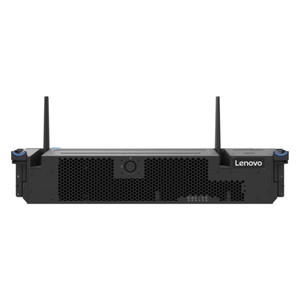
Lenovo 4XB7A93890 ThinkSystem 2.5" U.2 CD8P 6.4TB Mixed Use NVMe PCIe 5.0 x4 Hot-Swap SSD
Overview
The Lenovo 4XB7A93890 is a 6.4TB enterprise NVMe SSD built for ThinkSystem server platforms where both read-heavy analytics workloads and sustained write-intensive operations need to coexist on the same device. The CD8P series targets mixed-use environments — think AI inference nodes, database tiers, and virtualization hosts that see unpredictable I/O patterns throughout the day — without forcing you to over-provision a write-optimized drive or sacrifice write endurance with a read-optimized model. The 2.5-inch U.2 hot-swap form factor integrates directly into Lenovo ThinkSystem backplane bays, and the PCIe 5.0 x4 interface delivers the raw bandwidth headroom that Gen 4 drives simply cannot match at scale. If you are spec'ing Lenovo ThinkSystem storage for a performance-sensitive workload tier, this drive belongs in the conversation.
Key Features
- 6.4TB TLC NAND Capacity: Triple-Level Cell NAND at 6.4TB gives you meaningful density per bay slot — enough to consolidate what would have been multiple smaller drives onto a single hot-swap slot, reducing backplane complexity and power draw per terabyte in dense enterprise storage configurations.
- PCIe 5.0 x4 Interface: Gen 5 lanes deliver roughly double the theoretical bandwidth ceiling of PCIe 4.0. At 12,000 MB/s sequential read and 5,500 MB/s sequential write (ATTO), this drive does not create the storage bottleneck — your application and CPU will be the limiting factors, not the SSD fabric.
- 2,000,000 Random Read IOPS (4KB): Two million read IOPS at a 4KB block size is the spec that matters for latency-sensitive workloads: OLTP databases, VM storage pools, container registries. The drive handles deep I/O queues without collapsing throughput, keeping tail latency predictable under load.
- 400,000 Random Write IOPS (4KB): For mixed-use deployments where write bursts hit during compaction, logging, or checkpoint operations, 400K write IOPS prevents the storage tier from becoming a serialization point. This is the figure that separates mixed-use SKUs from read-optimized variants that throttle hard under sustained writes.
- 69 µs Read Latency / 10 µs Write Latency: Sub-100 microsecond read latency directly impacts application response time in any workload that cannot fully cache in DRAM. The 10 µs write latency is particularly relevant for synchronous write paths — database commit logs, journaling filesystems — where each write adds directly to transaction time.
- TCG Opal 2.0 Hardware Encryption: Full-drive hardware encryption offloads the AES compute burden from the host CPU entirely. Opal 2.0 compliance means the drive works with ISV-supported software management tools for key provisioning and secure erase — critical for data-center decommissioning workflows and compliance mandates (PCI-DSS, HIPAA, NIST 800-88).
- Hot-Swap U.2 Form Factor: Hot-swap capability means a failed drive can be replaced without bringing the server offline — a non-negotiable requirement in any storage configuration without full mirrored redundancy. The U.2 connector provides both the PCIe signal path and the hot-plug management interface the backplane needs to detect insertion and removal cleanly.
- S.M.A.R.T. Monitoring: S.M.A.R.T. attribute reporting lets your server management stack (XClarity, iDRAC, iLO, or third-party monitoring) track drive health, wear indicators, and predictive failure signals in real time — enabling proactive replacement before an unplanned outage rather than reacting after one.
- NVMe Protocol: NVMe's parallelism model — up to 65,535 queues with 65,535 commands each — is purpose-built for flash storage. Compared to legacy SAS/SATA command sets, NVMe removes the queue-depth ceiling that throttles IOPS under concurrent multi-threaded I/O, which is exactly the pattern that mixed-use workloads generate.
Integration and Compatibility
The 4XB7A93890 is a Lenovo ThinkSystem-branded option designed to install into ThinkSystem servers with U.2 NVMe hot-swap backplane bays. The PCIe 5.0 x4 electrical interface requires a host platform with Gen 5 PCIe capability — verify your ThinkSystem server generation supports PCIe 5.0 NVMe U.2 drives before ordering, as Gen 4 backplanes will physically accept U.2 connectors but will not expose Gen 5 bandwidth. The drive is flagged as a server component (UNSPSC 43201830) and is not intended for workstation or desktop deployment. TCG Opal 2.0 self-encrypting drive management requires a compatible SED management application; Lenovo XClarity and most enterprise ISV tools support the Opal 2.0 command set. For deployments requiring high-density NAS or SAN storage buildouts, pairing multiple units across a backplane with a suitable RAID or software-defined storage stack will maximize the per-slot bandwidth this drive is capable of delivering. S.M.A.R.T. telemetry integrates with Lenovo XClarity Administrator and compatible third-party monitoring platforms for fleet-wide server storage management.
Frequently Asked Questions
Q: What interface does the Lenovo 4XB7A93890 use?
A: The 4XB7A93890 uses a PCIe 5.0 x4 NVMe interface via a U.2 connector. This requires a ThinkSystem server backplane that supports PCIe 5.0 NVMe U.2 hot-swap drives. Gen 4 backplanes will accept the connector but will operate at reduced bandwidth.
Q: Is this drive self-encrypting?
A: Yes. The 4XB7A93890 supports TCG Opal 2.0 hardware-based self-encryption. Encryption and decryption are handled entirely on the drive controller, with no CPU overhead on the host. Opal 2.0 compliance supports standards-based secure erase for decommissioning workflows.
Q: What are the random IOPS specs for this drive?
A: At a 4KB block size, the drive delivers up to 2,000,000 random read IOPS and 400,000 random write IOPS. These figures are relevant to database, virtualization, and AI inference workloads where small-block random I/O dominates the access pattern.
Q: Can this SSD be replaced without powering down the server?
A: Yes. The U.2 form factor on the 4XB7A93890 is hot-swap capable, allowing drive replacement while the server remains operational — provided the storage configuration (RAID, software-defined storage, or mirrored volume) supports it at the software level.
Q: What is the NAND type used in this drive?
A: The 4XB7A93890 uses TLC (Triple-Level Cell) NAND. TLC provides a higher density-to-cost ratio than SLC or MLC while still meeting enterprise mixed-use endurance requirements when paired with enterprise-grade controller firmware and overprovisioning, as is the case with this CD8P series drive.
Q: What sequential transfer speeds does this drive achieve?
A: Per ATTO benchmark measurements, sequential read speed reaches 12,000 MB/s and sequential write speed reaches 5,500 MB/s. These figures reflect the Gen 5 PCIe bandwidth advantage and are relevant to large sequential workloads such as AI model loading, backup streaming, and large-dataset analytics scans.
The 4XB7A93890 is one of the first ThinkSystem drives to ship on PCIe 5.0 x4, and that 12,000 MB/s sequential read ceiling is not theoretical headroom — it is the number you actually see in large sequential I/O scenarios once you have the right Gen 5 backplane behind it. If you are sizing storage for an AI inference cluster or a high-throughput analytics tier, this drive eliminates the bandwidth bottleneck that Gen 4 NVMe has been creating at scale.
Technical Highlights:
- 2,000,000 Read IOPS at 4KB: This is the spec that defines suitability for database and VM workloads. Most Gen 4 mixed-use drives top out between 800K and 1.2M read IOPS — the CD8P's 2M figure gives you meaningful headroom for consolidating multiple logical storage volumes onto fewer physical drives without hitting an IOPS ceiling.
- 10 µs Write Latency: Single-digit-to-low-double-digit microsecond write latency is what makes synchronous write paths — database redo logs, journaling, transactional commit — scale without becoming serialization bottlenecks. At 10 µs, this drive will not be the reason your database commit time inflates under load.
- TCG Opal 2.0 Hardware Encryption: In regulated environments (PCI-DSS, HIPAA, FedRAMP-adjacent), hardware encryption is the right answer — not filesystem-level software encryption that burns CPU cycles and adds latency. Opal 2.0 also gives you a cryptographic erase path for decommissioning, which matters when drives leave the data center.
Deployment Considerations:
- Verify your ThinkSystem server generation has a PCIe 5.0-capable NVMe U.2 backplane before committing. The U.2 connector is physically backward-compatible with Gen 4 platforms, but you will only get Gen 4 bandwidth — and at that point you are paying a Gen 5 premium for Gen 4 throughput.
- TLC NAND on a mixed-use drive is purpose-matched to workloads that are not write-dominated (roughly 30–70% writes or lower). If your workload is sustained write-heavy (video ingest, logging, constant ETL), evaluate whether a write-optimized variant better fits the endurance profile — the 400K write IOPS figure is strong, but the TLC endurance curve under heavy write amplification is a real consideration for sizing drive refresh cycles.
This drive is the right fit for ThinkSystem-based AI inference nodes, Tier-1 database servers, and dense virtualization hosts running on PCIe 5.0 platforms — specifically deployments where you need 2M+ read IOPS per slot and cannot afford to run separate read-optimized and write-optimized drive pools.