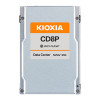
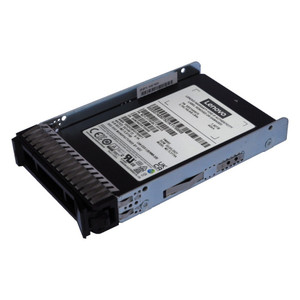
Lenovo 4XB7A93888 ThinkSystem 2.5-Inch U.2 CD8P 1.6TB Mixed Use NVMe PCIe 5.0 x4 Hot-Swap SSD
Overview
The Lenovo 4XB7A93888 is a 1.6TB 2.5-inch U.2 NVMe solid-state drive built for ThinkSystem servers running mixed read/write workloads at enterprise scale. Riding the PCIe 5.0 x4 interface, it delivers sequential read throughput of 12,000 MB/s — roughly double what a PCIe 4.0 x4 drive can sustain — and random read performance of 1,600,000 IOPS at 4KB block size. If your storage bottleneck lives in the flash tier rather than the network or CPU, this is the right place to look.
The CD8P series targets the mixed-use workload class: environments where the drive absorbs both heavy read streams (database queries, analytics scans, VM boot storms) and meaningful sustained write traffic simultaneously. TLC NAND underpins the capacity point at reasonable cost per gigabyte, while the performance envelope keeps pace with the demands of high-concurrency transactional workloads common in AI inference serving, VDI farms, and real-time data pipelines.
Key Features
- PCIe 5.0 x4 Interface — 12,000 MB/s Sequential Read: The generational jump to PCIe 5.0 doubles the available lane bandwidth versus PCIe 4.0. At 12 GB/s sequential read and 3,500 MB/s sequential write, large dataset scans, checkpoint restores, and bulk data ingestion complete faster — which directly reduces job latency and server idle time during data-intensive operations.
- 1,600,000 IOPS Random Read / 300,000 IOPS Random Write (4KB): At sub-microsecond-range latencies (69 µs read, 10 µs write), this drive handles the rapid random I/O patterns that punish slower storage — OLTP databases, key-value stores, and caching tiers where queue depth spikes are constant. The 10 µs write latency in particular is aggressive for TLC NAND at this capacity.
- Mixed-Use Workload Rating: Unlike read-intensive SSDs optimized for low write amplification at minimal write duty, this drive is rated for sustained mixed workloads. That means you're not burning through endurance headroom when your workload alternates between heavy reads and meaningful write streams — appropriate for operational databases, analytics clusters, and AI training storage tiers.
- TLC NAND Memory: Triple-level cell NAND delivers the capacity-to-cost ratio that makes 1.6TB viable in mixed-use configurations where all-TLC or SLC-cached architectures would inflate price per GB significantly. At this performance tier, TLC is a deliberate engineering tradeoff Lenovo has validated for the mixed-use duty cycle.
- TCG Opal 2.0 Hardware Encryption: Self-encrypting drive capability means AES encryption runs in the drive controller at full line speed — zero CPU overhead, no software stack to manage, and clean cryptographic erase on decommission. For environments subject to HIPAA, PCI-DSS, or federal data-handling requirements, hardware encryption at the drive level is a cleaner compliance path than software full-disk encryption.
- Hot-Swap Support: U.2 hot-swap capability lets you replace a failed drive without powering down the server or the storage array. In 24/7 environments — production databases, always-on analytics pipelines — this is the operational feature that eliminates a maintenance window entirely for a single-drive fault.
- S.M.A.R.T. Monitoring: Integrated Self-Monitoring, Analysis and Reporting Technology surfaces wear indicators, reallocated sector counts, and predictive failure data through standard management channels. Paired with Lenovo's XClarity management stack, you get early warning on drive health before a fault becomes an outage.
- 2.5-Inch U.2 Form Factor: The U.2 (SFF-8639) connector is the enterprise standard for hot-swap NVMe in rack servers. Compatible with ThinkSystem 2.5-inch drive bays supporting PCIe 5.0 backplanes — confirm your specific ThinkSystem model's backplane revision before ordering, as PCIe 5.0 NVMe requires a 5th-gen-capable backplane.
Integration and Compatibility
The 4XB7A93888 is engineered as a factory option and field upgrade for Lenovo ThinkSystem servers that support 2.5-inch U.2 NVMe hot-swap bays with PCIe 5.0 x4 backplane connectivity. Lenovo's ThinkSystem storage line includes validated configurations for this drive in server models with 5th-generation PCIe backplanes. Before deploying, verify the target server's backplane generation — installing a PCIe 5.0 drive into a PCIe 4.0 backplane will typically negotiate down to PCIe 4.0 speeds, losing the throughput advantage that justifies this SKU.
For environments building out enterprise server storage, the drive integrates with Lenovo XClarity Administrator and XClarity Controller for S.M.A.R.T. telemetry, drive health alerts, and predictive replacement workflows. TCG Opal 2.0 support pairs with compatible ISV encryption management software (Symantec, WinMagic, or native OS-level SED management) for centralized key management across drive fleets.
U.2 NVMe drives of this class are commonly deployed in pairs or larger groups behind NVMe-oF (NVMe over Fabrics) targets, software-defined storage clusters (Ceph, vSAN, Lustre), or as local scratch/cache tiers in AI/ML inference nodes. If you are evaluating NVMe-based storage architectures for high-throughput workloads, the sequential bandwidth and IOPS figures here represent the upper tier of 2.5-inch U.2 options currently available in the ThinkSystem catalog. Consult Lenovo's ThinkSystem compatibility matrix for the specific server SKU you are populating.
Frequently Asked Questions
Q: What servers is the Lenovo 4XB7A93888 compatible with?
A: The 4XB7A93888 is designed for Lenovo ThinkSystem servers that support 2.5-inch U.2 NVMe hot-swap bays with PCIe 5.0 x4 backplane connectivity. Compatibility depends on the specific server model and backplane generation. Consult Lenovo's ThinkSystem option compatibility matrix for your server SKU before ordering.
Q: What is the interface and form factor of this SSD?
A: The drive uses a PCIe 5.0 x4 NVMe interface in a 2.5-inch U.2 (SFF-8639) form factor. It is hot-swap capable, meaning it can be replaced in a running server without powering down.
Q: What random IOPS performance does the 4XB7A93888 deliver?
A: The drive is rated at 1,600,000 IOPS random read and 300,000 IOPS random write at 4KB block size. Sequential throughput reaches 12,000 MB/s read and 3,500 MB/s write.
Q: Does this SSD support hardware encryption?
A: Yes. The drive supports TCG Opal 2.0 self-encrypting drive (SED) functionality, enabling AES hardware encryption at full drive speed with zero CPU overhead. It also supports secure cryptographic erase for decommissioning.
Q: What workload type is this drive rated for?
A: The CD8P is rated for Mixed Use (MU) workloads — environments with a combination of sustained read and write traffic, such as OLTP databases, VDI deployments, AI inference nodes, and real-time analytics pipelines. It is not optimized solely for read-intensive or write-intensive duty cycles.
Q: Will a PCIe 5.0 drive work in a PCIe 4.0 backplane?
A: PCIe is backward compatible, so the drive will function in a PCIe 4.0 backplane — but it will negotiate down to PCIe 4.0 speeds, significantly reducing throughput from the rated 12,000 MB/s to approximately 6,800–7,000 MB/s sequential read. If maximum performance is the goal, a PCIe 5.0-capable backplane is required.
The 4XB7A93888 sits at the intersection of two trends I'm seeing in enterprise storage deployments right now: the push to PCIe 5.0 in server backplanes, and the demand for mixed-use NVMe that can handle both the read-heavy query load and the write-heavy ingestion load without a separate tiering scheme. At 1,600,000 random read IOPS and 12,000 MB/s sequential throughput, this drive doesn't leave performance on the table — but the TCG Opal 2.0 SED capability is equally important in regulated environments where drive decommission procedures get audited.
Technical Highlights:
- PCIe 5.0 x4 Bandwidth: 12,000 MB/s sequential read is the headline, but the practical win is for workloads with large sequential scans — AI model checkpoint loads, database backup restores, and bulk analytics reads that previously stalled on PCIe 4.0 ceiling of ~6.9 GB/s. The generational step here is meaningful, not incremental.
- 10 µs Write Latency: For TLC NAND at 1.6TB capacity, 10 µs random write latency is notably low. It means write-back cache flushes, journal commits, and synchronous write operations on transactional databases don't accumulate latency debt the way higher-latency MU drives can. Watch this number when comparing against competitive options at this capacity point.
- TCG Opal 2.0 SED: Hardware-level encryption with zero CPU overhead is the clean answer for PCI-DSS and HIPAA storage compliance. More importantly, cryptographic erase on decommission means drive retirement is a one-command operation rather than a multi-pass wipe job — real operational time savings across a large fleet.
Deployment Considerations:
- Confirm your ThinkSystem server's backplane supports PCIe 5.0 x4 NVMe before deploying — this is not a universal assumption even on current-generation ThinkSystem hardware. A PCIe 4.0 backplane will accept the drive but cap throughput at roughly half the rated sequential read figure.
- Mixed-use rating does not mean unlimited write endurance — verify the drive's TBW (terabytes written) specification against your actual write workload before committing to a deployment density. High write-ratio workloads (above 60% write mix) should be evaluated against a write-intensive rated SKU in the same family.
This drive is well-positioned for ThinkSystem-based AI inference nodes and high-concurrency OLTP database servers where local NVMe scratch or primary storage needs to keep pace with 5th-generation PCIe backplanes — particularly in regulated industries where SED decommission compliance is a hard requirement.