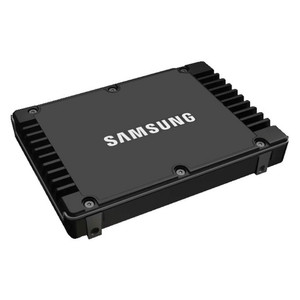
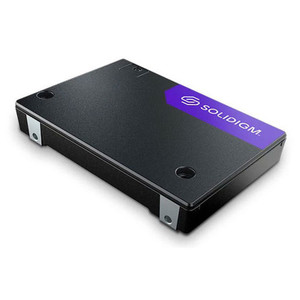
Lenovo 4XB7A93889 ThinkSystem 3.2TB Mixed-Use NVMe PCIe 5.0 x4 U.2 SSD
Overview
The Lenovo 4XB7A93889 is a 3.2TB 2.5-inch U.2 NVMe SSD built for ThinkSystem servers running mixed read/write workloads — databases, virtualization hosts, and analytics tiers where you need high random throughput without sacrificing write endurance. Running on the PCIe 5.0 x4 interface, it delivers sequential read speeds up to 12,000 MB/s and 1,900,000 random read IOPS at 4KB, putting it in a different performance class than PCIe 4.0 predecessors. If your workload splits roughly 70/30 or 60/40 between reads and writes and you can't afford the cost premium of a full write-intensive drive, this is the tier to evaluate.
Key Features
- PCIe 5.0 x4 Interface — 12,000 MB/s Sequential Read: PCIe 5.0 doubles the per-lane bandwidth of Gen 4, translating to 12 GB/s sequential read throughput. For workloads that stream large datasets — columnar analytics, AI inference pipelines, or database log replay — that headroom is real and prevents the storage tier from becoming a bottleneck as CPU and memory scale up.
- 1,900,000 Random Read IOPS (4KB): At sub-70µs read latency, 1.9M IOPS is the figure to benchmark against your transaction database's peak demand. An OLTP system that previously required four drives to saturate its queue depth can now do it with one — fewer slots consumed, lower failure-domain surface area, and simpler cabling in a dense chassis.
- 400,000 Random Write IOPS at 10µs Write Latency: The 10µs write latency is the spec that separates this drive from value-tier NVMe. Log writes, journal commits, and redo-log flushes are latency-sensitive, not throughput-sensitive — 10µs keeps those operations from piling up in the storage queue under burst conditions.
- 5,500 MB/s Sequential Write Speed: At 5.5 GB/s sequential write, large sequential ingest — VM snapshots, backup staging, data warehouse bulk loads — completes faster without saturating the network or leaving the CPU waiting on flush acknowledgments.
- 3.2TB Mixed-Use TLC NAND: Mixed-use positioning means the endurance rating is calibrated for workloads that write data multiple times per day without the cost premium of a full write-intensive (WI) SLC or MLC drive. For most virtualization and database deployments where the write/read ratio stays below 50%, TLC at this capacity is the economical correct choice.
- TCG Opal 2.0 Hardware Encryption: Self-encrypting drive (SED) capability via TCG Opal 2.0 means data-at-rest encryption runs in the drive controller with zero CPU overhead — relevant for regulated environments (HIPAA, PCI-DSS, FedRAMP) where AES encryption is required but you can't afford software-layer performance penalties on a storage-intensive workload.
- Hot-Swap Support: Hot-swap in a ThinkSystem chassis means you can replace a failed drive without scheduling a maintenance window. In high-availability configurations with RAID or storage replication, that capability converts a critical storage event into a routine swap during business hours.
- S.M.A.R.T. Monitoring: S.M.A.R.T. support allows your server management stack — whether XClarity, iDRAC equivalent, or third-party monitoring — to track drive health metrics (wear indicators, reallocated sectors, temperature) and generate predictive alerts before a failure occurs. Reactive replacement is the expensive way to manage storage.
- 2.5-Inch U.2 Form Factor: The U.2 (SFF-8639) form factor is the enterprise standard for hot-swap NVMe in 2.5-inch bays. It gives you the cable management and bay density of a traditional SAS/SATA drive while running the NVMe protocol natively — no U.2-to-M.2 adapter, no PCIe riser slot consumed.
Integration & Compatibility
The 4XB7A93889 is a ThinkSystem-qualified component, designed for installation in Lenovo ThinkSystem servers that support 2.5-inch hot-swap NVMe U.2 bays with PCIe 5.0 backplane connectivity. Verify your specific ThinkSystem model's storage configurator against the 4XB7A93889 before ordering — not all ThinkSystem generations ship with PCIe 5.0 backplanes, and the drive requires a Gen 5-capable slot to operate at rated throughput. In a Gen 4 slot, the drive will function but will be limited to Gen 4 bandwidth. TCG Opal 2.0 encryption management requires a compatible key management solution; consult your security team on ISE (Instant Secure Erase) workflows for decommissioning. For enterprise deployments pairing this SSD with high-density server storage solutions, evaluate the full Lenovo ThinkSystem line for compatible chassis and backplane configurations. Storage architects planning NVMe tiering should also review available datacenter storage options for complementary capacity and caching tiers. For infrastructure teams managing power and connectivity, pairing this drive with a well-designed rack PDU and power distribution strategy ensures stable operating conditions in high-density deployments.
Frequently Asked Questions
Q: What interface does the Lenovo 4XB7A93889 use?
A: The 4XB7A93889 uses a PCIe 5.0 x4 interface with the NVMe protocol, in a 2.5-inch U.2 (SFF-8639) form factor designed for hot-swap enterprise server bays.
Q: What are the random IOPS specs on the 4XB7A93889?
A: The drive delivers up to 1,900,000 random read IOPS and 400,000 random write IOPS at a 4KB block size, with read latency up to 69µs and write latency up to 10µs.
Q: Does the 4XB7A93889 support hardware encryption?
A: Yes. The 4XB7A93889 is a self-encrypting drive (SED) supporting TCG Opal 2.0 hardware-based AES encryption, with no host CPU overhead for encryption operations.
Q: Is this drive hot-swap capable?
A: Yes. The 4XB7A93889 supports hot-swap, allowing replacement in a compatible ThinkSystem chassis without powering down the server — provided the storage configuration supports online drive replacement (RAID, replication, or erasure coding).
Q: What workload type is the 4XB7A93889 designed for?
A: It is rated as Mixed Use (MU), meaning it is optimized for deployments with a balance of read and write operations — typical of OLTP databases, virtual machine datastores, and analytics platforms. It is not a write-intensive (WI) drive; if your workload is write-dominant, a higher-endurance variant should be evaluated.
Q: Will the 4XB7A93889 work in a PCIe 4.0 slot?
A: PCIe interfaces are backward compatible, so the drive will function in a Gen 4 slot, but throughput will be limited to Gen 4 bandwidth — sequential reads will be capped well below the rated 12,000 MB/s. For full performance, a PCIe 5.0 x4-capable backplane is required.
The 4XB7A93889 is the drive I reach for when an architect needs Gen 5 NVMe performance without committing to write-intensive pricing — the 10µs write latency is the spec that makes it credible for real transactional workloads, not just sequential throughput benchmarks. At 1.9M random read IOPS and 12 GB/s sequential read, this is genuine PCIe 5.0 performance in a standard 2.5-inch U.2 bay.
Technical Highlights:
- PCIe 5.0 x4 at 12,000 MB/s Sequential Read: Gen 5 doubles per-lane bandwidth over Gen 4 — 12 GB/s sequential read is real and measurable in AI/ML inference and database replay workloads where the storage tier previously bottlenecked CPU utilization.
- 10µs Write Latency: This is the spec most buyers gloss over. Sub-10µs write latency means redo logs, WAL commits, and journal writes clear the queue fast enough that latency-sensitive OLTP workloads don't stall waiting on storage acknowledgment — a meaningful distinction from drives that lead with IOPS but hide write latency numbers.
- TCG Opal 2.0 SED: Hardware-level AES encryption with Instant Secure Erase support. For any regulated deployment — financial services, healthcare, government — this eliminates the software-encryption performance tax and simplifies decommissioning workflows: one ISE command cryptographically sanitizes the drive in seconds.
Deployment Considerations:
- Confirm your ThinkSystem chassis backplane is PCIe 5.0 x4 rated before ordering. A Gen 4 backplane will accept the drive but cap sequential read at roughly half the rated figure — you'll pay Gen 5 pricing for Gen 4 performance.
- TCG Opal 2.0 requires an Opal-compatible key management solution to activate encryption. If your environment doesn't have one provisioned, the SED capability sits unused — plan the key management workflow before deployment, not after.
This drive is the right call for ThinkSystem deployments running virtualization hypervisors or OLTP databases in regulated industries where hardware encryption is mandatory and write latency under burst load directly affects application SLA compliance.